Product advertisement is any paid message designed to promote a specific product to potential buyers. It spans digital, print, TV, outdoor, and social channels. The goal is always the same: show people why your product solves their problem, then get them to act.
Global ad spend is set to surpass $1 trillion for the first time in 2026, with online video growing 11.5% year over year. At Vidico, we’ve produced over 2,000 B2B explainer video campaigns for 920+ clients. This guide breaks down the best product advertisement examples, the core types, and practical steps to create ads that drive revenue.
Key Takeaways:
- Short-form video delivers the highest ROI of any content format, with 48.6% of marketers ranking it first
- UGC-style ads outperform polished production on paid social, earning 4x higher click-through rates at 50% lower cost-per-click
- Systematic ad production beats one-off campaigns. Brands that build reusable asset banks generate more creative variations from a single investment.
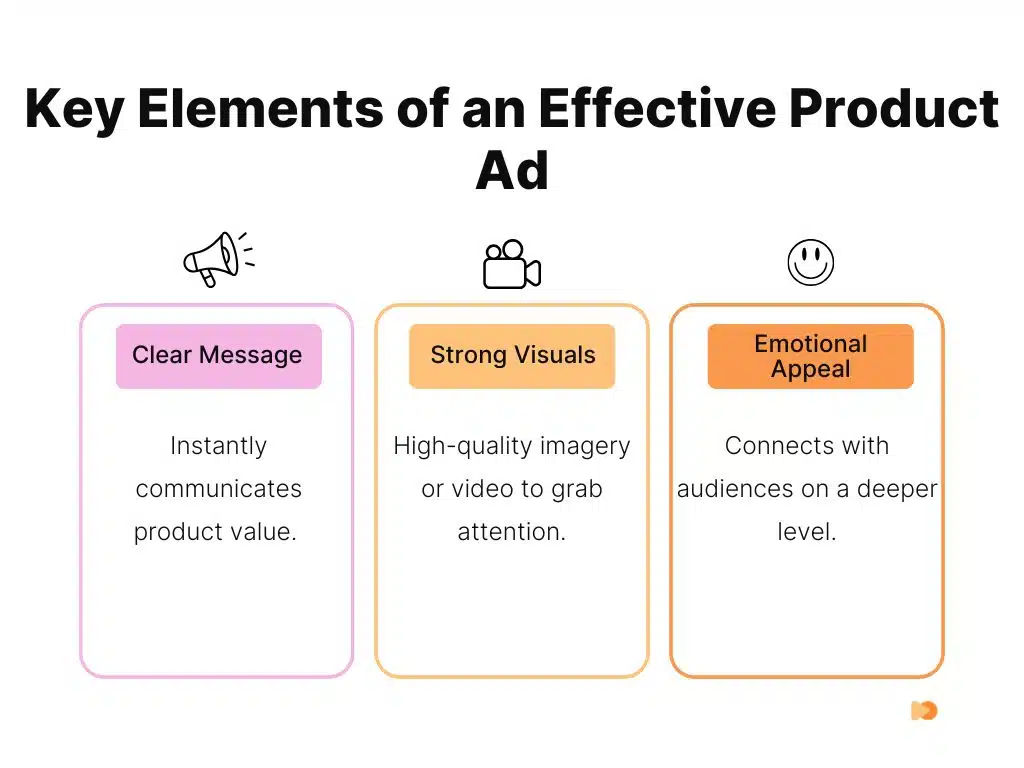
- Every effective product ad has five components: target audience, unique selling proposition, call-to-action, medium selection, and creative execution
- Multiple ad types work together. The strongest campaigns combine comparative, pioneering, and digital approaches across the buyer journey.
Content
What Is Product Advertising?
Product advertising is a form of marketing communication that promotes a specific product or service to potential customers. It highlights the product’s features, benefits, and unique selling proposition (USP) to persuade people to buy.
Product advertising covers every medium: digital display, social media, television, print, radio, and outdoor placements like billboards. The format changes based on the channel, but the core job stays the same. You show what the product does, who it helps, and why it beats the alternatives.
Where a product sits in its lifecycle shapes the advertising approach. New products need pioneering ads that educate the market. Established products use competitive ads that reinforce brand preference. Products in crowded categories use comparative ads that draw direct contrasts with rivals.
Product advertising differs from brand advertising. Brand advertising builds long-term identity and emotional connection. Product advertising drives a specific action: a purchase, a sign-up, or a trial. Most successful companies run both, but product advertising ties directly to revenue.
Core Components of a Product Advertisement
Every effective product advertisement contains five core components. Miss one, and the ad underperforms.
- Target Audience. Define exactly who the ad speaks to before writing a single word. Demographics, psychographics, pain points, and buying triggers all shape the message. An ad for CFOs looks nothing like an ad for design teams, even if they buy the same software.
- Unique Selling Proposition (USP). State the one reason a buyer should choose this product over every alternative. The USP must be specific and provable. “Best quality” is not a USP. “50% faster setup than the leading competitor” is.
- Call-to-Action (CTA). Tell the viewer exactly what to do next. Strong CTAs are direct, time-sensitive, and low-friction. “Start your free trial” outperforms “Learn more” in nearly every test.
- Medium Selection. Match the ad format to where your audience already spends time. Short-form video delivers the highest ROI of any format, but that only matters if your buyers are on platforms that favor video. B2B buyers might respond better to LinkedIn display ads or YouTube pre-roll than TikTok.
- Creative Execution. The visual style, tone, pacing, and production quality must match your brand and your audience’s expectations. A scrappy UGC-style ad works on Instagram. A polished cinematic spot works on connected TV. The creative has to feel native to the platform.
Types of Product Advertising
Product advertising breaks into six primary types. Each serves a different goal and works best at a different stage of the buyer journey.
Comparative Advertising
Comparative advertising directly compares your product against a named competitor. The goal is to shift buyer preference by proving superiority on specific features.
Samsung’s “Galaxy vs. iPhone” campaigns are a textbook example. Each ad isolates a single feature (camera quality, battery life, screen size) and shows a side-by-side comparison. This type works best in mature categories where buyers already know the alternatives. It requires factual claims that hold up to scrutiny.
Competitive Advertising
Competitive advertising positions your product as superior without naming specific rivals. Instead of direct comparisons, it emphasizes your unique strengths.
Apple’s “Shot on iPhone” campaign never mentions Samsung or Google. It simply shows what the iPhone camera produces, letting viewers draw their own conclusions. This approach builds brand prestige while avoiding the legal risks of direct comparison.
Pioneering Advertising
Pioneering advertising introduces a new product or category that buyers don’t know they need yet. The primary job is education, not persuasion.
When Peloton launched, its ads had to explain what an at-home connected fitness bike was before selling the benefits. Pioneering ads are essential for product launches where the concept itself is unfamiliar.
Digital Advertising
Digital advertising covers all paid placements on websites, search engines, streaming platforms, and apps. Formats include display ads, pre-roll video, native placements, and programmatic buys.
Digital ads offer precise targeting and real-time performance data. You can adjust creative, audience, and budget mid-campaign. Online video ad spend is growing 11.5% year over year, faster than any other digital format.
Social Media Advertising
Social media advertising runs paid placements on platforms like Instagram, TikTok, LinkedIn, YouTube, and Facebook. Each platform has its own ad formats, audience behaviors, and creative best practices.
The key advantage is native integration. Social media ads appear in the same feed as organic content, reducing the “ad blindness” that plagues banner displays. Platform algorithms optimize delivery based on engagement signals, pushing your best-performing creative to more of the right people.
UGC-Style Advertising
UGC-style (user-generated content) ads are filmed to look like organic social posts, not polished studio productions. They feature real people, handheld camera work, and casual delivery.
The performance data is clear: UGC increases conversions by 161% on e-commerce product pages, and UGC-based ads earn 4x higher click-through rates at 50% lower cost-per-click. The format reduces production cost while increasing trust. Brands like Glossier, Gymshark, and The Ordinary have built entire paid strategies around UGC-style creative.
15 Best Product Advertisement Examples (2026)
These 15 product advertisement examples show what works across industries, formats, and budgets. Each one nails at least one core component that makes it effective.
1. Glossier
Average Pricing: Starts at $5000
Glossier’s product video strips away everything except the product itself. No voiceover. No narrator. Just smooth transitions between cosmetics, bold text overlays, and a clean soundtrack. The minimalist aesthetic matches the brand’s “skin first, makeup second” positioning.
The ad works because it trusts the product to sell itself. Every frame reinforces Glossier’s identity: clean, simple, real. The text-only approach makes it platform-flexible. It plays equally well with sound off on Instagram or full-screen on YouTube.
What makes it work:
- Minimalist aesthetic mirrors the brand’s core identity
- Smooth product transitions hold attention without relying on dialogue
- Text overlays communicate the message with sound off, ideal for mobile feeds
“Vidico were simply brilliant for our TVC. They’re a dual threat of artistic ability and story-telling know how. They went through pre-pro without a hitch, executed our shoot day efficiently and got through 5 rounds of edits quickly.” – Charlie Gearside, Creative Director, Koala
2. Temple & Webster
Average Pricing: Starts at $5000
Temple & Webster’s 30-second commercial turns furniture shopping into comedy. The ad builds a relatable scenario where every viewer has been: wanting to refresh a room without the hassle. Then it positions Temple & Webster as the easy solution.
Humor is one of the hardest tools to use in product advertising because it can overshadow the product. This ad avoids that trap by weaving the product showcase directly into the joke. Every funny moment features actual furniture from their catalogue.
What makes it work:
- Humor creates emotional engagement without overshadowing the product
- Relatable scenarios connect with a broad audience of homeowners
- Product placement is integrated into the narrative, never forced
3. Pringles
Pringles used its Super Bowl slot to spotlight one specific product truth: the number of possible flavor combinations when you stack different chips. The ad features a smart home device that becomes “sad” realizing it will never taste a Pringles stack.
Super Bowl ads cost over $7 million for 30 seconds. Pringles made the investment work by creating a concept simple enough to remember and share. The “sad device” hook gave the ad a second life on social media, earning millions of organic views beyond the broadcast.
What makes it work:
- A single, memorable product claim (flavor stacking) anchors the entire ad
- Humor creates shareability, extending reach far beyond the initial airing
- The concept is platform-agnostic, performing well on TV and social feeds
4. Alexa
Amazon asked a simple question: what if Alexa lost her voice? The answer involved Gordon Ramsay, Rebel Wilson, Cardi B, and Sir Anthony Hopkins each filling in as replacement voices. The result is absurd, funny, and deeply effective.
The genius of this ad is how it demonstrates the product without feeling like a demo. Every celebrity “replacement” fails in a way that highlights what Alexa actually does well. Ramsay yells at someone asking for a recipe. Cardi B responds to a weather query with attitude. Each scene makes you appreciate the real Alexa more.
What makes it work:
- Celebrity cast creates instant attention and shareability
- The “loss” framing highlights product value through contrast
- Each comedy scene doubles as a feature demonstration
5. Kevel
Kevel (formerly Adzerk) sells ad-serving APIs to developers. That is a hard product to make exciting. This animated explainer video solves the problem by leading with the pain: third-party ad networks control your user experience.
The ad breaks a complex B2B product into a clear story. Problem, impact, solution, benefit. The animation style keeps it engaging without dumbing it down. For B2B companies with technical products, this format works because it respects the buyer’s intelligence while making the message accessible.
What makes it work:
- Opens with the buyer’s pain point, not the product’s features
- Animation simplifies a complex technical product without losing substance
- Clear problem-solution structure matches how B2B buyers evaluate tools
Planning your next product ad campaign? Get a free cost estimate and video style recommendations with our VidiFit Quiz.
6. Karma Cola
Karma Cola does not try to compete with Coca-Cola on taste or nostalgia. Instead, it asks a question most cola drinkers have never considered: where does real cola come from? The ad uses hand-drawn illustration to trace the journey from West African cola nut farms to the bottle.
This is pioneering advertising at its best. It creates a new buying criterion (ethical sourcing) that favors the challenger brand. The ad does not ask you to stop drinking Coke. It asks you to think about what you drink. That is a much easier ask, and it leads to the same outcome.
What makes it work:
- Creates a new decision factor (ethical sourcing) that favors the underdog
- Hand-drawn illustration stands out against polished competitor ads
- Story-first approach builds brand trust without a hard sell
7. Adidas
Adidas flipped the typical product ad by showing the manufacturing process instead of the finished shoe. Robots assembling sneakers. Precision stitching in slow motion. The raw mechanics of how an Adidas shoe gets made.
Behind-the-scenes content works because it satisfies curiosity and builds trust simultaneously. Viewers see the care that goes into each product. The production quality of the ad itself reinforces the message: this is a brand that cares about craft at every level.
What makes it work:
- Behind-the-scenes format builds trust through transparency
- Robotic manufacturing footage signals innovation and precision
- Visual craft of the ad matches the product quality being showcased
8. Tetley
Tetley’s “Now We’re Talking” campaign uses talking animals to deliver a message about human connection. A cat, a dog, and other household pets voice what their owners are too distracted to say: slow down, sit together, have a cup of tea.
The talking animal device is a familiar advertising trope. What makes Tetley’s version work is the relevance of the message. In a world of constant screen time, the ad positions a cup of tea as a real-world pause button. The product becomes a tool for something people genuinely want: real conversation.
What makes it work:
- Familiar creative device (talking animals) with a fresh, relevant message
- Positions the product as a solution to a modern problem (digital isolation)
- Emotional resonance makes the ad memorable without being sentimental
9. Nike
Nike’s Air Max 2017 ad contains zero dialogue. No voiceover. No text. Just a shoe floating in space, surrounded by particles that suggest weightlessness and airflow. The “no see-say” rule in action: the visuals communicate everything.
This ad works because Nike has earned the right to sell on pure aesthetics. Decades of brand building mean the swoosh alone triggers associations with performance and style. The floating particle effect makes you feel the shoe’s lightness without anyone telling you it is light.
What makes it work:
- Zero-dialogue format puts full focus on the product’s physical qualities
- Floating particle effects communicate “lightweight” through visual sensation
- Cinematic quality makes a single shoe feel like an event
10. AT&T
AT&T disguised a family WiFi plan ad as a horror movie trailer. Suspenseful music, eerie voiceover, and shaky cam footage of children in a car. The “nightmare” is not a monster. It is a family road trip with no internet for the kids.
Genre subversion is a powerful advertising technique because it hijacks existing emotional patterns. Viewers lean in expecting horror and get a punchline instead. The format mismatch creates surprise, and surprise creates memory. This ad is far more memorable than a straightforward “stay connected on the go” message.
What makes it work:
- Horror genre subversion creates surprise and sticks in memory
- Relatable parent pain point (kids on road trips) connects with the target audience
- The twist ending reframes the product as the hero of the story
Want to see how top brands approach creative video ads? Download our free Video Ads Swipe File for curated examples across industries.
11. Patagonia
Patagonia’s Better Sweater ad is a masterclass in mood. Warm colors, soft focus, cozy settings, gentle music. Every production choice evokes the feeling of wearing the product before you ever touch it. The ad barely mentions product features. It sells a feeling.
This approach works for Patagonia because the brand already has strong values-based positioning. Viewers know Patagonia stands for sustainability and quality. The ad does not need to re-establish those credentials. It just needs to make you want to feel warm right now.
What makes it work:
- Production design (color, lighting, music) creates the product’s sensory experience on screen
- Animated elements add visual interest to a simple product category
- Emotional storytelling replaces feature lists, which works for lifestyle brands with strong values
12. AXE
AXE packed a celebrity endorser, narrative arc, stunning animation, and detailed sound design into 30 seconds. By featuring Nick Eh 30, a popular Fortnite streamer with millions of young male followers, AXE hit its target demographic with precision.
The animation style matches the gaming world Nick Eh 30’s audience lives in. This is not a generic celebrity endorsement. AXE picked a creator whose audience perfectly overlaps with its buyer persona, then built creative that feels native to that audience’s culture.
What makes it work:
- Creator selection matches the exact target demographic (young males, gaming culture)
- Animation style feels native to the audience’s digital environment
- 30-second runtime forces every frame to earn its place
13. Heinz
Heinz built an entire ad around a moment every ketchup fan recognizes: scanning a restaurant table for the red bottle. “The Moment You Find Heinz” dramatizes that small victory with cinematic slow motion and triumphant music.
The strategy is pure brand recall. Heinz does not talk about ingredients, taste, or price. It simply claims ownership of a universal dining experience. The next time you reach for ketchup in a restaurant, this ad wants you to feel a tiny flash of recognition. That is how brand advertising compounds over time.
What makes it work:
- Claims ownership of a universal micro-moment (finding ketchup at a restaurant)
- Cinematic treatment elevates an everyday experience, making it feel special
- Zero product features needed because the brand’s reputation does the selling
14. American Express
American Express’s Gold Card ad replaces typical luxury stock footage with stylized, Instagram-native visuals. Food photography, travel moments, and social experiences shot in a style that feels like a curated feed, not a bank commercial.
The ad understands that modern luxury is not about marble lobbies and private jets. It is about experiences worth sharing. By matching the visual language of Instagram, Amex positions the Gold Card as the tool that unlocks a lifestyle its audience already aspires to on social media.
What makes it work:
- Visual style matches how the target audience already consumes content (Instagram aesthetic)
- Redefines luxury as shareable experiences, not material excess
- Stylized approach differentiates from competitors still using generic stock footage
15. Ikea
IKEA partnered with agency Akestam Holst and Mercene Labs to create the first “pee-stick” print ad. Women could use the ad itself as a pregnancy test. A positive result revealed a discounted price on a crib.
This is product advertising as invention. The ad is not just a message. It is a functional object. The earned media value dwarfed the production cost. The campaign generated global press coverage and millions in equivalent media value from a single print execution.
What makes it work:
- The ad itself is a functional product, blurring the line between advertising and utility
- Built-in shareability through sheer novelty drove massive earned media
- The discount reveal tied the creative directly to a purchase action
Building your B2B video ad strategy? See how we have done it for 920+ brands in our Case Studies.
Benefits of Product Advertising
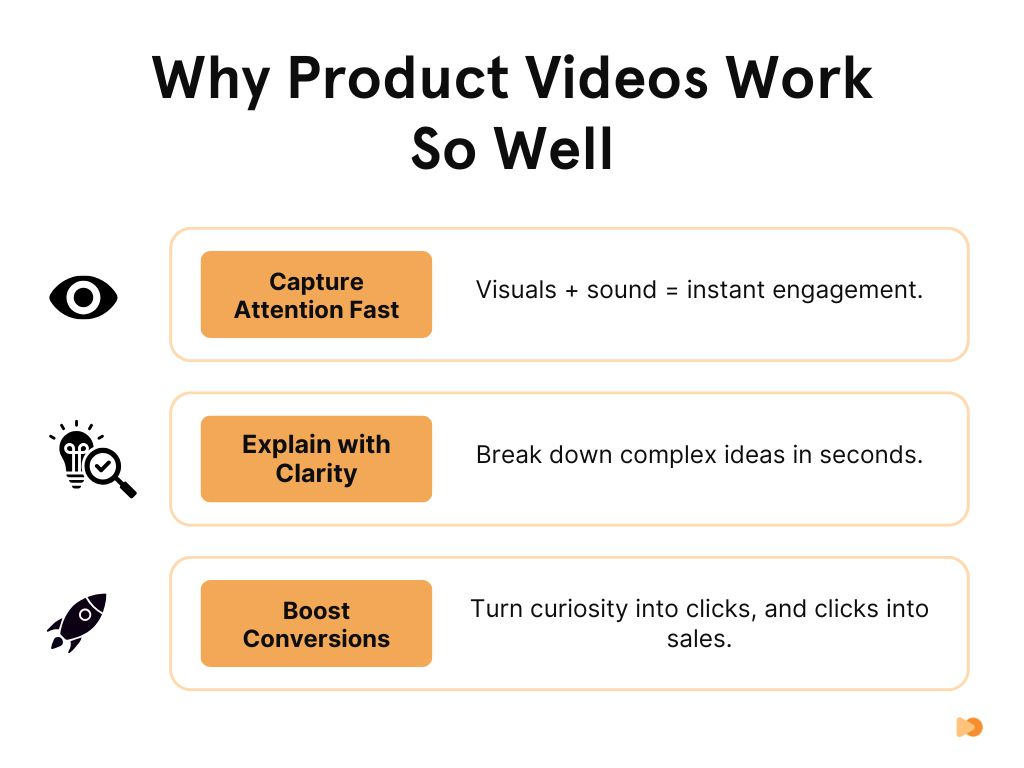
Product advertising delivers measurable business outcomes when executed well. Here are the six primary benefits.
- Increased brand visibility. Consistent product advertising keeps your brand in front of buyers at every stage of the purchase journey. Global ad spend is crossing $1 trillion in 2026 because businesses see the direct connection between visibility and revenue.
- Precise audience targeting. Digital and social platforms let you target ads by demographics, interests, behavior, and intent signals. You reach the people most likely to buy, not just the most people.
- Product education at scale. Ads explain what your product does, who it helps, and why it matters to thousands or millions of people simultaneously. This is especially critical for complex or new products.
- Emotional connection. Strong creative builds feelings around your product that rational features alone cannot. Testimonial-driven ads and storytelling create trust that lowers resistance to purchase.
- Measurable ROI. Digital product advertising provides real-time data on impressions, clicks, conversions, and cost-per-acquisition. You can calculate exact return on every dollar spent.
- Competitive differentiation. In crowded markets, product advertising is how you claim a position. Without it, even superior products get lost behind competitors with louder messaging.
Curious what your next product video would cost? Get a free estimate with our Creative Intelligence Report.
How to Create an Effective Product Ad
Follow these six steps to build a product advertisement that converts.
1. Define your audience with precision. Start with your actual customer data, not assumptions. Pull demographics, purchase behavior, and pain points from your CRM and analytics. The more specific your audience definition, the sharper your message. “Marketing managers at SaaS companies with 50-200 employees” is useful. “Business professionals” is not.
2. Lead with a single, clear USP. One ad, one message. Pick the strongest reason your target audience should choose your product and build everything around that claim. Trying to communicate five benefits in 30 seconds communicates none of them.
3. Choose the right format for the platform. Video advertising outperforms static across most channels, with 48.6% of marketers ranking short-form video as the highest-ROI format. But format must match platform. Vertical video for TikTok and Reels. Widescreen for YouTube and connected TV. Carousel for LinkedIn.
4. Open with the hook, not the logo. You have 1-3 seconds to stop the scroll. Lead with the problem your audience feels, a surprising stat, or a visual that demands attention. Save branding for after you have earned their attention.
5. End with a specific, low-friction CTA. Tell viewers exactly what to do next. “Start your free trial” beats “Visit our website.” Reduce the steps between interest and action. Every extra click loses a percentage of your audience.
6. Build a system, not a single ad. Create a reusable asset bank from every production. One shoot should generate 10+ ad variations across formats, lengths, and platforms. This systematic approach compounds your investment and lets you test at scale.
Why Work With Vidico
“Video has everything: visuals, sound, story. It’s why video is such a powerful medium. But it also takes everything to make it. Every frame needs attention, every detail matters, and every role, from the director to the sound engineer, plays a part. Even the biggest companies sometimes struggle to get it right. Not because they lack creativity, but because video demands a deep mix of specialisation and collaboration, often across different markets and different tastes. That’s why, even for the brands with strong creative teams, video is a challenge. And it’s why having the right people, the right infrastructure, and the right understanding of every nuance is key.“
>
– Evan Pirone, CoFounder @ Vidico
Vidico is a B2B explainer video production company that has delivered 2,000+ campaigns for 920+ clients, generating over 1.5 billion views. Our client list includes TikTok, Square, Spotify, NinjaOne, and Temple & Webster.
We operate on a subscription model that gives you ongoing access to video production without the overhead of one-off project pricing. Our reusable template systems let you scale creative output across campaigns without starting from scratch each time.
Transparency is built into how we work. Our VidiFit Quiz gives you a free, clear cost estimate in under two minutes, with no hidden fees.
Ready to start? Book a strategy session and see how systematic video production can drive your next product advertising campaign.
FAQs
What is an example of a product advertisement?
A product advertisement is any paid promotion for a specific product. Glossier’s minimalist cosmetics video is one example. It uses smooth product transitions, text overlays, and clean visuals to showcase its beauty line without voiceover. Nike’s Air Max 2017 ad is another. It communicates the shoe’s lightweight design through floating particle visuals and zero dialogue.
What are the 7 types of advertisements?
The seven primary types are: comparative (direct competitor comparison), competitive (positioning as superior without naming rivals), pioneering (introducing new products), digital (display, pre-roll, programmatic), social media (paid placements on platforms), UGC-style (organic-looking content), and traditional broadcast (TV, radio, print, outdoor). Most effective campaigns combine multiple types across the buyer journey.
How do I advertise my product?
Start by defining your target audience using real customer data. Pick one clear USP your audience cares about. Choose the format and platform where your buyers spend time. Create the ad with a strong hook in the first 1-3 seconds and a specific CTA at the end. Launch, measure performance, and iterate based on data. Build a reusable asset bank so every production generates multiple ad variations.
What is the difference between product advertising and brand advertising?
Product advertising promotes a specific product and drives a direct action like a purchase or sign-up. Brand advertising builds long-term awareness, emotional connection, and identity for the company as a whole. Brand marketing focuses on values and perception. Product advertising focuses on features, benefits, and conversion. Most companies need both, but they serve different goals and are measured differently.
The Bottom Line
The best product advertisements share one trait: they lead with the product’s value, not the brand’s ego. Every example in this list succeeds because it matches the right format to the right audience on the right platform. Whether that means a zero-dialogue Nike spot, a UGC-style Glossier reel, or a genre-bending AT&T horror trailer, the creative serves the product story first.
Vidico is a B2B explainer video production company that has delivered 2,000+ campaigns for brands including TikTok, Square, and Spotify. Our systematic production model turns a single shoot into 10+ ad variations across formats and platforms.
Ready to build your next product ad? Take our VidiFit Quiz for a free cost estimate in under two minutes.