Most software solutions fail to convert interest into sales because their product demos focus on listing features instead of solving real problems. Your demo videos need to show how the product works in real life—not just what it does.
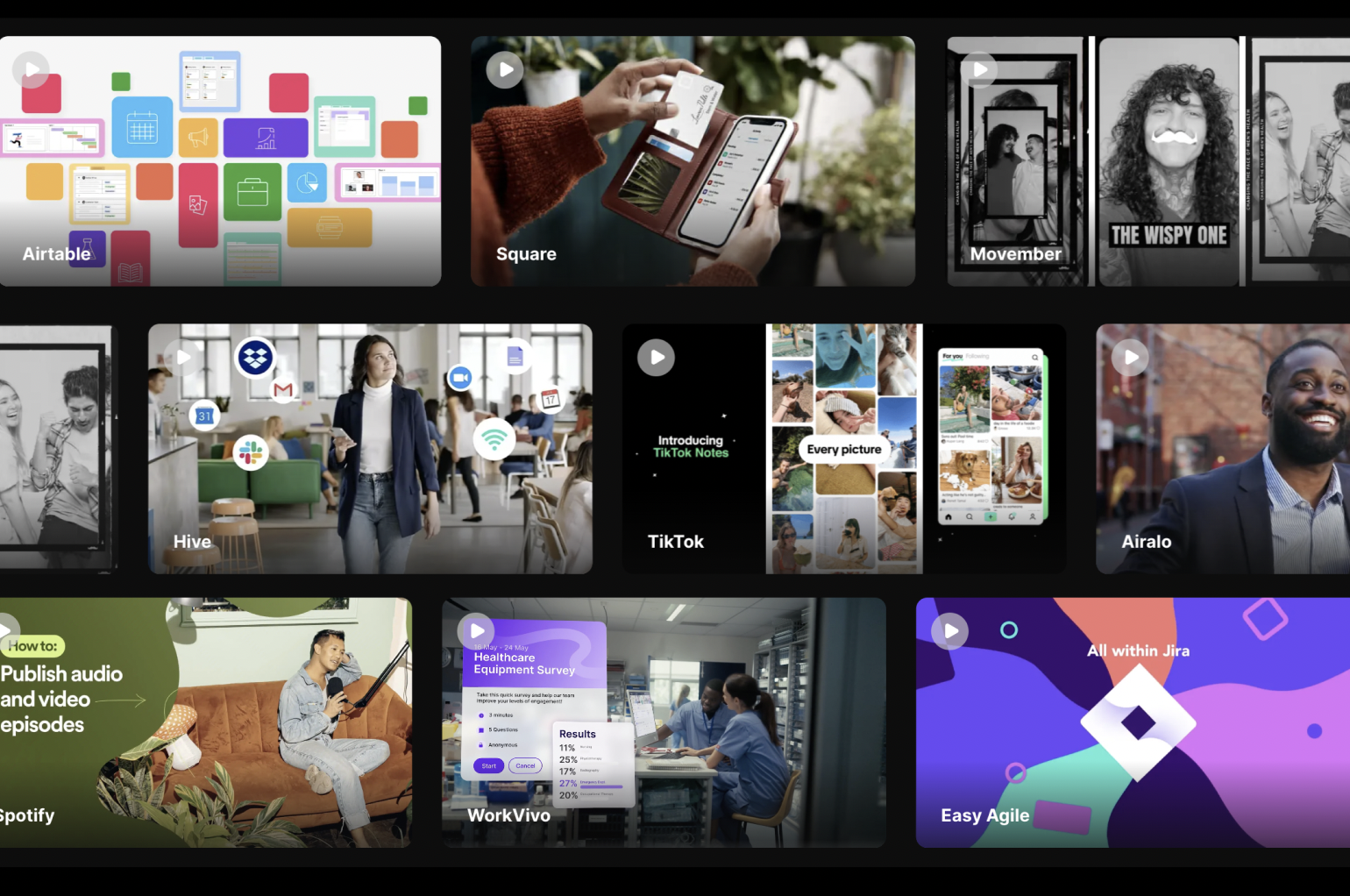
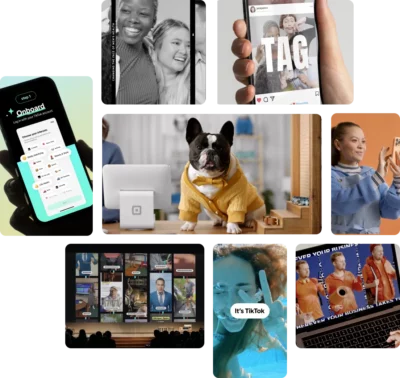
At Vidico, we’ve produced demo videos for TikTok, Square, Spotify, and 600+ product launches—generating 1.4 billion views across 1,200+ projects. We know what separates product demo videos that convert from those that get skipped. Here are examples that actually work, plus the exact strategies we use to create effective product demo videos at scale.
Key Takeaways
- 82% of video marketers report positive ROI from video content, with product demos ranking among the highest-converting formats
- Shoppers who view demo videos are 1.81x more likely to purchase than those who only see product photos or text descriptions
- Professional product demo videos cost $1,500–$7,000, depending on complexity, with animated product demo video production averaging $2,000–$3,000
- 71% of marketers say 30 seconds to 2 minutes is the optimal demo length—short enough to maintain viewer engagement, long enough to demonstrate value
- Vidico’s TikTok campaign achieved 400% creative output increase while reducing production costs by 40% through systematic asset bank methodology
- Interactive demos can reduce sales cycles by up to 30%—Gartner ranks them as the most useful website resource for 30% of SaaS buyers
- 39% of video marketers create product demos, making them the 7th most popular video type after social media videos (69%) and explainer videos (68%)
- The biggest mistake in demo content: feature overload without connecting to customer pain points or showing real-world scenarios
Content
Top 10 Examples for Product Demo Videos
1. Vidico x Repose
Repose needed a demo video that could explain their workforce management platform without overwhelming users with technical details. We created a systematic product demo using clean graphics and strategic pacing.
Why It Works:
This video demo shows how Repose simplifies complex scheduling workflows through clear visual storytelling. Instead of walking through every feature, we built a narrative demonstrating how the software solutions actually help real users.
The engaging visuals use our systematic asset bank approach—each graphic element was designed to be reusable for future product videos. This gives Repose the ability to create demo videos for new features without having to start from scratch each time.
We focused on showing rather than telling. The video shows actual product interfaces with overlays that guide viewers through key features, eliminating the need for narration for every action. Background audio keeps energy up while the visuals do the heavy lifting.
Key Elements:
- Real-life scenarios showing product benefits
- Clean interface demonstrations that don’t overwhelm
- Systematic production enabling ongoing product video creation
- Clear connection between features and business value
2. Vidico x Groundswell
Groundswell needed animated demo videos that could explain their charitable giving platform without boring viewers with technical specifications. We created engaging content that brings their value proposition to life.
Why It Works:
This product demo video uses animation to simplify complex financial workflows. The graphics make abstract concepts concrete, helping viewers understand how Groundswell’s platform works without getting lost in details.
We built this using modular animation templates that Groundswell can adapt for different audience segments. Sales teams use shorter versions for quick pitches. Marketing teams use extended cuts on the website. The systematic approach means one production effort serves multiple purposes.
The simple script focuses on outcomes—how companies build culture through giving—rather than drowning viewers in feature specifications. We show a diverse range of real-life use cases that potential customers can immediately relate to.
Key Elements:
- Animation simplifying complex financial concepts
- Modular demo structure for various formats
- Focus on outcomes over features
- Reusable visual system for future product videos
3. Vidico x Mavenoid
Mavenoid needed a demo video showcasing their AI-powered product support platform. We created a product demonstration that shows exactly how their solution transforms customer support.
Why It Works:
This video demo succeeds by demonstrating real customer support scenarios. We demonstrate the product’s features using real support tickets, making the value clear to viewers immediately.
The systematic production approach we used creates frameworks that Mavenoid can replicate for new product launches or feature updates. Each demo segment works independently or as part of the complete video series.
We kept the simple language throughout, avoiding technical jargon that would alienate viewers who aren’t support specialists. The focus stays on solving problems—reducing support costs, improving response times, and creating better customer experiences.
Key Elements:
- Real support scenarios demonstrating product value
- Clear before/after transformations
- Simple language accessible to all viewers
- Systematic frameworks for ongoing demo videos
4. Vidico x Nutrislice
Nutrislice needed app demo videos showing how their nutrition platform works across mobile apps and web interfaces. We created content demonstrating the seamless experience.
Why It Works:
This product video works because it shows the app works in real-life situations—parents checking school lunch menus, students finding nutrition info, and administrators managing menus. The demonstrations make it easy for potential customers to envision using Nutrislice themselves.
We built systematic templates for demonstrating mobile app interfaces that Nutrislice uses to create demo videos for new features without full production cycles. The modular approach means they can update specific sections as their app evolves.
The video shows key features without overwhelming viewers. We strategically highlight what matters most—easy menu access, nutrition transparency, and simple administration—while keeping technical details to a minimum.
Key Elements:
- Mobile app demonstration across devices
- Real-life use cases for different user types
- Modular templates enabling efficient updates
- Focus on user experience over technical specs
Download our 10x Creative Production Checklist to identify opportunities for creating content more efficiently across your product demos.
5. SurveyMonkey
SurveyMonkey’s product demo videos take a unique approach—they let you experience their platform by actually taking a survey that demonstrates their features as you use them.
Why It Works: This interactive demo lets viewers become users immediately. You don’t just watch someone explain features—you experience them. This hands-on approach makes the product’s value instantly clear while keeping viewers engaged throughout. The demonstration proves that product demos don’t always need a traditional video format to be effective.
6. Grammarly
Grammarly’s demo video uses relatable workplace scenarios to show how their writing assistant solves real communication problems. The engaging visuals and fun storytelling make technical features approachable.
Why It Works: This product video succeeds by showing the product benefits through a story rather than a feature list. We see actual workplace miscommunication getting resolved through Grammarly’s suggestions. The humor keeps the audience engaged while clear demonstrations show exactly how the product works. It’s a great demo that proves software demonstrations don’t have to be dry.
7. Office 365
Office 365’s demo video creates a character educators can relate to, then shows how the software solutions address specific teaching challenges. The simple script and colorful animations make complex features accessible.
Why It Works: This demonstration video works because it starts with pain points the target audience actually experiences—tight budgets, overwhelming tasks, large class sizes. Then it shows how Office 365 features solve each problem. The educational approach builds trust while the engaging visuals maintain interest throughout.
See how we implemented systematic frameworks for TikTok, delivering 40 assets in 9 days using our production approach.
8. Notion
Notion’s product demo video provides an exhaustive look at their workspace platform, demonstrating how various features work together. The video shows real-life scenarios across different use cases.
Why It Works: This demo video shows that comprehensive walkthroughs can be effective when executed well. Notion demonstrates nearly all key features while maintaining viewer engagement through clear demonstrations and relatable scenarios. The video helps potential customers make informed decisions by showing exactly what they’ll get.
9. Wix
Wix’s product demonstration blends style with substance, using high-quality visuals and energetic pacing to showcase their website builder. The demo videos prove that software demos can feel premium.
Why It Works: This video demo works because it makes website creation look exciting and accessible. The engaging visuals demonstrate features clearly while maintaining high energy that keeps viewers watching. Wix shows that good product demo video content can be both informative and entertaining.
10. Ring
Ring’s demo videos focus almost entirely on visual demonstration, showing their doorbell camera in various real-life use cases. The video shows the product benefits without excessive narration.
Why It Works: This demonstration proves that sometimes showing is better than telling. Ring demonstrates its product’s features through scenarios every homeowner can relate to—package deliveries, unexpected visitors, and security concerns. The simple language and clear visuals make the product value immediately obvious to viewers.
What’s A Product Demo & How Does It Work?
A product demo is a video that shows how your product works and why it matters to your target audience. Unlike promotional content, demo videos educate viewers by demonstrating actual product use across the customer journey.
Product demonstration videos help new customers understand what your product does, assist existing users in discovering features, and support sales teams by answering common questions before prospects ask.
The best product demo videos focus on solutions rather than specifications. Great demo videos show how features solve real problems, helping potential customers envision themselves using your product.
Demo Video Formats:
Live-Action Product Demos use real people demonstrating products or showing software in actual work environments. These create authentic connections and work well for products with tangible benefits.
Animated Demo Videos excel at explaining abstract concepts or visualizing data flows. Animation makes complex software solutions understandable through graphics and simple language.
Screen Recording Demos capture your software interface directly, walking viewers through actual use. These app demo videos work well for mobile apps and web platforms.
Interactive Demo experiences let viewers explore products themselves through guided tours. This hands-on approach converts interest into understanding faster than passive viewing.
Systematic production makes creating demo videos efficient. By building templates for common structures, leading companies produce product videos faster without sacrificing quality.
What Makes A Good Product Demo?
Creating content that converts requires understanding what works. After producing 1,200+ projects for tech companies, here’s what makes a good product demo video.
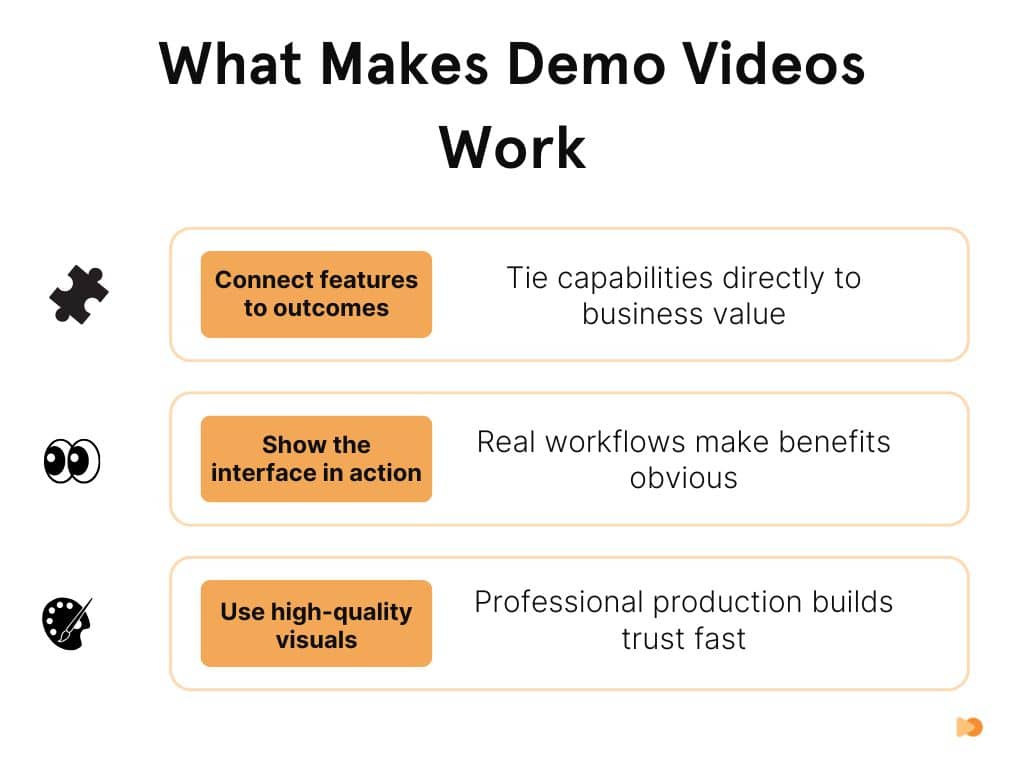
Clear Focus on Solving Problems: The most popular ones among product demo videos start with problems, not features. Show how your product works in real-life scenarios. Good product demo video content demonstrates solutions to actual pain points.
Simple Language and Clear Structure: Great demo videos avoid jargon. Use simple language anyone in your target audience can understand. Start with what the product does and why it matters. Then demonstrate key features in logical order. End with clear next steps.
Appropriate Length and Pacing: The best product demo videos respect viewers’ time. Most demos should run 60-90 seconds for social platforms or 2-3 minutes for website use. Pacing keeps viewers engaged—vary between quick demonstrations and slightly longer explanations of complex capabilities.
Want to see more of our work? Explore our portfolio featuring projects for leading tech brands.
Professional Quality That Builds Trust: Good product demo video production signals legitimacy. You don’t need Hollywood budgets, but you do need professional-quality visuals, clear audio, and smooth editing. Engaging visuals make technical content approachable.
Systematic Approach for Scale: Leading companies use systematic approaches—build templates for recurring demo structures, create libraries of reusable graphics, and develop modular segments. This transforms video production from expensive one-offs into efficient operations.
Focus on Benefits, Not Just Features: Every feature should connect clearly to business value. “This automation saves 10 hours per week” resonates more than “This feature automates workflows.” Features and benefits need equal attention.
Real-Life Use Cases: The best product demo videos showcase real use cases in realistic environments. Show your product solving problems people actually have, in settings that look like where they work.
Clear Calls to Action: Every demo video needs a clear next step. Make the action obvious and easy to complete. Place your call to action strategically at the end or midway through the video for longer demonstrations.
Schedule a free strategy session to explore how systematic demo video production can work for your product.
How Much Do Professional Product Demo Videos Cost?
Understanding demo video costs helps you budget appropriately and avoid surprises. Here’s what to expect based on Advids’ 2025 survey of 80 clients and 12 agencies:
Production Cost by Demo Type
| Demo Style | Price Range | Timeline | Best For |
|---|---|---|---|
| Screen recordings with basic editing | $500–$2,000 | 1–2 weeks | Software walkthroughs, tutorials |
| Motion graphics product demo | $1,500–$3,500 | 2–3 weeks | SaaS product demo video, UI/UX showcase |
| Animated product demo video | $2,000–$7,000 | 2–4 weeks | Complex concepts, explainer-style demos |
| Live footage with professional production quality | $5,000–$20,000 | 3–6 weeks | Physical products, brand campaigns |
| Enterprise/hybrid productions | $20,000–$50,000+ | 4–8 weeks | Product launches, high-quality visuals |
Hidden Costs to Budget For
Many brands underestimate true demo video costs. Here are expenses that can add 40-70% to your initial quote:
| Hidden Cost | Typical Range | Impact |
|---|---|---|
| Extra revision rounds (beyond 2-3) | $400–$1,000 per round | 15-30% increase |
| Music licensing (extended rights) | $500–$1,500+ | 5-15% increase |
| Voiceover artist talent | $300–$1,000 per minute | 10-20% increase |
| Platform re-cuts (aspect ratios) | $200–$500 per version | 10-25% increase |
| Script development | $500–$2,000 | 10-20% increase |
| Annual updates | 30-50% of the original cost | Ongoing expense |
Key insight: About 70% of the production budget goes to invisible work (pre-production and post-production) while only 30% goes to the actual shoot day or screen recordings.
Budget by Company Stage
| Company Type | Typical Budget | Recommended Approach |
|---|---|---|
| Early-stage startups | Under $2,000/video | DIY with tools or freelancers |
| Growing companies | $2,000–$7,000/video | Agency partnership for key demos |
| Mid-market | $5,000–$15,000/video | Systematic production with asset banks |
| Enterprise | $15,000–$50,000+/video | Full-service creative partnership |
Why Work With Vidico
We’ve produced product demo videos for TikTok, Square, Spotify, and 20+ tech unicorns. Work with Vidico because we’ve developed a systematic approach to creative production that delivers demo content traditional agencies can’t match.
Our Systems-Based Production: Traditional agencies treat each demo as a separate project. We build creative systems that maximize output without proportional increases in resources. Our asset bank methodology means every product demo generates reusable elements for future videos. When you need demo videos for new features, we adapt existing templates.
Proven Results: We’ve delivered 1,200+ projects, generating 1.4 billion views, and helped launch 600+ products. TikTok got 40 creative assets in 9 days. Square achieved demo content, converting 43% better. Multiple clients achieved 4x ROI through our systems. View our complete case studies.
End-to-End Production: We provide complete creative production for product demos—script writing, storyboarding, animation, live-action filming, and post-production. This delivers consistent product videos across channels, efficient workflows, and strategic content serving your sales funnel.
Subscription-Based Efficiency: Our subscription model delivers predictable demo video output at predictable costs. You get ongoing access to specialized creative talent, flexible production that adapts to product launches, and systematic workflows that become more efficient over time.
Built for Tech Companies: We understand how fast tech products evolve. Our systematic demo video production provides rapid response for launch deadlines, scalable production for multiple products, and systems that evolve as your products grow.
Book a free strategy session to explore how systematic production can transform your product demos.
Common Mistakes to Avoid in Product Demo Videos
Even great product demo video examples can teach us what not to do. Based on our experience producing 1,200+ projects and research across the industry, here are the mistakes that kill demo performance:
1. Feature Overload
The mistake: Cramming every product feature into one demo without connecting them to customer pain points.
The fix: Focus on 3-5 key features that solve your target audience’s biggest problems. Create separate demo videos for different features or audience segments rather than one overwhelming video.
2. Slow or Generic Starts
The mistake: Opening with company history, logos, or generic statements instead of immediately addressing problems.
The fix: Hook viewers in the first 5-7 seconds with a problem they recognize. Over 50% of viewers decide within 10 seconds whether to continue watching.
3. No Clear Call to Action
The mistake: Ending demo content without telling viewers what to do next.
The fix: Every product demo video needs a compelling call to action—whether that’s starting a free trial, booking a demo call, or exploring specific features. Make it specific: “Start your 14-day free trial” beats “Learn more.”
4. Ignoring Mobile Optimization
The mistake: Creating demos optimized only for desktop viewing when most video consumption happens on mobile devices.
The fix: Test your demo videos on mobile screens. Ensure text overlays are readable, key features are visible, and the call to action is tappable.
5. No Platform Optimization
The mistake: Using the same demo video across LinkedIn, YouTube, TikTok, and your website without adapting for each platform.
The fix: Create multiple versions optimized for each channel. Social media videos need faster pacing and captions. Website demos can be more detailed. The sales team might need versions they can pause and discuss.
6. Overlooking User Engagement Metrics
The mistake: Creating demo videos without a plan to measure what’s working.
The fix: Track view-through rates, click-through rates, and demo-to-trial conversions. A/B test different approaches. Use data to improve future demos.
Ready to level up your creative strategy? Join our On-Demand Masterclass on How to Scale B2B Creative
How to Create Product Demo Videos That Convert
Whether you create interactive demos or traditional video content, these principles apply to effective product demo videos:
Start With Customer Pain Points
Before showing a single feature, acknowledge the problem your target audience faces. The best demo videos open with scenarios viewers immediately recognize—then position your product as the solution.
Show Real World Scenarios
Don’t just demonstrate features in isolation. Show your product solving real problems in realistic contexts. If you’re selling project management software, show a stressed team missing deadlines, then show how your product prevents that chaos.
Keep It Focused
Resist the urge to show everything. Great product demo videos prioritize the features that matter most to your specific audience. Create separate demos for different features or customer segments.
Optimize for Platform
| Platform | Optimal Length | Key Considerations |
|---|---|---|
| Website homepage | 60–90 seconds | High-quality visuals, broad value proposition |
| Product pages | 2–3 minutes | Deep understanding of specific features |
| Social media | 30–60 seconds | Hook within 3 seconds, captions required |
| Sales enablement | 3–5 minutes | Pausable sections, detailed demo content |
| Email campaigns | Under 60 seconds | Thumbnail appeal, clear call to action |
Include Interactive Elements Where Possible
Interactive product demos and interactive demos allow potential customers to explore at their own pace. According to Gartner, 30% of SaaS buyers rank interactive demos as the most useful website resource—higher than product briefs, case studies, or diagnostic tools.
Build for Systematic Production
The smartest approach to demo videos isn’t creating one-off productions. It’s building reusable systems. When we worked with TikTok, we created asset banks that let them produce demo content 400% faster while reducing costs by 40%.
FAQs
What is an example of a product demonstration?
A product demonstration is any video, live presentation, or interactive experience showing how a product works. Examples include software walkthroughs showing features in action, physical product demos demonstrating use in real-life situations, or interactive tours letting potential customers explore products themselves. The best product demo video examples combine visual demonstrations with clear explanations of product benefits.
What is the best intro for a demo?
The best intro for a demo starts with the problem your product solves, not your company history or product features. Open with a scenario your target audience immediately recognizes—their pain point. Then introduce your product as the solution. This problem-solution structure hooks viewers instantly and gives them reason to keep watching. Keep intros under 15 seconds before showing your product in action.
How long should product demo videos be?
Most product demo videos should run 60-90 seconds for social media, 2-3 minutes for website use, or up to 5 minutes for complex software requiring detailed demonstrations. The key isn’t hitting a specific duration—it’s delivering value throughout. Every second should show product features, demonstrate benefits, or guide viewers toward action. Test various lengths to find what works for your specific target audience.
Should product demos show every feature?
No. Great demo videos focus on key features delivering the most value to your target audience. Showing everything overwhelms viewers and dilutes your message. Identify the 3-5 capabilities that matter most to potential customers and demonstrate those thoroughly. You can create additional demo videos covering advanced features for users ready to dive deeper.
What’s better: animated or live-action product demos?
Neither is universally better—it depends on what you’re demonstrating. Live-action product demos work well for physical products or software where seeing real people use it builds trust. Animated demo videos excel at explaining abstract concepts, visualizing data flows, or showing things difficult to film. Many great demo videos combine both, using animation for complex explanations and live-action for relatable scenarios.
How much do professional product demo videos cost?
Traditional agency product demo videos cost $5,000-$50,000+ per video, depending on complexity. This project-based pricing makes scaling demo video production expensive. Systematic production through subscription models offers cost-effective alternatives. At Vidico, our subscription approach provides ongoing demo video creation at predictable monthly costs, with efficiency gains compounding as we build your asset library.
How do you measure product demo video success?
Track metrics aligned with your goals. For awareness, measure views and watch time. For consideration, track engagement and shares. For conversion, measure click-through rates on calls to action, demo requests, or trial signups. The best measurement combines quantitative metrics with qualitative feedback—do viewers understand your product better after watching? Can sales teams use demos to accelerate deals?
Can we reuse product demo videos as products evolve?
Absolutely—if you build them systematically. Create modular demo structures where individual segments can be updated independently. Build reusable graphics and animations that work across product versions. Design templates supporting multiple products. This systematic approach lets you update specific sections as features change without complete reproductions, making demo videos that stay current efficiently.
In Conclusion
The best product demo videos don’t just show features—they demonstrate how your product solves real problems for your target audience. Whether you need a SaaS product demo video, an animated product demo video, or a comprehensive video series for your sales team, the approach matters as much as the execution.
At Vidico, we’ve produced demo videos for 600+ product launches, helping brands like TikTok, Square, and Spotify create demo content that converts. Our systematic approach means you get professional production quality plus a reusable video production system that scales with your needs.
Book a free strategy session to discuss your demo video needs. We’ll map out exactly how systematic production can help you create effective product demo videos that turn viewers into customers.
References:
- https://finance.yahoo.com/news/video-production-company-vidico-launch-130000641.html
- https://business.google.com/us/think/future-of-marketing/beat-the-attention-recession/
- https://www.hubspot.com/marketing-statistics