
One-third of content marketers doubled their output last year. Over a third sacrificed creativity to keep up. That’s the tension at the heart of technology content marketing — more content, less impact.
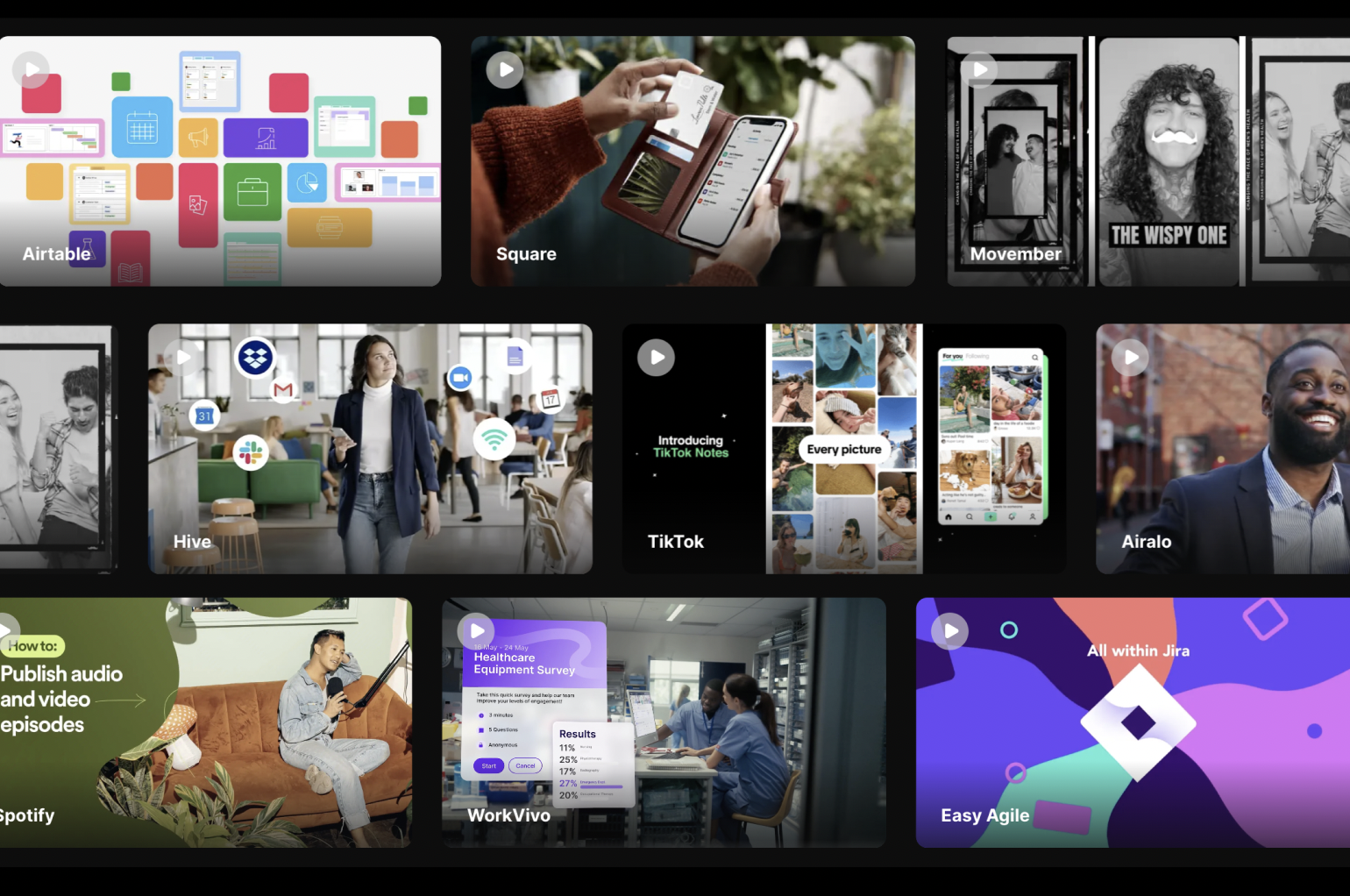
At Vidico, we’ve spent 2,000+ campaigns and 1.5 billion views learning what actually works for tech brands like TikTok, Square, Spotify, and Airtable. The pattern is clear: the companies winning at content marketing aren’t just publishing more. They’re building creative systems that compound in value over time. This guide breaks down exactly how to do that — from choosing the right content formats to scaling production without burning out your team.
Key Takeaways
- Start with bottom-of-funnel content first. Case studies, comparison pages, and product-led content generate leads faster than top-of-funnel blog posts. Build your sales funnel from the bottom up.
- Companies using video grow revenue 49% faster. Tech buyers prefer visual content — 96% have watched an explainer video to learn about a product. Lead with video, then repurpose into blog posts and social media posts.
- Systems beat campaigns every time. One well-built content engine can turn a single digital asset into 40+ variations across content formats. That’s how technology companies scale without doubling headcount.
- AI search is reshaping content distribution. 58% of marketers say AI referral traffic has much higher purchase intent. Your content strategy needs to optimize for both search engines and AI engines in 2026.
Content
What Is Content Marketing for Tech Companies?

Technology content marketing is the practice of creating and distributing relevant content to attract, educate, and convert business buyers. For tech companies, tech content marketing covers everything from blog posts and guides to video content, case study videos, and thought leadership.
What makes content marketing for tech companies different from traditional marketing?
- You’re selling to buying committees, not individuals. A typical B2B tech purchase involves six to ten stakeholders — a champion who cares about business value, a CTO evaluating technical content, a finance lead monitoring costs, and end users who care about the experience. Your content marketing strategy needs to create content for all of them.
- The customer journey is long and nonlinear. Buyers consume multiple pieces of content before they talk to your sales team. CMI’s 2026 research found that 87% of B2B content marketers say content marketing created brand awareness in the last 12 months. But awareness is just the start. Your content strategy needs targeted content at every stage of the funnel.
- Your target audience expects deep expertise. Tech content marketing can’t rely on surface-level thought leadership. Tech marketers and industry experts alike spot generic content immediately. They want specific data, real-world examples, and actionable frameworks they can apply to their own business goals.

Why Technology Content Marketing Matters More in 2026
The data makes the case clearly. Content marketing costs 62% less than traditional marketing and generates 3x more leads (Demand Metric). Search engine optimization alone generates a 748% ROI for B2B organizations — the highest of any digital channel, according to industry benchmarks.
But the tech industry landscape is shifting fast. Organic search clicks dropped from 44.2% to 40.3% year-over-year in the US (SparkToro/Datos, 2025). At the same time, 58% of marketers say traffic from AI search has much higher purchase intent (HubSpot, 2026).
That means your marketing strategy needs two tracks: traditional search engine optimization for the clicks that still come through Google, and content syndication to AI engines like ChatGPT, Perplexity, and Google’s AI Overviews. We’ll cover both.
The good news? Technology marketers are already ahead.
The Content Marketing Institute’s 2026 research shows that 66% of tech marketers rate their technology content marketing as effective, compared with 59% of all B2B content marketers. That edge comes from stronger sales team alignment, better data governance, and more mature marketing automation.
Want to see how your creative production stacks up against 200+ SaaS marketers? Download the State of Creative in Tech Report for the latest benchmarks on content output, budget allocation, and production models.
2 Content Formats That Drive Results for Tech Companies
1. Video Content: The Highest-ROI Format
Short-form video is now the #1 ROI-driving content format, with 104% more marketers naming it their most valuable channel compared to 2024 (HubSpot, 2026). And 96% of people have watched an explainer video to learn about a product or service.
Video isn’t dessert anymore. It’s the main course of any serious content marketing strategy. At Vidico, we’ve produced 2,000+ campaigns generating over 1.5 billion views for tech brands including TikTok, Spotify, and Airtable. The approach: build reusable video systems — what we call Content Engines — so one shoot turns into dozens of digital assets across channels.
For example, our work with TikTok produced a 400% increase in content output and 1M+ organic views within five days. That’s not from producing more one-off videos. It’s from building a Motion System and Design System that compound in value over time.
Types of video content that generate more leads for tech companies:
- Explainer videos — Break down complex data and product features for non-technical stakeholders
- Case study videos — Client testimonials and success stories with real performance metrics
- Product demos — Software walkthroughs that shorten your sales team’s cycle
- Social media video — Short-form clips repurposed from longer shoots for content syndication across platforms
TikTok increased creative output by 400% using our video system → See our work
2. Blog Posts and Thought Leadership
Writing blog posts still works — they ranked among the top five highest-ROI formats in 2026 (HubSpot). But the bar for thought leadership content keeps rising. Generic listicles won’t cut it for people with deep expertise in the tech industry.
Effective thought leadership articles share three traits: they’re built on proprietary data, they answer a specific question your target audience is asking, and they demonstrate your brand voice rather than reading like every other AI-generated post.
Industry research confirms this shift. 86% of marketers plan to increase their proprietary research budgets in 2026. Those publishing original data report 64% higher conversion rates and 61% stronger organic traffic. If your content creation isn’t backed by your own data, you’re competing with thousands of companies saying the same thing.
Other High-Impact Formats
- How-to guides — Address the specific problems your target audience faces. These drive traffic and establish thought leadership over time.
- Case studies and customer testimonials — Bottom-of-funnel content that converts. Include real metrics — not vague success stories, but specific results. Our work with Square produced 200+ assets per month and a 43% conversion lift across 200+ markets.
- Visual content (infographics, data visualizations) — Ideal for explaining complex data and industry trends to non-technical stakeholders.
- Social media posts — LinkedIn remains where 4 out of 5 B2B leads originate from social media. Repurpose your existing content into social-ready formats to generate more leads.
- Press releases and content syndication — Distribute your own content through industry publications to amplify reach beyond your owned channels.
Subscribe to the Video for Growth Newsletter for weekly tips and insights.
Building a Content Marketing Strategy: The BOFU-First Framework
A smarter approach: build your content marketing strategy from the bottom of the funnel up.
- Bottom-funnel content first (months 1–3): Create content for people already looking for tech solutions like yours — comparison pages, use case pages, case studies, and product-led how to guides. This is where lead generation happens fastest.
- Mid-funnel content next (months 3–6): Build out educational content, thought leadership, webinars, and industry expert roundups. This content nurtures leads already in your pipeline and positions you as an authority.
- Top-funnel content last (months 6+): Expand into broader industry trends, leadership content, and brand awareness plays. By this point, your bottom-funnel content is already generating leads and revenue to justify the investment.
Budget Allocation by Growth Stage
Your marketing budget should match your stage:
| Stage | Organic Channels | Paid Ads | Experimental |
|---|---|---|---|
| Early (<$1M ARR) | 60–70% | 20–30% | 10–20% |
| Growth ($1M–$10M ARR) | 40–50% | 30–40% | 10–20% |
| Scale ($10M+ ARR) | 30–40% | 40–50% | 10–20% |
The pattern: early-stage tech companies and SaaS companies should invest heavily in content creation and search engine optimization. As you scale, shift your marketing strategy toward paid amplification and marketing automation. At every stage, content marketing compounds — blog posts and videos keep working long after publication, unlike paid channels that stop when your budget runs out.
Why More Content Doesn’t Mean Better Content
Here’s where most technology marketing breaks down: the operations layer.
A 2025 Adobe study found that only 43% of content teams have standardized, automated workflows. The rest deal with manual processes, inconsistent tools, and fragmented production — even as their output volume doubles.
This is the create content paradox. AI tools help teams produce 75% more content per week (Adobe, 2025). But if nobody can find the right digital assets, if other team members don’t know which version is current, or if every project starts from scratch, you’re just creating more chaos.
Three options exist for scaling content production:
- Hire in-house. Full control over brand voice, but expensive and slow — one or two people can’t cover video, design, written content, and social media.
- Freelancers. Flexible but inconsistent in quality, with no strategic alignment. You lose time managing and briefing each new freelancer.
- Subscription-based creative partnerships. A team of 40+ specialists across disciplines plugs into your marketing operations on a monthly retainer. Your marketing budget rolls over. Every project builds on the last.
This is the model we use at Vidico. With our Creative Services Plans, tech companies get access to everything from explainer video production to ad creative and social media creative under one subscription. The result: creative that compounds in value, not one-off assets that collect dust.
See this in action. Our Scaling B2B Creative Masterclass breaks down how brands like TikTok and Square built Content Engines that turned single campaigns into 40+ variations across markets and channels.
Optimizing Content for AI Search and Traditional SEO

Your content marketing strategy in demands a dual-track approach.
- For traditional search engines: Focus on search engine optimization fundamentals. Build topical authority by going deep on a narrow set of topics rather than broad coverage of everything. Technical SEO still matters — site speed, structured data, internal linking. And 83% of B2B content still focuses on brand awareness, so there’s room to differentiate with conversion-focused, relevant content.
- For AI search and content syndication to LLMs: Structure your tech content so AI can parse and cite it. Use clear headings, direct answers to questions, and factual claims backed by data. Establish your brand as an authoritative source in industry-specific communities — Reddit threads, technical forums, and niche publications. AI models increasingly use these discussions as training signals. Being helpful in communities where your tech buyers already spend time builds visibility in ways that traditional SEO alone can’t achieve.
The marketers who treat this as an either/or decision will fall behind. Those who build content that satisfies both search and AI engines will capture more leads from a shrinking pool of organic clicks.
Not sure where your content stands with AI search? Vidico’s Creative Intelligence Report includes a competitive creative audit — see how your technology content stacks up and where the gaps are.
Measuring Content Marketing ROI
The uncomfortable truth: 56% of B2B content marketers struggle to connect content to revenue (CMI). And 47% don’t measure ROI at all.
Here’s a practical framework:
- Track these performance metrics at a minimum: Organic traffic by content piece, lead generation volume (form fills, demo requests), lead-to-customer conversion rate, and customer acquisition cost from content channels. Tie content touches to closed deals using multi-touch attribution in your CRM.
- Don’t rely on vanity metrics. Page views and social media engagement feel good, but don’t prove business growth. The question isn’t “how many people read this?” It’s “did this content influence pipeline and revenue?”
- Use extended attribution windows. B2B tech sales cycles run 3–6 months. Set 60–90 day attribution windows to capture the full impact on customer behavior.
FAQs
How do you create a content marketing strategy for a tech company?
Start with your target audience. Define 2–3 buyer personas based on real customer feedback from your sales team, not assumptions. Map their customer journey from awareness to decision. Then build a content marketing strategy for each stage — starting from the bottom of the funnel, where conversion rates are highest.
What content types work best for tech companies?
Video content, thought leadership articles, case studies with client testimonials, and educational content like how-to guides. The best tech companies repurpose across channels. One video shoot can generate blog posts, social media posts, email content, and visual content for paid campaigns.
How much should tech companies spend on content marketing?
B2B tech companies typically invest 8–10% of revenue in marketing, with content claiming 25–40% of that budget. Early-stage companies in the tech industry should allocate 60–70% of their spend to organic channels. At scale, the marketing strategy shifts toward paid amplification and content syndication.
How do you measure content marketing ROI for tech solutions?
Focus on lead generation metrics, not traffic. Track content-attributed pipeline, lead quality, conversion rates, and customer acquisition cost. Use multi-touch attribution with 60–90 day windows to account for long B2B sales cycles. Connect your content analytics with CRM data to see which pieces drive revenue.
Conclusion
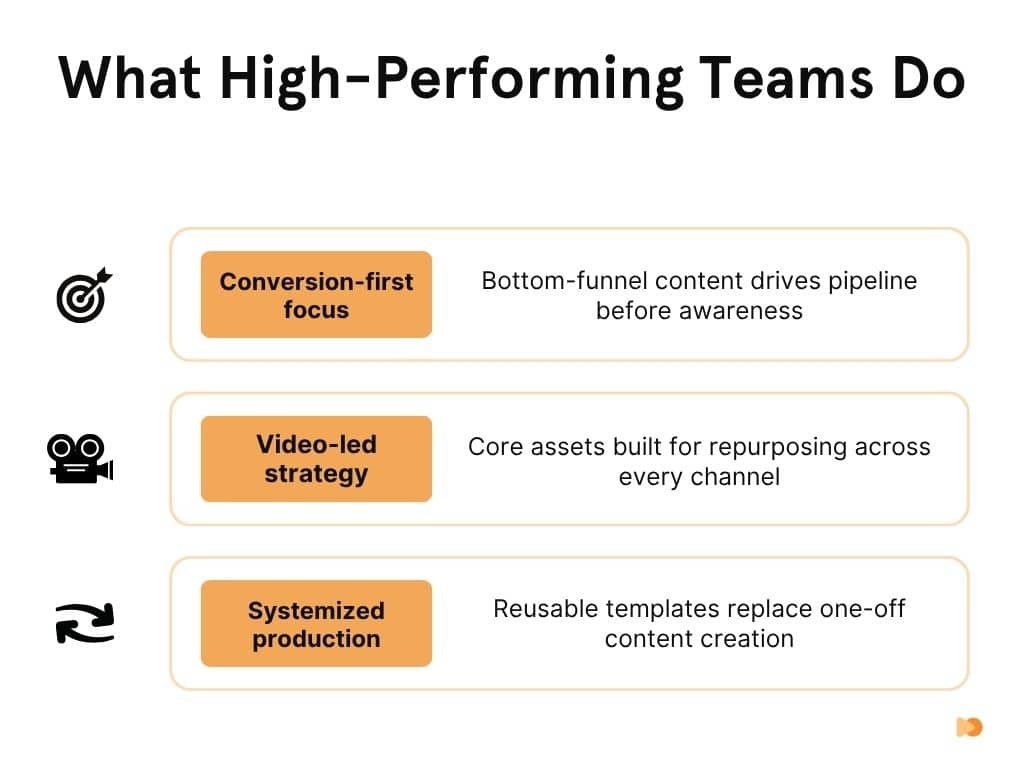
Content marketing for tech companies isn’t about producing more. It’s about building systems that produce smarter. The winning tech marketers start with conversion content, lead with video, build reusable creative systems, and optimize for both search engines and AI.
If your team is producing more content but seeing diminishing returns, it might be time to rethink the model. Book a free strategy session with Vidico, and we’ll map out a content production system built for your business goals.
References:
- https://contentmarketinginstitute.com/technology-research/content-marketing-technology-research
- https://contentmarketinginstitute.com/b2b-research/b2b-content-marketing-trends-research
- https://www.hubspot.com/marketing-statistics
- https://www.adobe.com/express/learn/blog/scale-content-with-ai
- https://www.wordstream.com/blog/ws/2017/03/08/video-marketing-statistics
- https://searchengineland.com/google-search-click-data-q1-2025-454498