
The 2026 State of Creative Marketing in Tech
How marketing leaders are turning creative into trust, distribution, and pipeline impact. Survey of 230+ B2B tech marketing leaders.
How to turn creative into pipeline in 2026. Findings from 230+ B2B marketing leaders.
This is your creative playbook for what works in 2026 and beyond.

What’s changed most about getting attention in 2026?
This is the central tension of 2026, and it runs through the entire dataset.
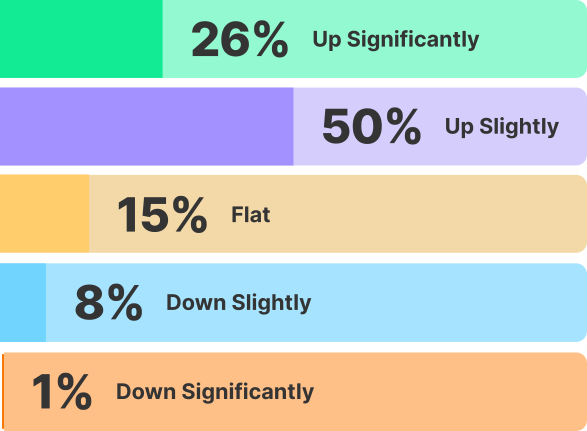
76% of respondents say their creative production budget is increasing this year.
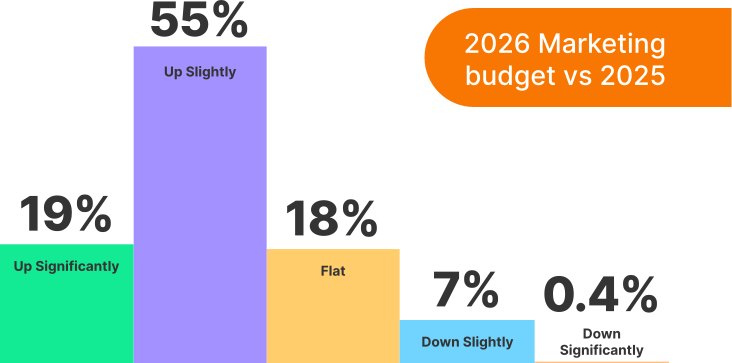
74% say their total marketing budget is growing. Investment in creative is accelerating.
And yet:
Buyer discovery is getting harder, not easier. More spend isn't automatically creating more advantage. That gap is what this report is about.

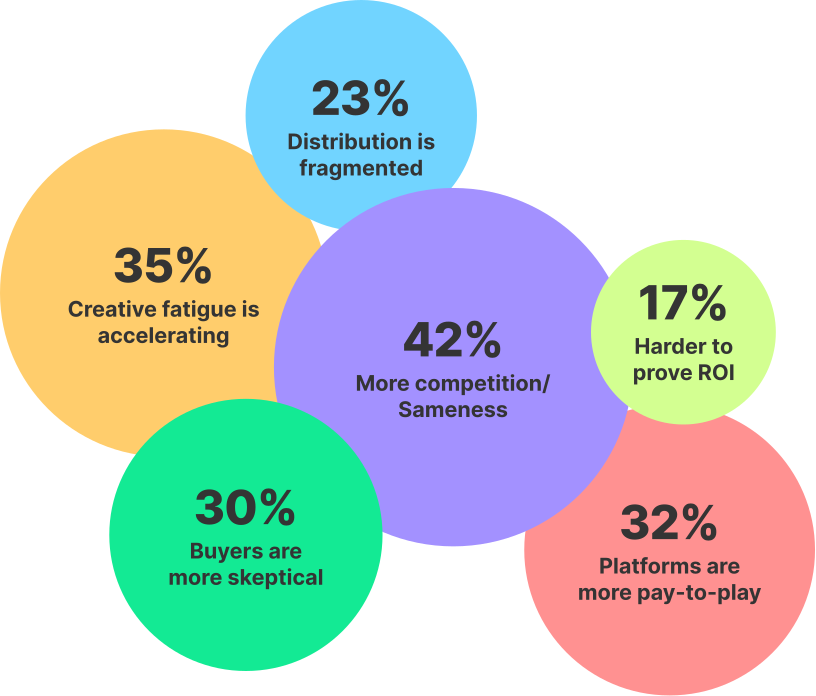
The market isn't just getting louder, it's getting more generic. AI-generated content is flooding every channel. The brands standing out in 2026 look and sound different, and back it with proof.

How is creative production budget moving vs 2025?
Creative production is growing faster than total marketing spend. Teams are treating it as a core growth driver, not a support function.

Contractors account for roughly 50% of our budget. We’re moving from one-off engagements to a curated, standing vendor bench that includes boutique agencies and freelancers we can rely on to scale up quickly without procurement delays.
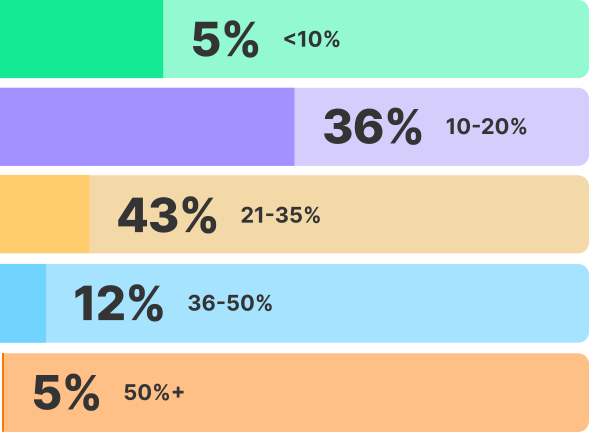
What share of marketing budget goes to creative production?
The majority of tech brands are now committing 21-35% of their total marketing budget to creative production (42.7%). Most of the rest sit in the 10-20% range (35.9%).
Where is spend being reallocated?
Creative is no longer just ad production. Budget is shifting into the full conversion layer: paid social, website, sales enablement, proof, and operational tooling. Teams are building infrastructure, beyond just campaigns.

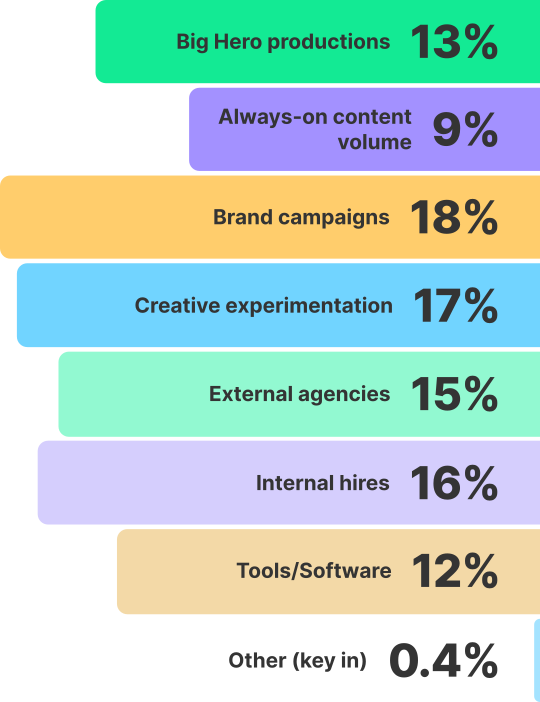
What gets cut first when budgets tighten?
Teams are prioritizing consistent, pipeline-driving creative over big one-off productions.
Brand campaigns (17.5%) and creative experimentation (17.1%) are most at risk when belts tighten. Always-on content volume (9.0%) is the most protected.

This is the sharpest finding in the 2026 data.
The most persuasive proof type in B2B tech is customer outcomes and results (42.7%). Buyers want to see the transformation, not the tool. And most companies have proof: case studies, ROI results, customer testimonials, logos.
The gap is in how it gets packaged and distributed.

The bottleneck isn’t the proof itself — it’s getting the content produced and distributed across formats. The assets that actually move buyers tend to be the ones that feel specific and fresh, not repurposed.
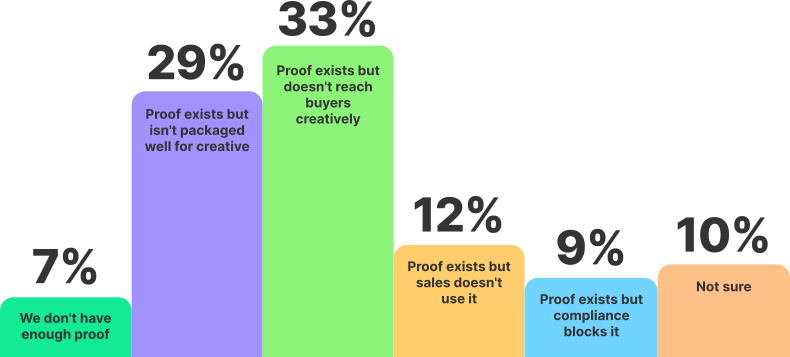
Where are teams weakest on proof today?
Only 6.8% say they don't have enough proof. The other 93% have proof but can't activate it effectively. That's a distribution and packaging problem, not a creation problem.

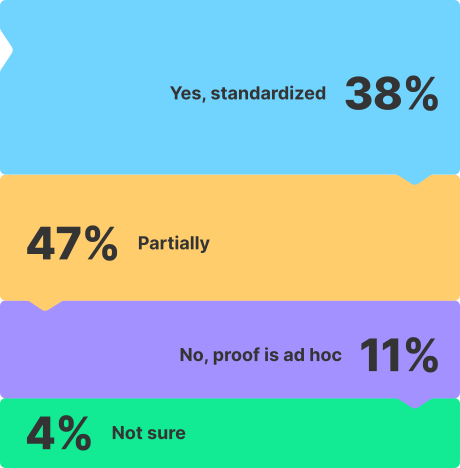
Do you have a repeatable proof system?
85% have at least a partial proof system. Only 38% have standardized it. The gap between "partially" and "fully" is where competitive advantage lives in 2026.
Which proof types move sales most in your market?
Lead with the transformation, not the tool. Buyers want to see what changed for a customer like them, faster than any feature list will deliver.


Most of our case studies are PDF format, and typically sit on the website and wait for the right person to find them. We’re going to be launching testimonial videos in the platforms our users are on, and getting the message in front of them proactively.
Square Retail Campaign
Customer proof works hardest when it's built as a system from the start.
Square's retail campaign led with quantifiable merchant outcomes. The same proof carried across paid, sales, and web in 6+ languages, with no creative rework for each market.

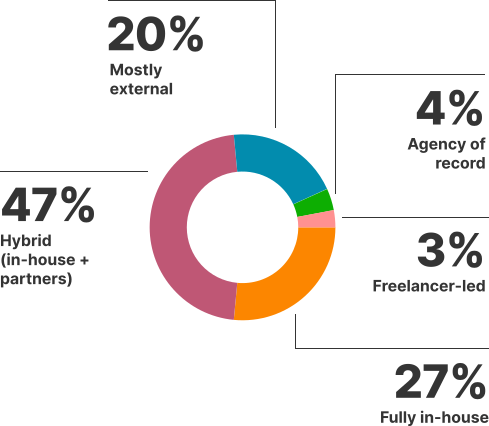
What's your production model?
Nearly half of B2B tech brands are running a hybrid model. The goal isn't outsourcing; it's a production stack that can flex as priorities and volume shift.
My small marketing team doesn’t have the time or high enough level of skill in video production to create anything as polished as our brand requires. Leaning on experts helps us achieve the most we can.
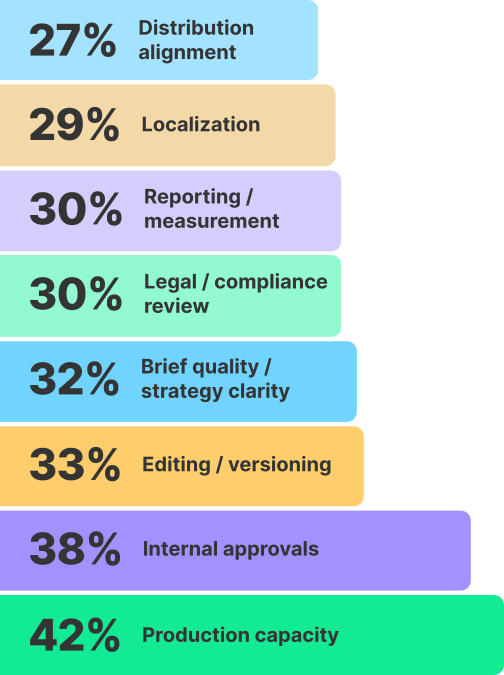
What's the biggest bottleneck in your workflow?
Teams are producing more than ever, but the production infrastructure hasn't kept pace. The bottleneck is the process, not the talent.
Production capacity and internal approvals are the top two blockers, and they compound each other. Teams are producing at volume without the system underneath to support it.
When a stakeholder submits a vague or underdeveloped creative request, the scoping process adds 1–2 weeks before production can even start.

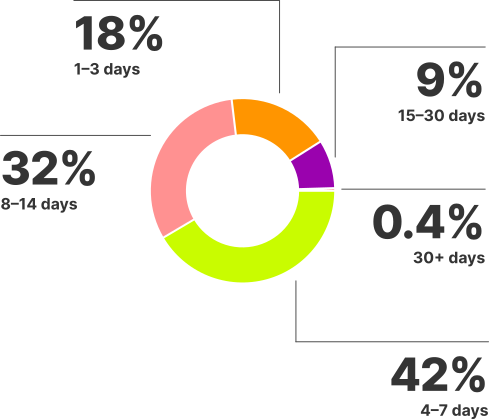
How fast can you get a new creative concept live?
Most teams take 4–14 days from concept to live—too slow for fast-moving paid channels. Teams with reusable asset systems and streamlined approvals are consistently hitting 1–3 days.
Do you have a modular system for scaling assets?
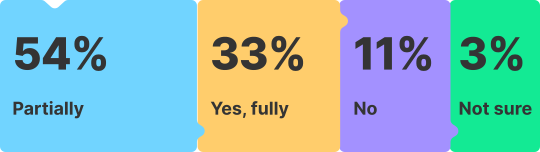
Only 1 in 3 has a fully reusable asset system. The majority are "partially" there, which means they're still rebuilding from scratch more often than they should be.
What's your single biggest constraint?
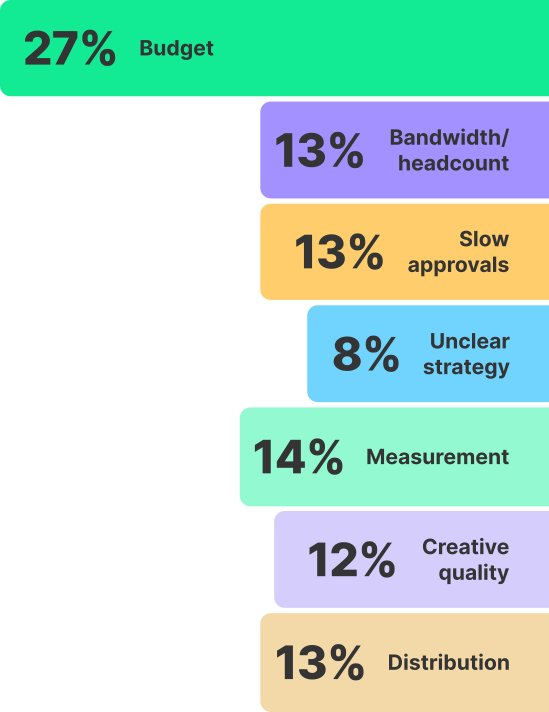
Budget leads (27.4%), but measurement/attribution (14.1%), slow approvals (13.2%), and bandwidth/headcount (12.8%) are all within striking distance. The constraint is as much operational as financial.
Spotify, TikTok, Square
The tech brands producing creative at high volume have built systems underneath their output.
Spotify runs reusable creative across 50+ campaigns. TikTok has a design system that supports rapid asset production. Square ships 28+ video assets per week, localized across 8 languages.
Design and motion systems mean new campaigns reach market without starting from zero each time.

Whether it’s creating a unique visual identity that aligns with our brand, producing sizzles, developing educational resources, or handling translations, Vidico has helped us hit key business goals and elevate our efforts. They’re friendly, professional, and an absolute pleasure to work with—hands down the best agency we’ve partnered with!
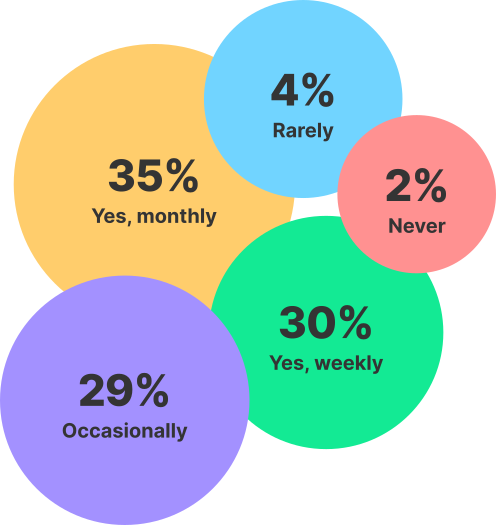
65% of respondents run structured creative experimentation at least monthly. The belief in testing is there. The infrastructure isn't, and that gap is widening.
How often do teams run structured creative experimentation?
The majority of tech brands are now committing 21–35% of their total marketing budget to creative production (42.7%). Most of the rest sit in the 10–20% range (35.9%).
How do teams evaluate creative success?
Engagement (views/watch time) still leads at 52.1%, but revenue influenced (36.3%) and conversion rate/CPL (35.0%) are close behind. Teams are pushing for harder accountability, even if the measurement infrastructure isn't fully there yet.


What do teams test most often?
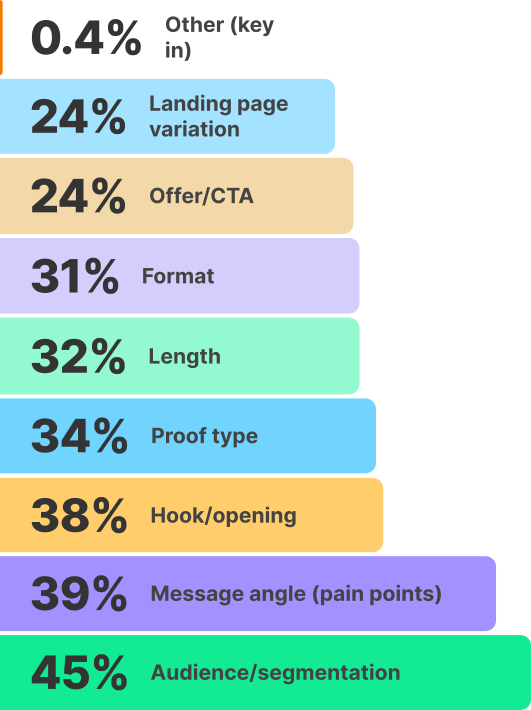
Audience/segment-specific creative leads (44.9%), followed by message angle (39.3%) and hook/opening (38.0%). Teams have figured out what to test—the issue is having enough variants to do it properly.
What stops better testing?
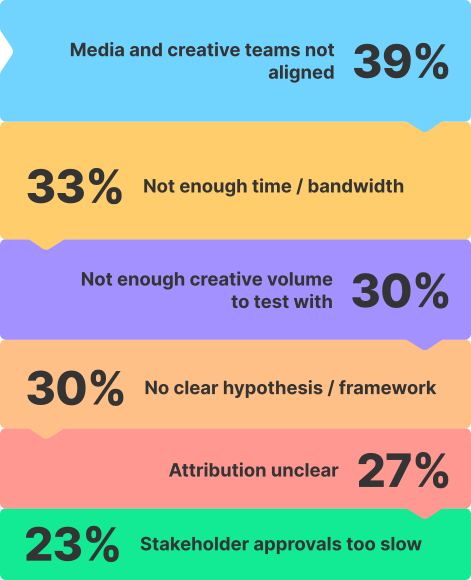
The #1 barrier to better testing is the gap between media and creative teams. No tool alone fixes that. When the team running the ads and the team making them aren't aligned on what to test, testing becomes reactive instead of intentional.
What kills performance most often?
Creative performance breaks first at the message level. The brief is the product.


Set up structured experiments with a pre-aligned hypothesis:
- Test by message angle (problem vs. aspiration vs. outcome)
- Compare format (UGC vs. polished vs. motion)
- Align media and creative teams on the question before the asset is built
- Track CTR, watch-through, and conversion lift, not just views

What's your current content mix?
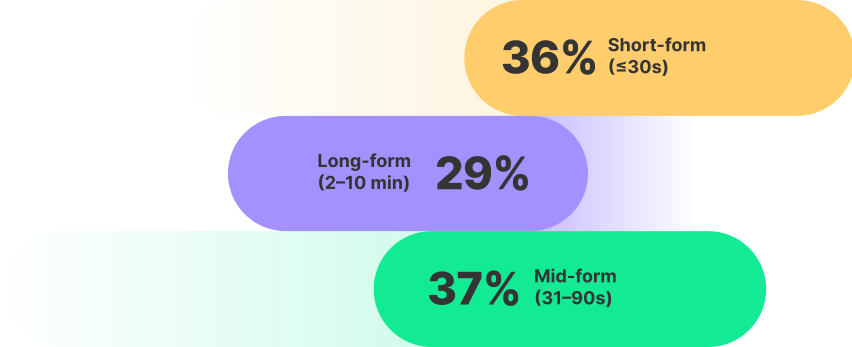
Mid-form content, ideal for demos, testimonials, and product storytelling, is now the leading format by a slim margin.
Short-form had its moment. Now teams are running a more deliberate mix, and the formats driving business impact have shifted toward proof and conversion, not just reach.
Teams are running a surprisingly balanced mix:
Which formats will drive the highest business impact in 2026?
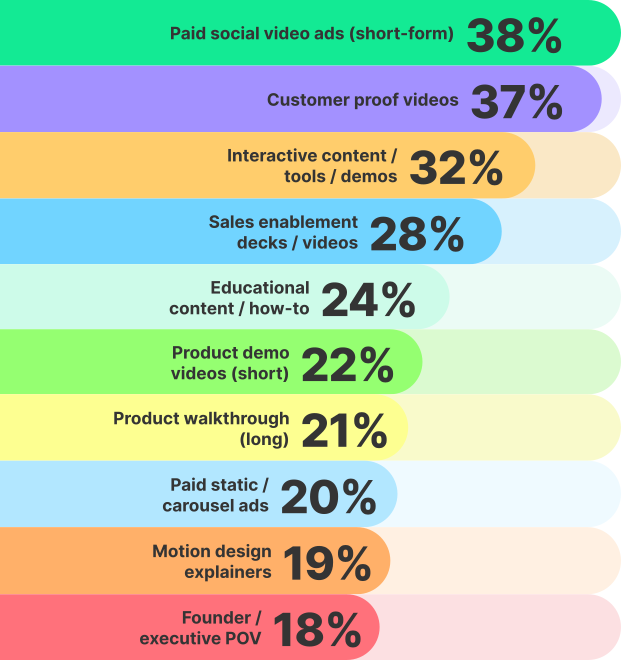
Paid social video and customer proof videos are essentially tied at the top. The defining format trend of 2026 is evidence-based creative: testimonials, case studies, outcome proof. The best-performing brands are building proof content that works equally across paid, sales, and web.
We’re looking to advertise on YouTube and LinkedIn this year (as opposed to Google Ads and Meta last year) due to AEO, which heavily cites YouTube, Reddit and LinkedIn in my industry and niche.

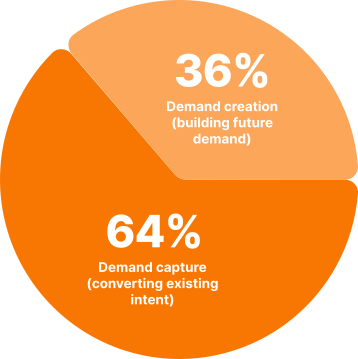
Is content built for demand capture or demand creation?
Most teams are skewed toward bottom-of-funnel content, which helps explain why brand campaigns are the first thing cut when budgets tighten. With buyer discovery getting harder, the imbalance is worth watching.
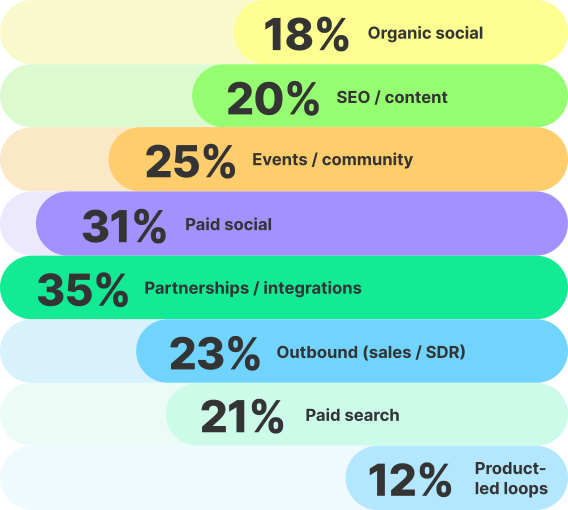
Where will growth depend most in 2026?
Partnerships lead for the first time, overtaking paid social as the top-cited growth channel. Partnerships are driving growth now. Teams are building creative for integration launches and co-marketing programs rather than paid channels alone.
As buyer discovery shifts toward AI search and answer engines, brand visibility is becoming less about ranking for individual keywords and more about being recognized as a trusted, high-quality source that AI systems choose to cite. Authoritative content, and topical relevance remain the foundation for visibility in AI-generated answers.
AI adoption in creative teams has moved from early experiment to embedded workflow. The question in 2026 is no longer whether to use AI. It's where to trust it, and where to draw the line.

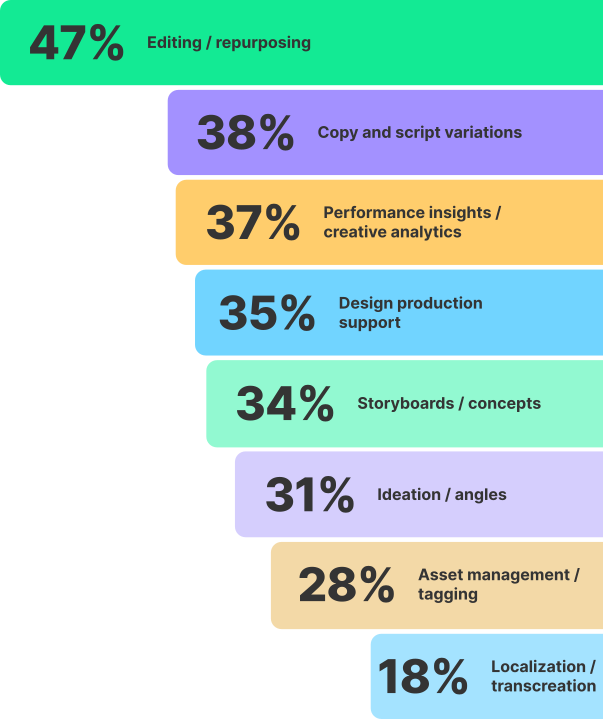
Where does AI help most today?
AI is most useful mid-process: editing and repurposing assets that already exist. The brief and the final output stay human. It's production infrastructure, not creative authority.
AI can accelerate production, but it can’t yet make the call on whether something feels like HubSpot.
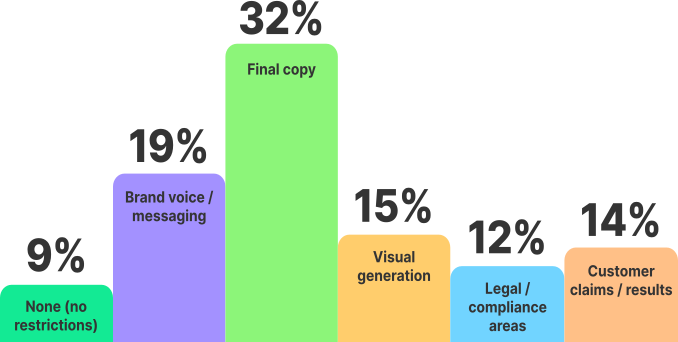
Where is AI not allowed or heavily restricted?
Final copy is the most protected creative output. Teams use AI to draft and iterate, but humans own the words that go live. Brand voice stays human.

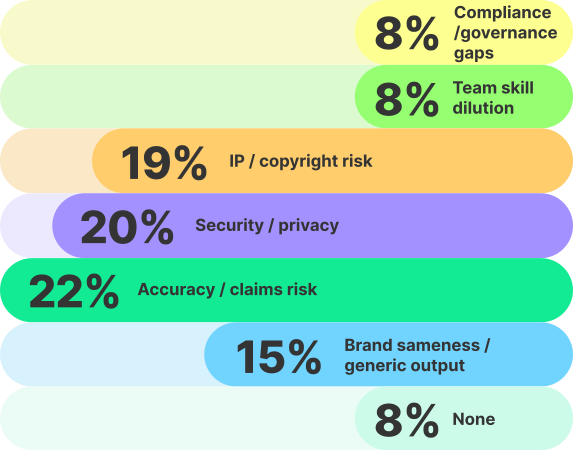
What's your biggest AI risk concern?
Accuracy risk leads, and it makes sense in an environment where buyers are skeptical and proof-sensitivity is high. Getting a customer outcome claim wrong in AI-generated copy is a credibility problem, not just a quality problem.
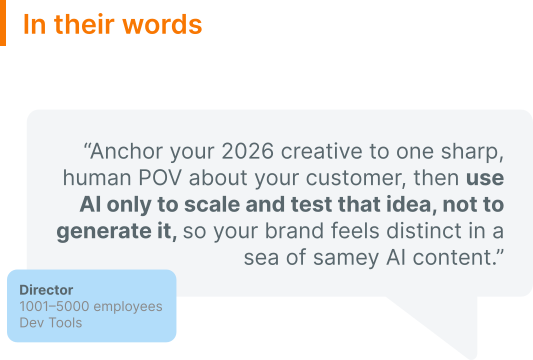
The creative ideas that ChatGPT provides with little human input are generic and regurgitated. The more polished or thought out an idea is before it gets to AI, the better and more personalised the outcome.
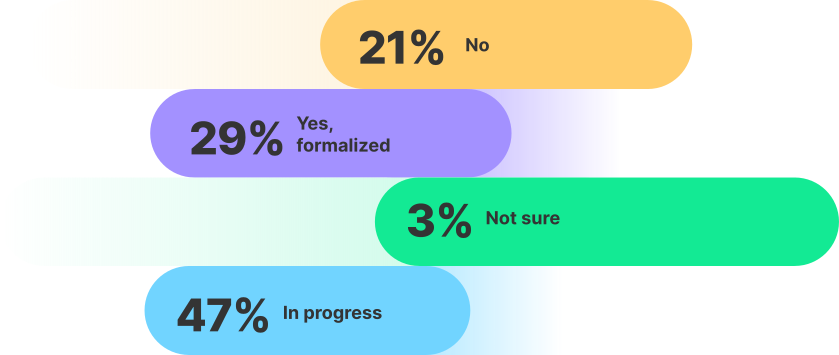
Do you have an AI governance policy for marketing creative?
Nearly half of teams are still building their AI governance policy, and only 29% have formalized one. In a market where accuracy and IP risk are the top concerns, this is a gap that's accumulating risk fast.

Start simple. Scale strategically. Automation should empower human creativity, not replace it.
Brief strategically, build modular assets, measure performance, optimize and repurpose—and feed those insights into your next brief to create a continuous creative flywheel.
The Vidico approach to AI
We use AI to speed up production, not to replace creative direction, brand strategy, or human judgment.
In our workflow that means script variation and hook testing, subtitle generation and localization, asset tagging and performance analysis, and repurposing long-form content for short-form channels.
Human creative directors own the brief and every deliverable.
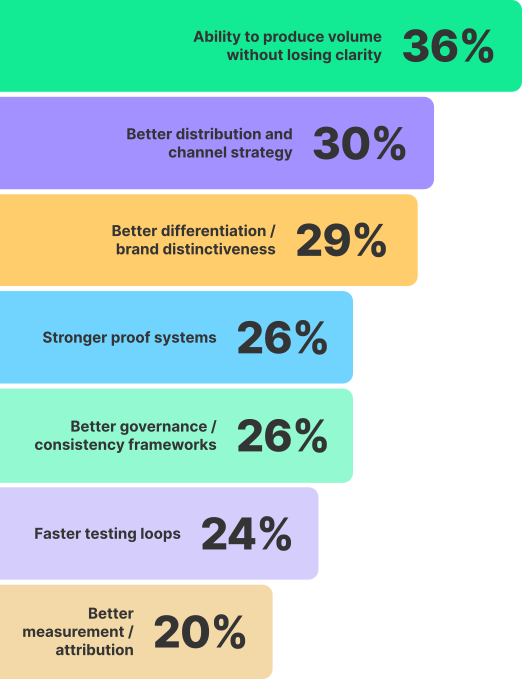
The teams pulling ahead aren't just producing more. They've solved a different set of problems.
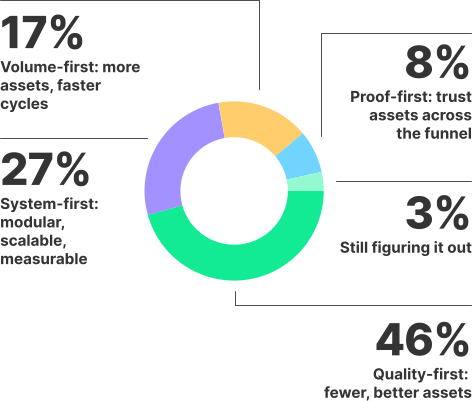
The #1 answer is volume without losing clarity. That's a systems problem. Teams with the strongest briefs and a reusable asset system are consistently the ones moving fastest without sacrificing quality.
Which best describes your 2026 creative strategy?
There's a meaningful tension here: most teams say they're quality-first. But the market advantage in 2026 goes to teams that can produce clarity at scale. Not just fewer, better assets. Quality alone isn't enough if you can't also move fast.
What will matter most for your team in 2026?
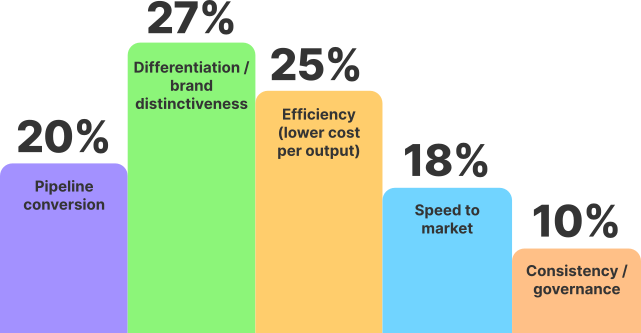
Differentiation edges out efficiency as the top priority. In a market flooded with AI-generated creative, the brand that sounds most human wins.
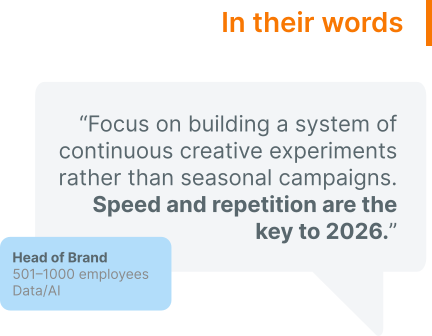
Final Thought: In 2026, the work is making proof travel.
2025 asked: how do we produce more?
2026 asks: how do we turn creative into pipeline?
The brands ahead this year built creative systems to put customer proof in front of buyers, and the discipline to keep their brand voice human in a market full of AI-generated content.
That is the 2026 creative problem: making proof move.


Thank you, from Franky
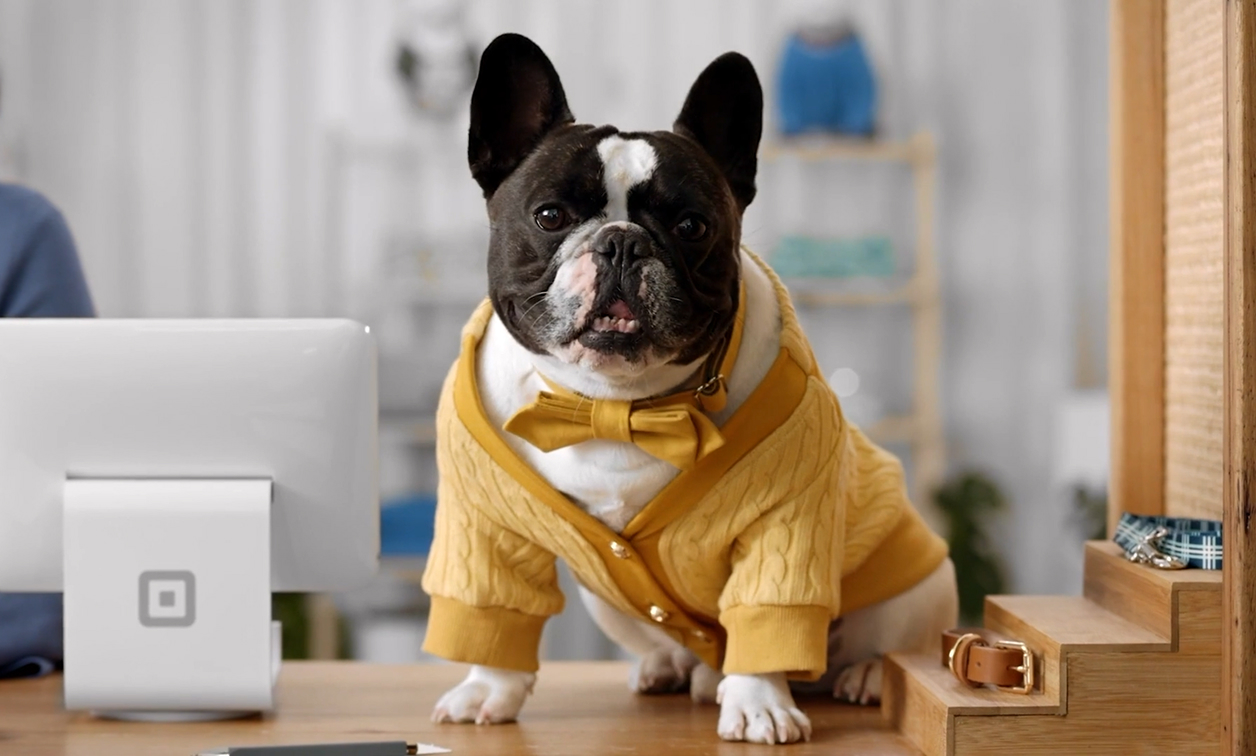
We built this report so creative and marketing leaders in tech could see what's working, and where the gaps are.
Vidico builds creative for tech brands that need to produce at volume without losing brand clarity. Video, motion graphics, modular design systems.
Want help building your creative system? The VidiFit quiz gives you specific recommendations and a cost estimate for what to make next.