Most product launches fail before the product ever reaches the market. Not because the product is bad, not because the timing is wrong, and not because the budget ran out. According to Gartner, the product launch process is fraught with communications-related pitfalls that delay or derail launches entirely. The product was ready. The communication was not.
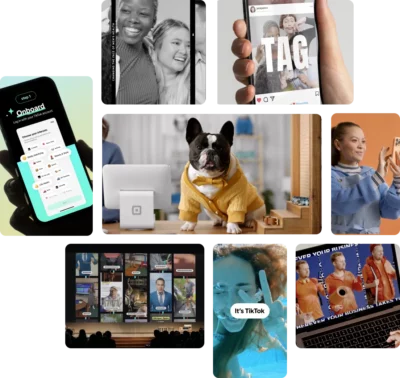
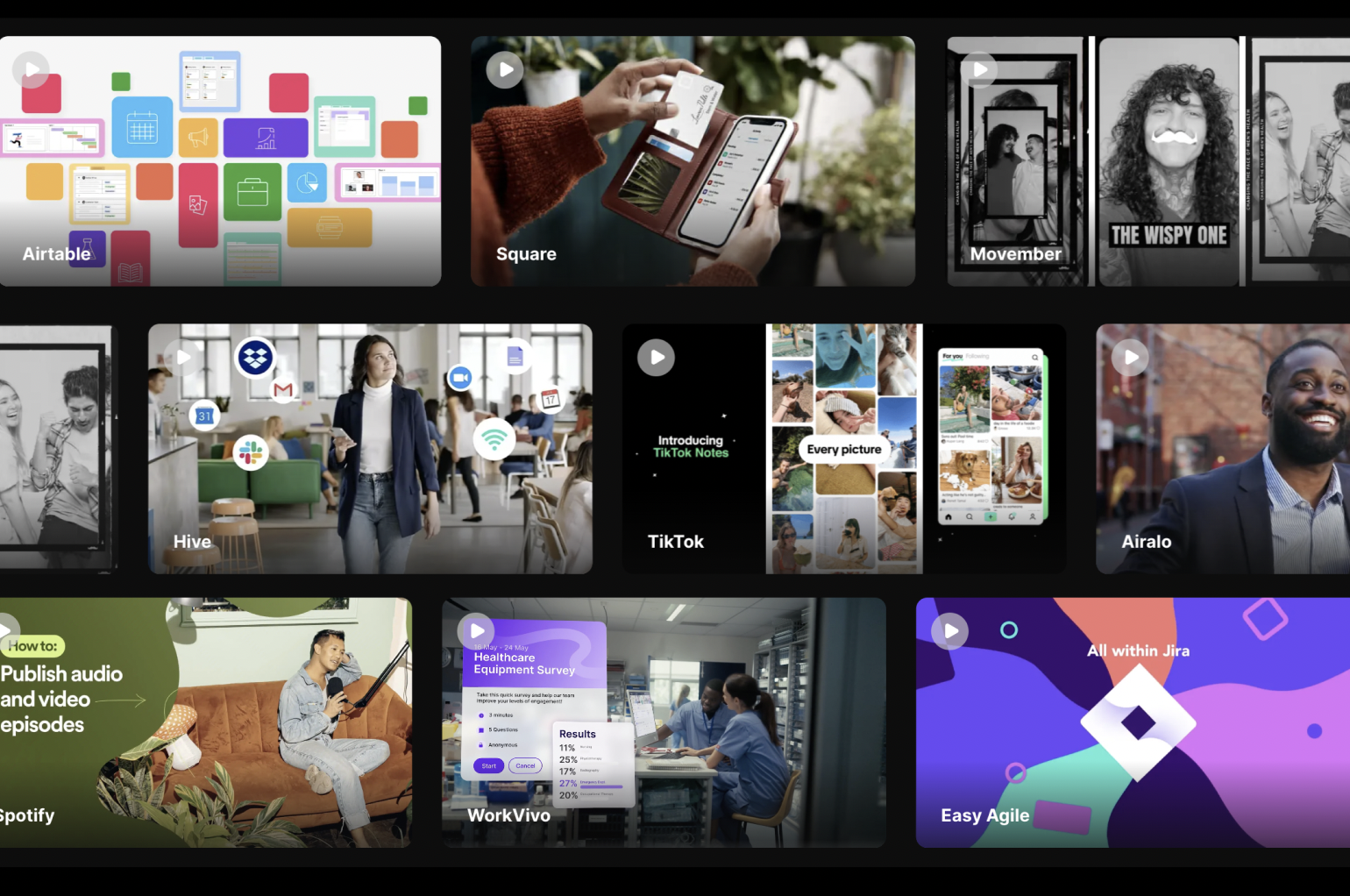
After supporting 200+ product launches per year for brands including TikTok, Square, Spotify, and Koala, we have seen this pattern more times than we can count. Teams that spend months perfecting the product spend weeks – sometimes days – on the plan for telling anyone about it. The result is a launch that generates noise for four to eight weeks and then disappears, leaving a sales team that cannot pitch it, a press cycle that never materialized, and a post-launch phase nobody budgeted for.
This guide covers how to build a product launch communication plan that works across internal and external audiences, across all four phases of a launch, and across every visual format that carries the message – from hero video to static ads to sales enablement decks. It includes a template you can adapt for your next launch.
Key takeaways
- 73% to 75% of product launches fail to meet revenue targets – and Gartner’s research confirms the primary cause is communications-related, not product-related. The plan for telling people about the product is where most teams fall short.
- Sales and marketing are the last to receive the product strategy. According to Gartner Peer Community data, product teams communicate the strategy to engineering before sales and marketing. A communication plan that does not fix this sequence before launch day will fail internally before it fails externally.
- Start 6 to 9 months before your launch date. Research shows that best-in-class B2B marketers begin planning 6 to 12 months in advance for major launches. Teams that start creative production after the product is ready are already behind.
- The post-launch phase needs 3 to 5 times more assets than the launch itself. Most communication plans budget for launch week. The 6 to 12 months after launch is where real customer acquisition happens.
- One hero campaign generates 40+ asset variations when production is built as a system. That output is what sustains communication across a 12-month launch cycle without restarting production every quarter.
- Including video in launch emails increases click-through rates by 96% (Syndacast). Landing pages with video convert 80% better. The format of communication matters as much as the message.
Content
- What is a product launch communication plan (and what it is not)
- The two audiences your plan has to serve
- The 4 phases of a product launch communication plan
- The product launch communication plan template
- How to craft messaging for each stakeholder
- The visual creative formats that carry each phase
- How Square, TikTok, Apple, and Koala approached product launch communication
- Common product launch communication mistakes
- Why work with Vidico
- FAQs
- Sources
What is a product launch communication plan (and what it is not)
A product launch plan tells you what to do and when. A product launch communication plan tells you who communicates what to whom, in what format, through which channel, and with what objective at each stage of the launch.
The distinction matters because most launch failures happen in the gap between those two things. A team can have a flawless launch plan – the right release date, the right pricing, the right feature set – and still fail because nobody told the sales team how to pitch it, nobody briefed the press three months early, and nobody produced the post-launch assets that would have sustained demand for the following year.
A communication plan forces three decisions that a launch plan leaves unanswered:
Who receives the message. A product launch has at least two distinct audiences: internal (sales, product, customer success, executives) and external (buyers at each funnel stage, press, analysts, partners, existing customers). Each audience needs a different message, a different format, and a different timing.
What format carries the message. A sales pitch deck, a hero explainer video, a teaser static ad, an email sequence, and a press release are all communication vehicles. A communication plan maps which format reaches which audience at which stage – rather than defaulting to “we’ll make a video” without specifying what kind, for whom, and when.
What success looks like at each phase. A launch plan has a launch date. A communication plan has measurable objectives for every phase: pre-launch awareness among target buyers, sales team confidence scores before launch day, media coverage within the first two weeks, post-launch engagement with demo content six months out.
Without those three decisions documented and agreed upon before production starts, the communication is improvised. And improvised communication at scale, across internal teams and external channels simultaneously, produces exactly the kind of noise-then-silence pattern that most launches follow.
The two audiences your plan has to serve
Internal audiences
The most expensive communication failure in a product launch is not a press release that goes unread. It is a sales team that cannot confidently pitch the product on day one.
According to Gartner Peer Community data, product teams communicate the launch strategy to engineering before communicating it to sales and marketing. That sequencing means the people responsible for external communication – the ones who will talk to buyers, journalists, and partners – receive the strategy last and have the least time to absorb it before the launch date.
A communication plan that does not explicitly address internal alignment before launch will produce one of two outcomes: reps who avoid pitching the new product and sell the familiar one instead, or reps who pitch it inconsistently and create buyer confusion.
The internal audiences that need specific communication before launch day:
Sales team. They need a pitch narrative, objection-handling content, a product demo they can run confidently, and a clear answer to “how is this different from what we had before?” They need this weeks before launch, not on launch day.
Product team. They need to understand how their technical decisions are being communicated externally, where the messaging departs from the technical reality, and what questions they should expect from sales and customers.
Customer success. Existing customers will ask about the new product. Customer success teams need to know what to say, when to escalate, and which existing accounts are upgrade candidates.
Executives. They need the board narrative, the revenue targets tied to the launch, and the leading indicators they should track in the first 90 days.
External audiences
External communication fails when it treats all buyers as the same audience at the same stage. A buyer encountering the product for the first time needs a different message than a buyer who has been evaluating alternatives for three months.
The external audiences in a product launch communication plan:
Cold buyers (awareness stage). They do not know the product exists. The communication objective is recognition and problem framing, not conversion. B2B buyers complete 57 to 70% of their research before talking to sales. Reaching them early with the right problem framing shapes how they evaluate every alternative, including yours.
Warm buyers (consideration stage). They know the product exists and are evaluating it. The communication objective is demonstrating fit and removing objections. 47% of buyers consume three to five pieces of content before speaking with sales. Those pieces have to exist.
Press and analysts. They need early access, an embargo briefing, and visual assets they can publish. Press coverage that lands on launch day requires communication that started three months earlier.
Existing customers. They need to understand whether this is an upgrade, an addition, or a replacement – and what it means for their current setup. Surprising existing customers on launch day is a retention risk.
Partners and resellers. They need enablement materials, pricing clarity, and a co-marketing brief before they can communicate on your behalf.
The 4 phases of a product launch communication plan
Phase 1 – Strategize (6-9 months before launch)
This is the phase most teams skip or compress, and it is where most launches are lost.
The strategic work that belongs here: defining the value proposition for each audience segment, mapping the buying committee for B2B products, establishing the messaging hierarchy (what is the one thing every audience must know, regardless of segment), and locking the internal communication sequence so sales gets the strategy before engineering gets the finished product.
Gartner recommends mapping the product’s core value across three areas that matter to different stakeholders: revenue growth (how does this help acquire or expand accounts), cost savings (how does this reduce operational burden), and risk management (how does this reduce compliance, security, or operational risk). A communication plan built on those three axes speaks to the full buying committee rather than the most vocal champion.
The creative work that belongs here: building the design system, locking brand guidelines, producing internal training videos and sales enablement assets. These are not launch assets. They are the foundation that makes launch assets consistent and faster to produce.
Communication outputs for this phase:
- Stakeholder messaging matrix by audience
- Internal alignment brief for product, sales, and marketing
- Creative brief and brand guidelines
- Internal training video for sales team
- Design system and motion templates
Phase 2 – Plan (3-6 months before launch)
With the strategy locked, the planning phase maps every asset to every audience across every channel, with a timeline and a responsible owner for each.
This is where the communication plan becomes operational. A 15 to 25-asset launch requires a production timeline that works backward from the launch date, accounting for review cycles, compliance approvals (for regulated industries), localization requirements, and platform specifications.
The asset map that comes out of this phase answers three questions for every piece of communication: who receives it, through which channel, and at what point in the launch sequence. Assets without those three answers are not in the plan.
For B2B launches, this phase also includes the buying committee analysis: who are the stakeholders that need to approve the purchase, what does each one need to see, and which assets address each stakeholder’s specific concerns. Enterprise B2B deals involve an average of 8.5 stakeholders. A communication plan that speaks to only one of them leaves the rest of the committee unconvinced.
Communication outputs for this phase:
- Full asset map by phase, audience, and channel
- Production timeline working backward from launch date
- Media relations plan with embargo dates and target publications
- Partner and reseller enablement brief
- Localization plan for multi-market launches
Phase 3 – Create (1-3 months before launch)
This is the production phase. Everything gets built here: the hero video, the explainer animation, the static ads, the social content, the email templates, the press kit, the sales deck, and the post-launch assets that will sustain communication for the following 12 months.
The most common mistake in this phase is producing assets sequentially rather than in parallel. A hero video that finishes two weeks before launch leaves no time to produce the social cuts, the email assets, and the ad variations that come from it. A systems-based production approach builds all derivative assets from the same production investment simultaneously.
When Vidico worked with TikTok, one production system generated 40+ creative assets across multiple formats in 2.5 months. Square produces 200+ assets per month using modular production systems built during this phase. That volume is not achievable with project-by-project production. It requires a design system, reusable templates, and a production brief that specifies every derivative asset before the first frame is shot.
Communication outputs for this phase:
- Hero video (60-90 seconds for B2B, variable for B2C)
- Animated explainer for complex products
- Product demo video (2-3 minutes)
- Static ads in all placement formats
- Carousel ads for multi-feature products
- Social content (organic and paid)
- Email creative with video thumbnails
- Press kit with visual assets
- Sales deck and pitch materials
- Post-launch asset bank for ongoing communication
Phase 4 – Communicate (launch + 6-12 months after)
Launch week is the shortest phase and the most visible. Everything built in the previous three phases goes live simultaneously across internal and external channels.
The post-launch phase is where launches succeed or fail at a business level. Most communication plans end at launch day. Most revenue is generated in the 6 to 12 months that follow.
The post-launch communication plan covers: ongoing sales enablement as the team encounters real objections, ad creative rotation to prevent fatigue, customer case study videos filmed 3 to 6 months post-launch with real results, localized asset versions for markets that were not covered at launch, and short-form social content that keeps the product visible.
The post-launch phase needs 3 to 5 times more assets than the launch itself. Teams that budget only for launch week will run out of communication material before the market has had time to fully engage with the product.
Communication outputs for this phase:
- Updated demo with real usage data and customer feedback
- Customer case study videos (3-6 months post-launch)
- A/B tested ad variations (quarterly)
- Short-form social cuts (monthly)
- Localized asset versions for expansion markets
- Ongoing sales enablement updates based on real objections
How to use this template:
Add rows for every audience segment your launch needs to reach. Add channels as your distribution strategy requires. The key discipline is completing every column for every row before production starts. A row with an empty “Format” or “Timing” column is a gap in the plan that will show up as a scramble during launch week.
For enterprise B2B launches, add rows for each member of the buying committee separately. A CFO and a compliance officer need different messages from the same product communication. For B2C launches, add rows for each stage of the awareness funnel – the buyer who has never heard of the product needs different communication than the buyer who abandoned the cart.
How to craft messaging for each stakeholder
The most common messaging mistake in a product launch is writing one message and sending it to everyone. One message cannot address a CFO’s concern about financial risk, a compliance officer’s concern about regulatory exposure, an end user’s concern about learning curve, and a journalist’s concern about market fit simultaneously.
A communication plan maps a specific message to each stakeholder based on what they need to know to take the next step in their relationship with the product.
Internal stakeholders
Sales team The sales team needs a pitch narrative, not a feature list. They need to know: what problem does this solve, who has this problem, why is our solution better than the alternative, and what objections will they face. They need this in a format they can use in a conversation – a demo they can run, a one-page summary they can leave behind, and a video they can share after a meeting.
Product team The product team needs to understand where the external messaging departs from the technical reality. What claims can be made, what cannot, and which questions from sales or press need to be escalated back to product. This communication is often skipped, which produces either over-promising in external materials or corrective messaging mid-launch.
Customer success Existing customers will ask about the new product before the sales team has had time to prepare a response. Customer success teams need a brief that covers: what the product does, how it affects existing customers, which customers are upgrade candidates, and what to say when the answer is “we do not know yet.”
Executives The board narrative focuses on market opportunity, revenue targets, and the leading indicators that predict whether the launch is tracking toward those targets. Pipeline generated, sales rep confidence scores, and demo request volume in the first 30 days tell executives whether the launch is working before a single deal closes.
External stakeholders
CFO and finance buyers The message focuses on financial outcomes: cost reduction, revenue impact, risk mitigation. Gartner identifies these as the three value areas that move financial decision-makers. Specific numbers outperform percentages. “Reduces reconciliation time by 12 hours per week” outperforms “improves operational efficiency.”
Compliance and security buyers The message focuses on risk reduction and regulatory alignment. These stakeholders are not buying the product. They are deciding whether to block it. Communication that addresses their specific concerns before they raise them removes the most common veto in enterprise B2B sales.
End users The message focuses on the problem solved and the ease of adoption. End users are often not the buyer, but they are frequently the internal champion or detractor. A product that users find confusing will not be renewed, regardless of what the CFO decided at purchase.
Press and analysts The message focuses on market positioning and differentiation. Journalists and analysts are writing about trends, not products. The communication that earns coverage frames the product as evidence of a larger market shift, not as a feature announcement.
Existing customers The message focuses on continuity and upgrade value. Existing customers are the highest-probability revenue source in any launch and the most common missed opportunity. Communication that reaches them early, before they find out through a press release, signals that they are valued rather than surprised.
The visual creative formats that carry each phase
A product launch communication plan maps specific visual formats to specific audiences at specific phases. “We’ll make some content” is not a communication plan. A list of assets with owners, timelines, and distribution channels is.
Pre-launch formats
Teaser video (15-30 seconds) Purpose: generate awareness and curiosity before the product is revealed. Does not show the product. Shows the problem, the emotion, or the gap the product addresses. Best for social distribution and email campaigns targeting existing audience.
Motion graphics and static teasers Purpose: build visual brand recognition for the launch before the launch date. Consistent visual language across teaser assets makes the reveal feel coherent rather than sudden. Used in organic social, paid awareness, and email sequences.
Internal training video Purpose: prepare the sales team to pitch the product with confidence. A 3 to 5-minute walkthrough of the product’s value proposition, key objections, and demo flow. Produced during the Create phase and delivered 4 to 6 weeks before launch so the team has time to internalize it.
Sales enablement deck Purpose: give the sales team a leave-behind that covers what the video covers in conversation. Not a feature list – a problem-solution narrative with proof points for each stakeholder in the buying committee.
Launch formats
Hero video (60-90 seconds) Purpose: introduce the product to cold audiences and establish the core value proposition in under two minutes. This is the asset everything else is built from. For B2B, 60 to 90 seconds. For B2C, format varies by platform.
Animated explainer video Purpose: explain how the product works for complex or abstract products where live action cannot represent the value. Animation shows UI flows, process diagrams, and system architecture without requiring technical knowledge from the viewer. Best for awareness and consideration stages.
Product demo video (2-3 minutes) Purpose: show the product in use for buyers in active evaluation. Combines product UI with narration that addresses the specific concerns of each stakeholder type. For enterprise B2B, consider separate demo versions for different buying committee members.
Static image ads Purpose: retargeting and awareness at scale. Static ads load fast, communicate a single message, and work across every placement format. For launch, static ads carry the core message in a format that complements video rather than replacing it.
Carousel ads Purpose: multi-feature or multi-audience product communication. Each card addresses a different use case, a different stakeholder, or a different stage of the problem-solution story. Particularly effective on LinkedIn for B2B launches targeting enterprise buyers.
Email creative with video thumbnail Purpose: reach existing audiences with the launch message in a format they have already opted into. Including video in launch emails increases click-through rates by 96% (Syndacast). The video does not live in the email – the thumbnail links to the landing page, where the video converts at 80% higher rates than pages without video.
Social content (organic and paid) Purpose: sustain visibility across the 4 to 8 weeks around the launch date. Organic posts establish credibility. Paid social amplifies reach. Platform-native formats outperform repurposed assets on every metric.
Post-launch formats
Customer case study video Purpose: provide social proof for buyers in evaluation 3 to 6 months post-launch, when real customers have real results. A case study video filmed with specific metrics – not testimonials, but quantified outcomes – converts buyers at the decision stage more effectively than any other format.
Ad variations for ongoing testing Purpose: prevent creative fatigue and generate performance data for future launches. Quarterly A/B testing across hooks, messages, and formats identifies what resonates and informs the next campaign. Teams running 10 to 20 ad variations per quarter consistently outperform teams recycling launch assets.
Localized asset versions Purpose: extend the launch to markets not covered on day one. A modular production approach built during the Create phase makes localization a resizing and translation exercise rather than a new production. Square executed this across 200+ regions using templatized systems built at launch.
Short-form social cuts (monthly) Purpose: keep the product visible during the long tail of the launch cycle. 15 to 30-second cuts from the hero video or demo, reformatted for each platform, sustain presence without new production investment every month.
How Square, TikTok, Apple, and Koala approached product launch communication
Square: communicating across 17 markets without losing message specificity
Square needed to launch across global markets without producing separate campaigns for each region. The challenge with global product launch communication is that localization usually means translation – and translated assets rarely feel native to the market they reach.
Vidico built a modular communication system: a core brand story with interchangeable scenes and voiceover tracks, designed from the start to be adapted rather than translated. The visual storytelling carried the emotional narrative without depending on specific language, so each market received communication that felt local.
The result: Square produced 200+ assets per month across global markets, achieved a 43% conversion lift on their launch campaign, and built a communication system that sustained performance for months after the launch date – not just during launch week.
The lesson for communication planning: build for localization before you build for launch. A production system designed with modular components costs the same to produce and costs a fraction of the price to localize compared to a monolithic production that has to be rebuilt for each market.
TikTok: scaling internal and external communication simultaneously
TikTok’s product launches required simultaneous communication to an internal team of thousands and an external audience of millions. The volume of assets required – across formats, platforms, and markets – made project-by-project production impossible.
Vidico built a creative production system that generated 400% more output from the same production investment. One production generated 40+ creative assets across multiple formats: hero video, social cuts, ad variations, internal training materials, and platform-specific formats – all from a single shoot with a shared design system.
The lesson for communication planning: the volume of communication a modern product launch requires cannot be produced sequentially. Build the production system during the Plan phase, before the Create phase begins, so that every derivative asset is planned into the original production brief.
Apple: communication by layers
Apple’s product launch communication is the most studied in the world, not because of production quality but because of sequencing. The communication happens in layers, each designed for a specific audience at a specific stage of awareness.
Layer one: silence. Months before a launch, Apple communicates nothing – which generates press speculation that functions as unpaid awareness.
Layer two: the leak. Selective information reaches tech journalists, generating coverage that primes the market without committing Apple to specific claims.
Layer three: the keynote. The official reveal is designed as a media event, not a product announcement. The audience is not buyers – it is journalists who will then communicate to buyers.
Layer four: the ads. Product advertising begins after the keynote, targeting buyers who have already been primed by press coverage and social conversation. The ads carry specific product messages to audiences already aware the product exists.
Layer five: hands-on coverage. Reviews, unboxings, and tutorials created by third parties sustain communication for months after launch, with no additional production investment from Apple.
The lesson for communication planning: the sequence of communication often matters more than the content. An ad campaign that reaches cold audiences before they have any awareness of the product works harder for the same media spend. Building awareness before purchase intent is what allows later communication to convert rather than introduce.
Koala: communicating differentiation with a single video
Koala launched into a crowded ecommerce market with a single hero video that did not describe the product – it attacked the category. The video explained why every competitor’s product was inferior before introducing Koala as the solution.
The communication approach was built around one insight: in a category where every product claims to be the best mattress, the buyer has no way to evaluate the claim. Koala’s video gave buyers a framework for evaluation that Koala was built to win.
The result was a product launch that required no other communication vehicle to establish differentiation. One video, built around a clear insight, communicated what a feature list could not.
The lesson for communication planning: differentiation is a communication problem, not a product problem. If the buyer cannot explain why your product is different from the alternative, the communication has not done its job – regardless of how different the product actually is.
Common product launch communication mistakes
Starting communication after the product is ready. Production and communication strategy should run in parallel, not sequentially. When the marketing plan does not begin until the product is finished, there is never enough time to produce the volume of assets a launch requires. The teams that consistently execute successful launches begin creative production 6 to 9 months before the launch date.
Communicating to external audiences before internal teams are ready. A sales team that cannot confidently pitch a product on launch day will avoid pitching it and sell the familiar alternative instead. Internal communication – training videos, demo walkthroughs, objection-handling guides – must precede external communication. Gartner’s data shows that sales and marketing are currently the last to receive the product strategy. A communication plan that does not explicitly fix this sequence will produce the same outcome.
Treating all external audiences as one audience. A CFO evaluating financial risk and an end user evaluating ease of use need different messages from the same product. A communication plan that produces one message and sends it to everyone wastes media spend on audiences for whom the message is irrelevant and misses conversion opportunities with audiences who needed a different conversation.
Planning only for launch week. The post-launch phase needs 3 to 5 times more assets than launch itself, and it is where real customer acquisition happens. Teams that exhaust their communication budget during launch week have nothing left for the 6 to 12 months when buyers are actually making purchase decisions. Budget at least 60% of creative investment for the post-launch phase.
Producing assets without a system. One hero video, one explainer, and one social post is not a launch communication system. It is a week of content. A modular production approach – one shoot generating multiple hooks, format-specific variants, localized versions, and derivative assets – produces the volume a 12-month communication plan requires without proportionally increasing production cost.
Measuring communication success by launch-day metrics. Downloads, impressions, and social shares on launch day tell you whether the launch generated noise. They do not tell you whether the communication is building the pipeline that will generate revenue in month six. Track leading indicators – sales team confidence, demo request volume, qualified pipeline built – from the first week rather than waiting for closed deals to validate whether the communication is working.
Why work with Vidico
After supporting 200+ product launches per year for brands including TikTok, Square, Spotify, Koala, and Airtable, Vidico has developed a product launch video production approach that treats communication as a system, not a series of individual assets.
“Many marketers don’t realize just how many assets can be leveraged from a single video. A well-crafted 60-second video with 24 scenes can generate GIFs, stills, shorter cutdowns, and more – providing months of content from just one campaign. That’s the power of thoughtful execution and planning.” (Michael Pirone, Co-Founder, Vidico)
Systems-based production. One production investment generates your hero video plus social cuts, format-native ad variants, email thumbnails, sales enablement clips, and post-launch asset bank. TikTok increased creative output by 400% using our production system. Square produces 200+ assets per month across global markets. Koala established category differentiation with a single video built on a clear communication insight.
Full-funnel creative coverage. Vidico produces across every format a product launch communication plan requires: animated explainer videos for complex products, live-action brand videos for emotional storytelling, UGC-style content for social proof, static and motion graphics for paid channels, and sales enablement assets for internal communication. No format requires a separate agency relationship or a new production brief.
Transparent pricing. Use our VidiFit Quiz to get a clear, upfront estimate for your launch creative in under two minutes. For a full breakdown of production budgets at different investment levels, see our video production cost guide.
“The best video marketing agencies don’t just deliver videos – they deliver strategies. At Vidico, we design campaigns with longevity in mind, ensuring every frame of your video can be repurposed into engaging, platform-specific assets that amplify your ROI.” (Michael Pirone, Co-Founder, Vidico)