
Controversial commercials are ads that spark public outrage, social-media backlash, or outright bans through offensive themes, tone-deaf messaging, or cultural insensitivity. The most infamous ones did not just annoy viewers. They pushed brands into apologies, product pulls, and lasting reputation damage.
This guide breaks down 18 of the most controversial commercials of all time. Each entry explains what the ad showed, why it drew backlash, and what happened to the brand afterward, so you can see the difference between a bold campaign and a costly mistake.
Key Takeaways
- Controversy is a strategy with real downside. A bold ad can earn free reach and attention, but the same edge that makes it spread is what turns a misread into a crisis.
- Most backlash traces to three triggers: insensitivity toward serious issues, tone-deafness about the cultural moment, and shock value used for its own sake.
- A few controversial ads still worked. Nike’s Colin Kaepernick campaign drew boycotts and burned sneakers, yet its online sales rose in the days after launch.
- Most did not. Pepsi, Dove, and Nivea each pulled their ads within days, and Pepsi and Dove publicly apologized.
- The safest bold work is planned, not lucky. Brands that pressure-test an idea against how different audiences will read it avoid the misfires on this list.
Content
The 18 Most Controversial Commercials of All Time
| # | Commercial | Year | Why it was controversial | What happened |
|---|---|---|---|---|
| 1 | Pepsi “Live for Now” (Kendall Jenner) | 2017 | Trivialized social-justice protests | Pulled the next day, public apology |
| 2 | Apple iPad “Crush” | 2024 | Read as tech crushing human creativity | Apologized, “missed the mark” |
| 3 | American Eagle “Great Genes” | 2025 | “Great genes” pun read as tone-deaf | Tagline dropped from some placements |
| 4 | Nike “Colin Kaepernick” | 2018 | Politicized athlete protest | Boycotts, but online sales rose |
| 5 | Gillette “The Best Men Can Be” | 2019 | Accused of lecturing men on masculinity | Heavy dislike ratio, mixed reception |
| 6 | Dove “Real Beauty” Facebook ad | 2017 | Black-to-white transformation read as racist | Removed, brand apologized |
| 7 | Nationwide “Make Safe Happen” | 2015 | A dead child narrates a Super Bowl ad | Widely panned, insurer defended it |
| 8 | GM “Robot” | 2007 | Suicide imagery in a Super Bowl spot | Pulled after backlash |
| 9 | McDonald’s “Dead Dad” | 2017 | Used child grief to sell a sandwich | Withdrawn after complaints |
| 10 | Carl’s Jr. “All-Natural Burger” | 2015 | Objectified a nude model to sell a burger | Ran, drew sexism complaints |
| 11 | PETA “Last Longer” | 2016 | Explicit sexual content | Rejected for broadcast |
| 12 | Pot Noodle “The Horn” | 2005 | Crude sexual innuendo | Banned in the UK |
| 13 | SalesGenie “Talking Pandas” | 2008 | Racist Asian caricatures | Widely condemned as racist |
| 14 | Popchips (Ashton Kutcher) | 2012 | Brownface character | Pulled after backlash |
| 15 | Mountain Dew “Felicia the Goat” | 2013 | Racist tropes and violence played for laughs | Pulled after backlash |
| 16 | Holiday Inn “Bob Johnson” | 1997 | Mocked a transgender person for shock | Widely criticized |
| 17 | Love’s Baby Soft | 1975 | Sexualized a childlike image | Long cited as one of the worst |
| 18 | Coinbase QR code | 2022 | A bouncing QR code seen as annoying | Crashed the app it linked to |
1. Pepsi “Live for Now” (2017)
Pepsi’s “Live for Now” ad showed model Kendall Jenner leaving a photoshoot to join a street protest, then defusing the tension by handing a police officer a can of Pepsi. Critics said it trivialized real movements like Black Lives Matter by suggesting a soft drink could resolve police confrontations.
The backlash was immediate and near-universal. According to The Drum’s roundup of the most controversial ads, Pepsi pulled the ad the next day and issued a public apology, saying it had “missed the mark.” Watch the ad.
2. Apple iPad “Crush” (2024)
Apple’s “Crush” ad for the iPad Pro showed a giant hydraulic press flattening musical instruments, cameras, paint, and other creative tools into a single thin tablet. Many artists and creators read it as a symbol of technology crushing human creativity rather than celebrating it.
The reaction pushed Apple to respond. CBS News reported that a marketing executive apologized, saying the company “missed the mark with this video, and we’re sorry.” Watch the ad.
3. American Eagle “Great Genes” (2025)
American Eagle’s 2025 campaign built a wordplay around “great jeans” and “great genes” featuring actor Sydney Sweeney. Critics argued the “genes” angle read as tone-deaf, reinforcing narrow beauty standards and drawing accusations that it flirted with the language of genetic privilege.
The brand adjusted rather than fully retreated. The Drum notes that American Eagle removed the tagline from some placements while standing by the wider campaign. Watch the ad.
4. Nike “Colin Kaepernick” (2018)
Nike’s 30th-anniversary “Just Do It” ad featured Colin Kaepernick, the NFL quarterback known for kneeling during the national anthem to protest police brutality. The choice split audiences, with some praising the stance and others calling for boycotts.
This is one of the few ads on this list where the controversy paid off. The Drum reports that hashtags like #BoycottNike trended and some people filmed themselves burning sneakers, yet Nike’s online sales rose 31% in the days after the ad launched. Watch the ad.
5. Gillette “The Best Men Can Be” (2019)
Gillette reworked its long-running “The Best a Man Can Get” slogan into “The Best Men Can Be,” a spot that addressed bullying, harassment, and toxic masculinity in the wake of the Me Too movement. Supporters saw a brand taking a stand, while critics accused it of lecturing its own customers.
The ad drew an unusually high number of dislikes and a polarized response that dominated coverage for weeks. Watch the ad.
6. Dove “Real Beauty” Facebook Ad (2017)
Dove’s short Facebook ad showed a Black woman removing her shirt and appearing to transform into a white woman, then into a woman of another background. Viewers read the sequence as suggesting the body wash “cleaned” darker skin into lighter skin, a deeply racist implication.
Dove removed the post and apologized. The Guardian reported that the brand said it “missed the mark” in representing women of color. Watch the ad.
7. Nationwide “Make Safe Happen” (2015)
Nationwide aired a Super Bowl ad narrated by a young boy who lists the things he will never do, before revealing that he died in a preventable household accident. The insurer meant to raise awareness about child safety, but airing it during a party-centered broadcast shocked and upset viewers.
The ad was widely panned as a mood-killer. The Drum notes that Nationwide stood by the message while admitting the Super Bowl was the wrong place for it. Watch the ad.
8. General Motors “Robot” (2007)
General Motors ran a Super Bowl ad showing an assembly-line robot that gets fired for dropping a screw, then imagines a life of failure and appears to jump off a bridge. GM intended it as a statement about its commitment to quality, but suicide-prevention advocates said it made light of a serious issue.
Following the criticism, GM pulled the ad from circulation. Watch the ad.
9. McDonald’s “Dead Dad” (2017)
A McDonald’s UK ad showed a boy asking his mother about his late father, learning they had little in common, until he discovers they both liked the same McDonald’s order. Viewers accused the brand of exploiting child grief and bereavement to sell a Filet-O-Fish.
McDonald’s withdrew the ad and apologized after a wave of complaints. Watch the ad.
10. Carl’s Jr. “All-Natural Burger” (2015)
Carl’s Jr. ran a Super Bowl ad in which a model walks nearly nude through a farmers market, with produce covering parts of her body, ending on the line “she’s not the only one all-natural.” The spot leaned on the brand’s long history of using sex to sell burgers.
It drew heavy criticism for objectification and sexism, part of a pattern that eventually pushed the chain to change its advertising approach. Watch the ad.
11. PETA “Last Longer” (2016)
PETA produced a Super Bowl-timed ad implying that a vegan diet improves sexual stamina, using explicit scenes to make the point. The claim had no scientific basis, and broadcasters judged the content too graphic for television.
Networks rejected the ad for air, so it lived mostly online. Watch the ad.
12. Pot Noodle “The Horn” (2005)
Pot Noodle’s UK ad followed a man hiding a horn in his trousers and “seeking a horn,” a string of crude innuendo built around the snack brand’s cheeky tone. Viewers complained that it was vulgar and unsuitable for general audiences.
UK advertising regulators received complaints and the ad was pulled from broadcast. Watch the ad.
13. SalesGenie “Talking Pandas” (2008)
SalesGenie aired a Super Bowl ad featuring cartoon pandas speaking with exaggerated Asian accents while trying to save a bamboo furniture store. Viewers immediately called it a racist caricature.
The ad drew widespread criticism for its use of racial stereotypes to sell a product. Watch the ad.
14. Popchips featuring Ashton Kutcher (2012)
Popchips released an online dating parody in which Ashton Kutcher played several characters, including an Indian man in brownface named “Raj.” The portrayal was widely condemned as a racist caricature.
Popchips pulled the campaign after the backlash. Watch the ad.
15. Mountain Dew “Felicia the Goat” (2013)
Mountain Dew’s three-part “Felicia the Goat” series featured a talking goat and a police lineup made up entirely of Black suspects, played for comedy. Critics said it combined racist tropes with a joke about violence against a woman.
As ABC News reported, PepsiCo pulled the ad after critics called it racist. That report shows the ad and covers its removal.
16. Holiday Inn “Bob Johnson” (1997)
Holiday Inn’s Super Bowl ad used a class-reunion scene to reveal that a woman had transitioned, with the narrator joking about “the changes you can make,” treating a transgender person as a shock punchline. The framing offended many viewers and drew a mixed response from LGBTQ audiences.
The ad has been cited for years since as an example of using a transgender person as a shock punchline. Watch the ad.
17. Love’s Baby Soft (1975)
The Love’s Baby Soft perfume ad paired the line “innocence is sexier than you think” with imagery that sexualized a childlike woman. It has been cited for decades as an example of an ad that crossed a clear ethical line.
The campaign is still used in marketing classes as a case study in what not to do. Watch the ad.
18. Coinbase QR Code (2022)
Coinbase spent a Super Bowl slot on a single bouncing, color-changing QR code that filled the screen for a full minute. Scanning it led to a promotion with the tagline “less talk, more Bitcoin.”
The minimalist spot divided viewers, and the promotion drew so much traffic that the Coinbase app briefly crashed. Watch the ad.
Why Do Ads Become Controversial?
Most controversial commercials fail for one of three reasons. The pattern holds whether the ad is a Super Bowl spot or a social post.
- Insensitivity. The ad trivializes something serious, such as death, protest, or discrimination, to sell a product. Pepsi’s protest ad and Nationwide’s dead-child spot both fell here.
- Tone-deafness. The brand misreads the cultural moment or the way a wider audience will interpret its message. Nivea’s “White is Purity” deodorant slogan, which the BBC reported was widely shared by alt-right accounts before the brand removed it, is a clear example.
- Shock value. The ad reaches for offense or graphic imagery to grab attention, and the stunt overwhelms the message. Love’s Baby Soft and PETA’s explicit spot both leaned on shock.
Two other factors turn a normal ad into a flashpoint. Misinterpretation happens when a brand intends one meaning and audiences read another, as with Burger King’s “Women belong in the kitchen” post, which was meant to promote a culinary scholarship for women but read as plain sexism to anyone who did not click through. Cultural insensitivity shows up when an ad ignores how different communities will see it, as with H&M’s “Coolest Monkey in the Jungle” hoodie campaign and Bristol Dry Gin’s “looting and shooting” post, both of which brands apologized for and withdrew.
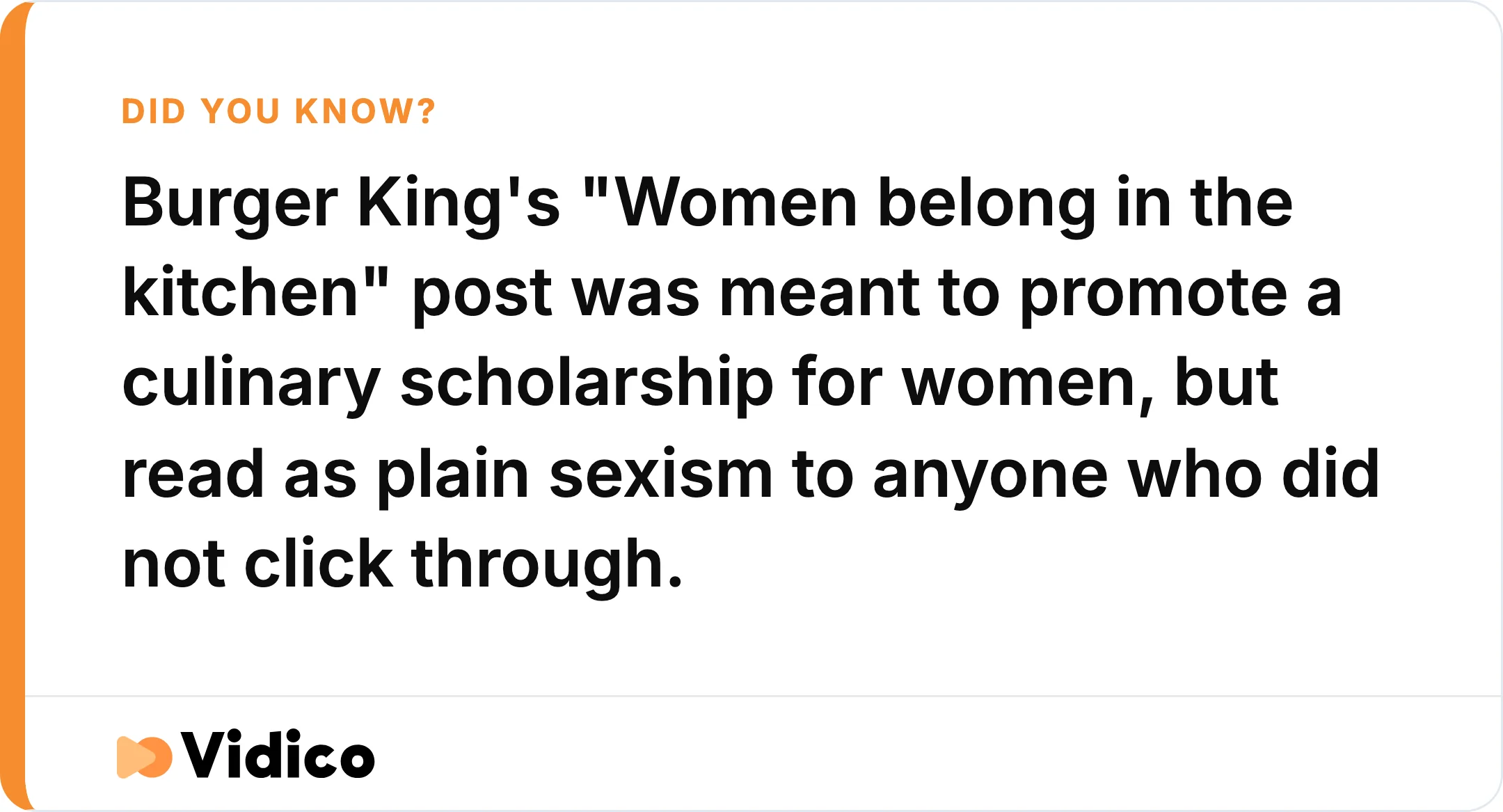
Misinterpretation turns a normal ad into a flashpoint when a brand intends one meaning and audiences read another.
Do Controversial Ads Actually Work?
Controversial ads can work, but the odds are poor and the downside is severe. A provocative campaign generates free reach, media coverage, and conversation, which is why brands keep trying. The problem is that the same attention amplifies a misstep just as fast as a hit.
The rare wins share a trait: the controversy aligns with what the brand already stands for. Nike’s Kaepernick ad drew boycotts yet lifted sales because taking a bold social stance fit Nike’s decades-old athlete-activism positioning. The failures share the opposite trait. Pepsi, Dove, McDonald’s, and Nivea all reached for meaning or shock that did not match their brand, and each pulled its ad within days.
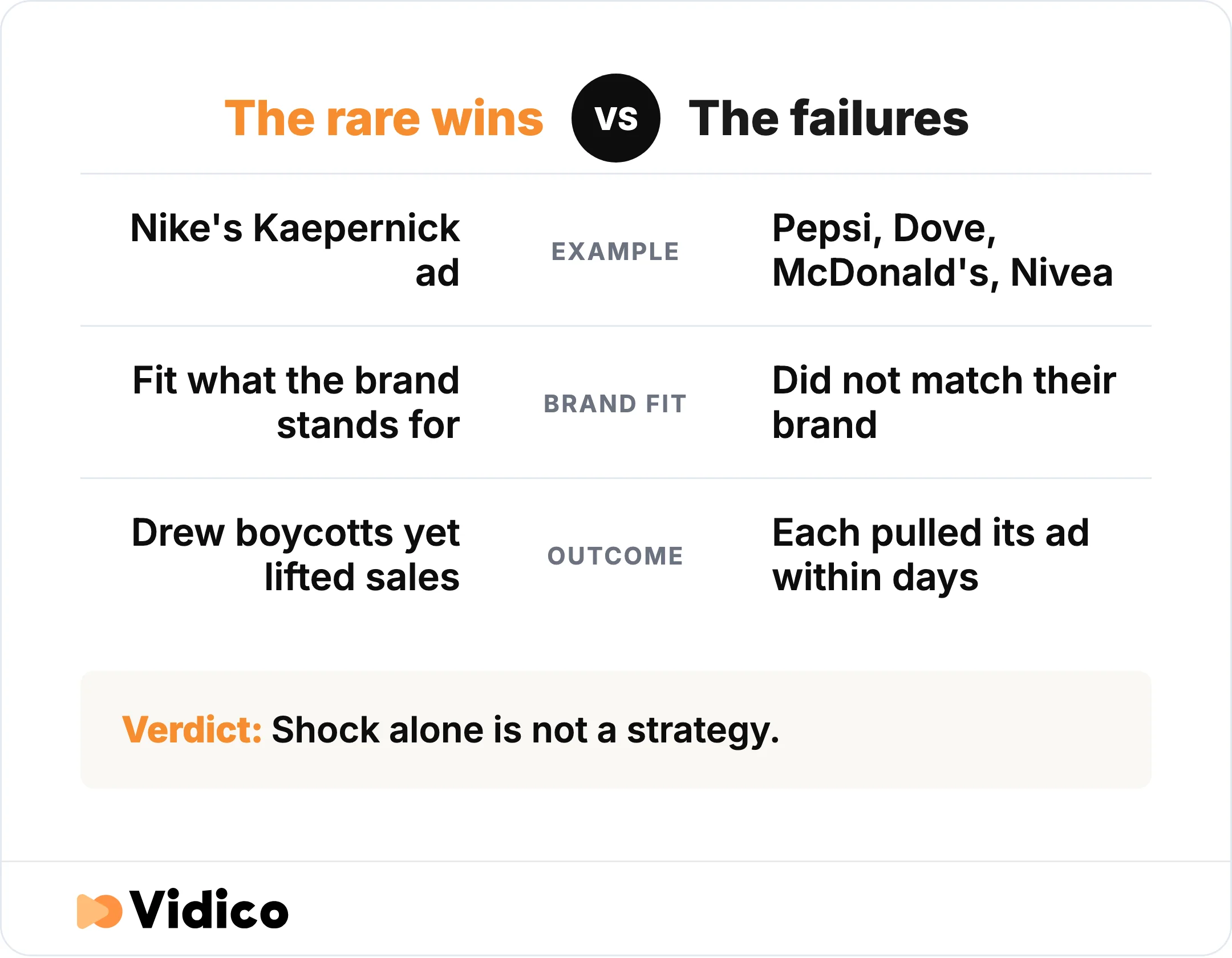
The rare controversial ads that worked matched what the brand already stood for; the failures did not, and were pulled within days.
The lesson is that shock alone is not a strategy. An ad that offends without a clear, honest reason tends to damage trust, and rebuilding trust costs far more than the attention was worth.
How to Run a Bold Campaign Without the Backlash
At Vidico, we produce video and creative for B2B brands, from explainer videos to brand campaigns, and we have shipped more than 2,000 campaigns that have earned over 1.5 billion views. The brands that stand out without blowing up tend to do three things.
- Anchor the idea to the brand. A bold message works when it extends what the brand already believes. If the connection is forced, audiences notice.
- Pressure-test against real audiences. Before launch, run the concept past people outside the core team who will read it differently. Most of the ads on this list would have been caught by one honest outside opinion.
- Plan for the reaction. Decide in advance how the brand responds if the ad lands badly, so a misread becomes a quick correction instead of a slow crisis.
Bold does not have to mean risky. Our work on the Movember “Mo Like a Pro” campaign took an attention-grabbing, playful idea and turned it into roughly 4 million views and more than 330,000 signups. The idea was daring, and the execution was planned.
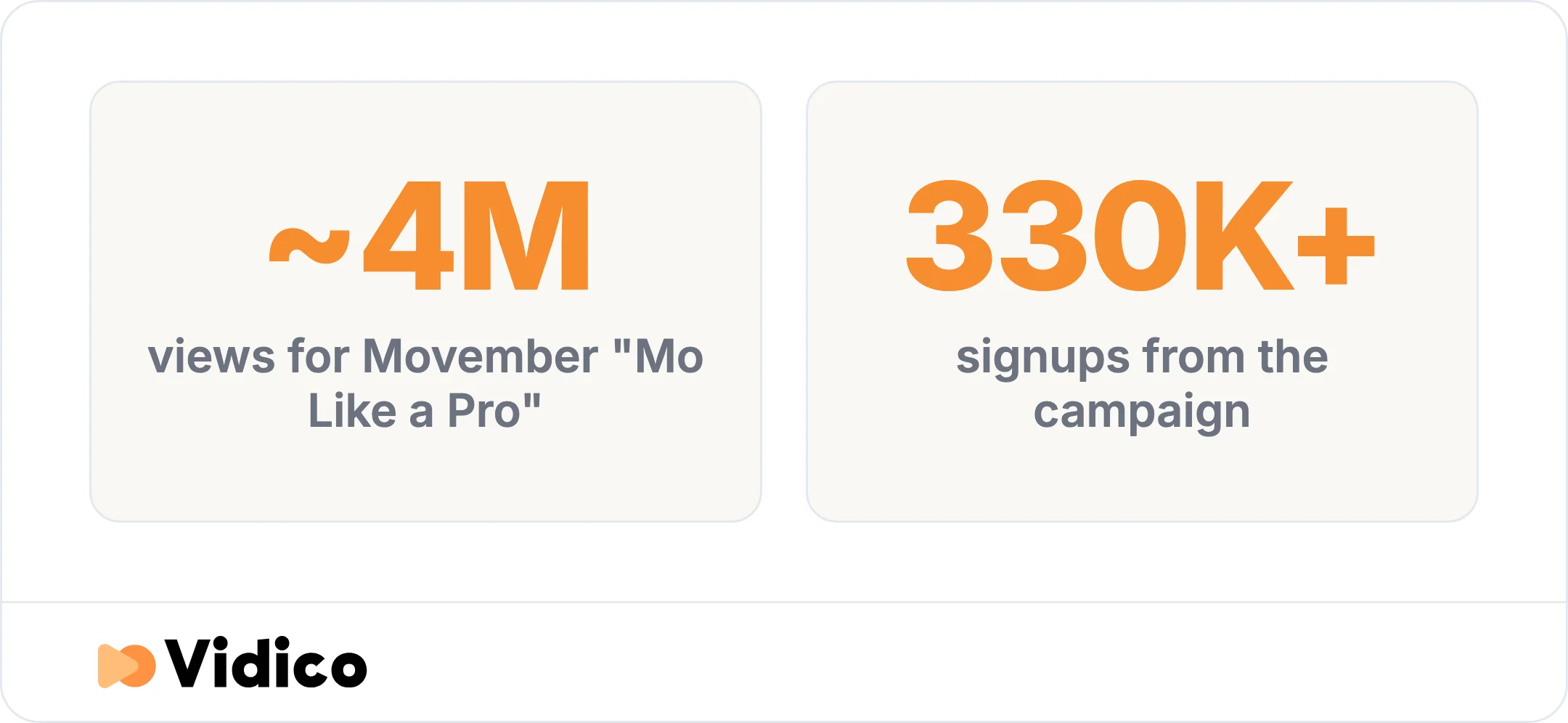
Vidico’s Movember “Mo Like a Pro” campaign took a playful, attention-grabbing idea to roughly 4 million views and more than 330,000 signups.
If you want an outside read before you commit budget, our Creative Intelligence Report is a free competitive analysis delivered within 48 hours, covering 12 areas of your creative. Spots are limited.
FAQs
What is the most controversial ad of all time?
Pepsi’s 2017 “Live for Now” ad with Kendall Jenner is one of the most frequently cited controversial commercials. It was accused of trivializing social-justice protests, and Pepsi pulled it within a day and apologized. Older examples like Love’s Baby Soft and more recent ones like Apple’s iPad “Crush” are also common answers, which shows there is no single winner, only a shifting list of the worst offenders.
What makes an ad controversial?
An ad becomes controversial when it offends or upsets a large audience, usually through insensitivity, tone-deafness, or shock value. Ads that trivialize serious issues, rely on racist or sexist tropes, or misread the cultural moment draw the strongest backlash. The reaction is often amplified on social media, which turns a single misstep into a public crisis within hours.
Do controversial ads actually work?
Sometimes, but rarely, and the risk is high. A controversial ad can earn free attention and reach, and a few, like Nike’s Kaepernick campaign, have boosted sales because the message fit the brand. Most, including Pepsi, Dove, and McDonald’s, backfire and force an apology or a product pull. The attention is real, but so is the reputation damage.
What commercials have been banned?
Several ads on this list were banned or pulled from broadcast, including Pot Noodle’s “The Horn,” which UK regulators pulled, and PETA’s “Last Longer,” which networks rejected as too explicit. Ads are usually banned for sexual content, offensive stereotypes, or misleading claims after regulators or broadcasters receive complaints.
The Bottom Line
The most controversial commercials of all time are a warning, not a template. A bold ad can earn attention that money cannot buy, but the same visibility turns a misjudged message into apologies, product pulls, and lasting damage. The failures on this list almost always trace back to insensitivity, tone-deafness, or shock used without a reason.
The brands that get it right treat boldness as a plan, not a gamble. They tie the idea to what they already stand for, test it against how real audiences will read it, and prepare for the response. Vidico builds bold, on-brand video campaigns for B2B teams that grab attention for the right reasons. If you are planning your next campaign, book a free strategy session and we will help you push the creative without the fallout.