Most fintech brands treat their ad creative as a production problem. They brief an agency, approve a video, run it until performance drops, and start over. The result is content that looks polished and converts poorly – because the problem was never production quality. It was strategy.
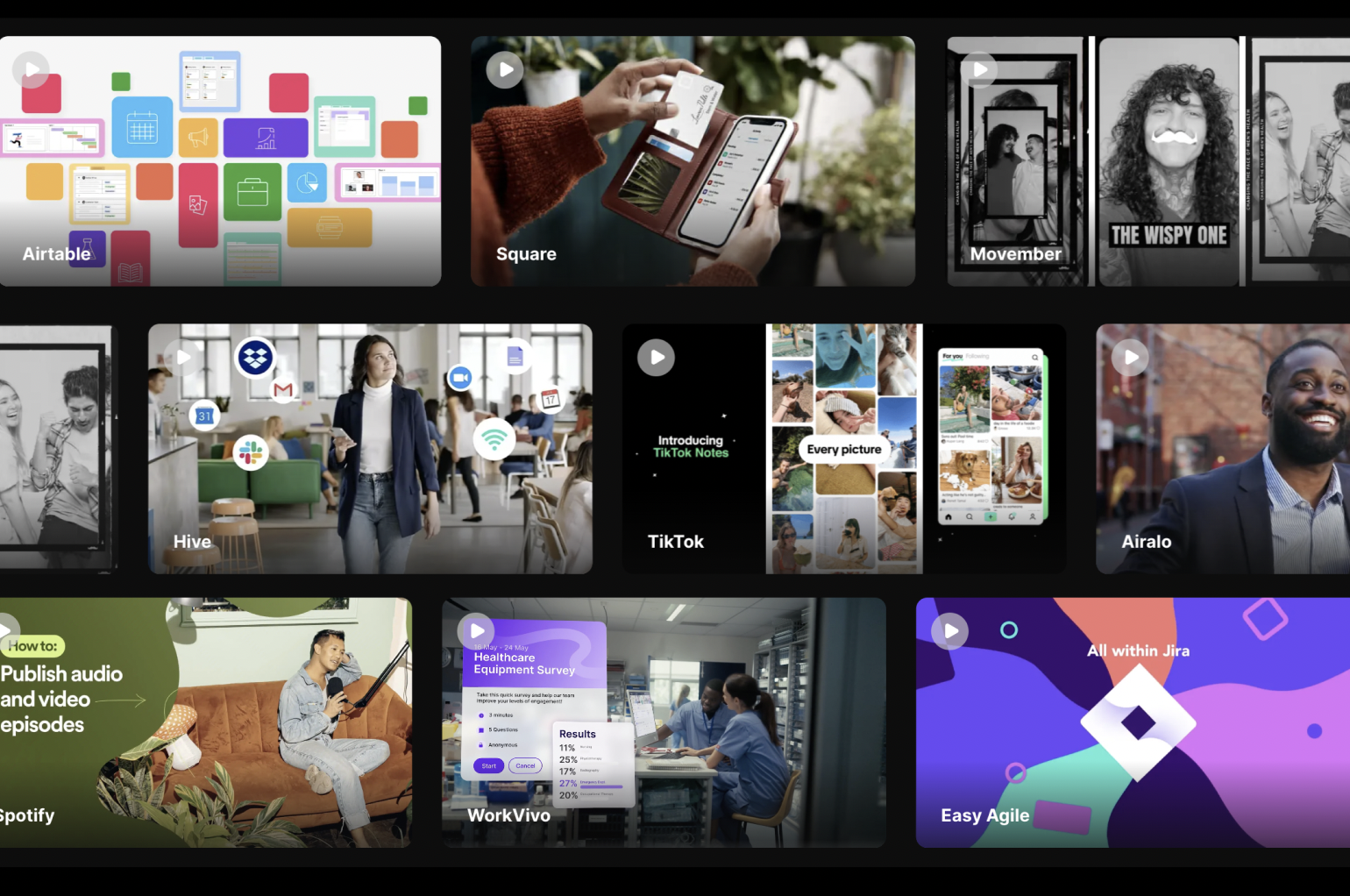
Fintech advertising has a challenge that most other categories do not. The product is invisible. The value is abstract. And the stakes are high enough that a viewer who does not trust you in the first few seconds will not convert, no matter how clean your UI looks or how competitive your rates are.8 Brands That Get Video Marketing Right And Tips From Them
After producing financial video production campaigns for brands including Juni, Airwallex, Behalf, Square, and Brex, we have identified what actually separates fintech ads that convert from ones that just run. This guide covers 10 best practices for visual fintech ad creative in 2026 – video, animation, UGC, static, and carousel – with data and real examples behind each one.
Key takeaways
- Fintech customer satisfaction sits at 92% vs 76% for traditional banks (J.D. Power 2025). That gap does not close by itself. Visual creative is the most efficient tool for building the trust that digital interfaces alone cannot create.
- Financial services companies increased video creation by 189% year-over-year (Vidyard 2024). The category is moving fast and brands not building creative systems are already behind.
- 96% of B2B buyers prefer video when evaluating financial products (Wyzowl 2026). For fintech targeting businesses, video is not optional – but it is one format in a broader visual creative mix.
- 85% of people have been convinced to buy a product after watching a video (Wyzowl 2026). For fintech, that number matters most at the consideration stage, not the awareness stage.
- Enterprise fintech deals involve 8.5 stakeholders on average and sales cycles of 211 to 320 days (NAV43 2025). Creative built for a single decision-maker misses most of the buying committee.
- More creative testing means more shots on goal. Brands that diversify formats, test different hooks, and put paid spend behind organic winners consistently outperform brands running a single creative.
Content
- Why fintech ads are different
- The trust gap: what fintech advertisers are really selling
- The visual fintech ad formats that work in 2026
- How to match format to audience and funnel stage
- 10 best practices for fintech visual ad creative
- Fintech ad benchmarks by format and platform (2025-2026)
- Common mistakes fintech brands make with ad creative
- Case studies: Vidico fintech clients
- Why work with Vidico
- FAQs
- Sources
Why fintech ads are different
Fintech advertising sits at the intersection of two competing demands: the need to explain something complex and the need to earn trust from someone who has every reason to be skeptical.
A consumer scrolling their feed does not know the difference between a legitimate neobank and a startup that will fold in eighteen months. They do not know whether your payment platform is secure or whether your lending rates are actually competitive. What they do know is whether you feel trustworthy in the first few seconds of an ad – and that judgment happens before they have processed a single feature.
This is the core challenge fintech ads have to solve that most other categories do not. You are not selling a product. You are selling permission to be trusted with money.
Financial services companies recognized this shift early. Video creation in the sector grew 189% year-over-year according to Vidyard’s 2024 benchmark report. Fintech ad spending climbed more than 45% over the last three years (FinancialContent 2026). The brands driving that growth are not just producing more content. They are building creative systems designed to close the trust gap at every stage of the funnel – across every format.
“What makes creative content stand out is its ability to be different and unique. It’s this originality that draws attention and leaves a lasting impression.” (Michael Pirone, Co-Founder, Vidico)
The trust gap: what fintech advertisers are really selling
In 2020, only 3% of US consumers used a digital bank as their primary financial institution. Today that number is 30%. That growth happened fast, but it did not happen without friction.
Fintech customer satisfaction now sits at 92% vs 76% for traditional banks (J.D. Power 2025). Fintech wins on speed, convenience, and digital experience. Where it still faces headwinds is trust – the kind of deep, institutional trust that comes from decades of relationships and regulatory history.
For fintech advertisers, this creates a specific creative challenge. Your ad is not just competing for attention. It is competing against the viewer’s default skepticism about financial products they have never touched before.
The data confirms this in the B2B segment. Enterprise fintech or financial services deals involve an average of 8.5 stakeholders (NAV43 2025) and sales cycles ranging from 211 to 320 days. A CFO evaluating a new payment platform is not going to convert from a single static ad or a 15-second Reel. They need multiple touchpoints across multiple formats, each speaking to different concerns across a buying committee that includes finance, compliance, security, and operations.
Visual creative solves this because each format serves a different job at a different funnel stage. The brands winning in fintech advertising are not picking one format. They are building systems that deploy the right creative at the right moment across a buying journey that can span almost a year.
The visual fintech ad formats that work in 2026
Not all visual formats serve the same purpose. Choosing a format based on what looks best rather than what the audience needs at that moment in their journey is one of the most common reasons fintech ad creative underperforms.
Here is how each format earns its place in a fintech creative system:
Video ads
Video remains the highest-performing format for fintech across every metric that matters. 85% of people have been convinced to buy a product after watching a video (Wyzowl 2026). 96% of B2B buyers prefer video when evaluating financial products. Financial services video ad investment grew 28% year-over-year according to Statista 2025.
Video works in fintech for a specific reason: it can build emotional trust and deliver technical information simultaneously. A 90-second explainer can show how a product works, demonstrate that real businesses use it, and communicate brand credibility in less time than it takes to read a product page.
Best use cases: product explainers, brand awareness, testimonials, platform walkthroughs, and awareness-stage social ads.
Animated explainer videos
Animation is the native format for fintech complexity. It can show UI flows, data movements, payment rails, and system architecture in a way that live action cannot – without requiring the viewer to understand the underlying technology.
For fintech products where the value proposition is abstract (embedded finance, API-first banking, treasury management), animation removes the visualization barrier that static content cannot overcome. Animated explainer videos have been the format of choice for Airwallex, Airbank, and Behalf when communicating financial infrastructure to audiences ranging from technical founders to non-technical business owners.
Best use cases: product education, onboarding sequences, B2B platform explanations, and awareness campaigns for complex financial products.
UGC-style video
UGC-style creative earns 4x higher click-through rates at 50% lower cost-per-click compared to standard ad creative (inBeat Agency). In fintech, those numbers carry additional weight because UGC does not look like a brand trying to sell you something – which is exactly the signal skeptical financial buyers need.
Founder-led and team-led content follows the same logic. A fintech founder or product lead speaking directly to camera about a specific problem they solved builds credibility in a way that produced brand videos cannot replicate. This format works especially well on LinkedIn for B2B fintech, where professional authenticity outperforms polish.
Best use cases: top-of-funnel social ads, testimonials, consideration-stage retargeting, founder-led LinkedIn content, and consumer fintech products targeting younger demographics.
Static image ads
Static ads are the workhorses of fintech or financial services advertising. They load fast, render reliably across placements, and communicate a single clear message without requiring the viewer to engage for more than a second.
The risk with static in fintech is genericness. Financial product imagery – coins, graphs, upward arrows, smiling people with phones – has been so overused that it triggers the same scroll reflex as any other ad. Static ads in fintech that perform are built around specific claims and unexpected visuals rather than category conventions.
Best use cases: retargeting, rate or offer promotions, brand awareness at scale, LinkedIn sponsored content, and display ads targeting professional audiences.
Carousel ads
Carousel ads give fintech brands a format for complexity that static cannot handle alone. Multiple cards allow a product story to unfold sequentially – problem on card one, solution on card two, proof on card three, CTA on card four.
On Facebook and Instagram, carousel tends to see higher engagement than single-image formats because the swipe mechanic creates an active viewing experience. For B2B fintech on LinkedIn, carousel is one of the most effective formats for presenting case study data, step-by-step process explanations, and multi-feature product overviews.
Best use cases: multi-feature product explanations, case study presentation, sequential storytelling, and consideration-stage campaigns.
How to match format to audience and funnel stage
The most common fintech ad mistake is using the same format for every audience at every stage. A brand video that works for cold awareness on YouTube will feel slow and generic to a warm prospect who has already visited your pricing page three times.
Vidico’s audience-creative-fit framework maps format selection across two axes: funnel stage (from discovery to action) and concept language (from functional to emotional). For fintech, this looks like:
Discovery stage, emotional: Brand videos to strengthen positioning. Social videos and UGC to relate and attract. Animated explainers to remove complexity.
Discovery stage, functional: Product ads to brand and educate. Motion graphics to highlight key features.
Action stage, functional: Demo videos to show how it works. Overview videos to pitch the product. Promo videos to communicate offers.
Action stage, emotional: Case study videos to demonstrate social proof.
The practical implication: a fintech brand running only one type of creative is serving only one part of its funnel. A cold audience CFO encountering your brand for the first time needs brand and explainer video. That same CFO, three months later, needs a case study video showing a company like theirs achieving measurable results. The creative has to evolve with the buyer’s position in the journey.
10 best practices for fintech visual ad creative
1. Distill your customer insight before choosing a format
The most common fintech creative mistake is choosing a format before understanding what the audience actually needs to see. A beautifully produced animation that answers the wrong question converts worse than a rough UGC video that answers the right one.
Before briefing any creative, define the specific insight that will move your target audience. Not “our product saves time” but “a fintech CFO at a Series B company is spending 40% of their week reconciling payments across three banking platforms and cannot get their team to adopt a single system.” That level of specificity determines format, message, hook, and platform simultaneously.
Vidico’s production process starts here: distill the unique customer insight, then find the creative format that best communicates it. Skipping this step and going straight to production is the reason most fintech ad creative feels generic – it was built for a category, not for a person.
2. Lead with the problem, not the product
Fintech products solve real, expensive problems. Those problems are more compelling than any feature list.
The ads that earn attention in fintech feeds open with a situation the viewer recognizes – a specific frustration, a costly inefficiency, a moment where the current system failed. The product enters the story as the resolution, not the introduction. This applies across every visual format.
A static ad that opens with “Managing 14 bank accounts across 5 currencies” earns more attention than one that opens with a product name. A carousel that starts with a recognizable problem on card one earns more swipes than one that starts with brand messaging. A video that opens with a situation before showing a product converts better than one that opens with a logo.
When Vidico produced Behalf’s explainer video, the opening frames focused on the friction of invoice financing for SMEs before introducing the product. When we produced Airbank’s animated explainer, the first thing viewers saw was the problem of managing multiple bank accounts – not the platform itself.
3. Build trust before asking for conversion
Fintech buyers do not convert on first exposure. The brands that treat every ad as a direct response vehicle – CTA to sign up, CTA to get started – are misunderstanding where their viewer is in the decision process.
Trust in fintech is built through accumulated exposure to credible signals: real customers, specific results, compliance credentials, recognizable client logos. An ad that leads with “Sign up today” to a viewer who has never heard of you is asking for commitment before establishing credibility.
The most effective fintech creative sequences use different formats at different funnel stages. Video and animation build familiarity at awareness, static and carousel deliver proof points at consideration, and UGC and testimonial video handle final objections at decision. No single format does all three jobs well.
4. Design every format for silent viewing
92% of business video viewers watch without sound (Lambda Films, cited in Whitehat 2026). For static and carousel, sound is irrelevant. But the principle – that your visual layer has to carry the full message – applies to every fintech ad format.
For video and animation: captions are not optional. They are the primary text layer for the majority of your viewers. Captions increase video viewing time by 12% and completion rates by up to 80%. Auto-generated captions produce errors that undermine brand credibility in a category where every word matters.
For static and carousel: every word on screen has to work independently. The headline, the visual, and the supporting copy have to communicate the complete message without audio context.
The test for any fintech ad: remove the audio, cover the logo. Does it still communicate what the product is, who it is for, and why they should care?
5. Run organic experiments before putting paid spend behind creative
One of the most cost-effective principles in fintech advertising is simple: run as many organic experiments as you can, then put paid spend behind your winners.
Paid fintech ads are expensive to test. LinkedIn CPCs for CFO targeting run $15 to $20+. Facebook Finance CPL averages $30 to $77 depending on sub-category. Testing five different hooks at those costs burns budget fast. Testing organically first – through LinkedIn posts, organic social video, email sequences – identifies which messages resonate with the audience before any paid spend is committed.
The winning formula: treat organic content as a testing ground for creative hypotheses. The post that earns unusual engagement, the founder video that gets shared inside a buying committee, the carousel that generates comments from exactly the right audience – these are the signals that tell you which creative deserves paid amplification.
This is especially important for early-stage fintech brands where every dollar of ad spend needs to compound rather than experiment.
6. Diversify creative through formats and hooks, not just budgets
More creative testing means more shots on goal. The fintech brands that consistently outperform in paid advertising are not the ones with the biggest budgets – they are the ones running the most creative variation.
Vidico’s approach: create different openers so you can 10x the amount of creative you test without 10x’ing the cost. From a single core video production, the methodology generates 10 hook variations with different intros, supporting cutdowns for different placements, static frames for image ads, and carousel card content – all from one production investment.
The math matters in fintech. If your core production generates one video, you have one creative hypothesis. If that production generates one core video plus 10 hook variations plus statics plus carousel, you have 15 or more creative hypotheses running simultaneously. Each one generates data. The winners get more budget. The losers get replaced. That compound learning is what separates fintech brands that improve over time from those that refresh creative arbitrarily.
7. Use UGC and founder-led content to close the credibility gap
Produced creative signals investment. UGC and founder-led content signal authenticity. In fintech, where the primary purchase barrier is trust rather than awareness, authenticity often converts better than polish.
UGC-style creative earns 4x higher CTR at 50% lower CPC compared to standard ad creative (inBeat Agency). For fintech specifically, customer testimonials carry additional weight because they provide social proof in a category where skepticism is the default.
Founder and team-led content follows the same logic and is particularly effective on LinkedIn for B2B fintech. A fintech founder speaking directly to camera about a problem they built the product to solve earns a different kind of credibility than any produced brand video. It communicates that real people built this, understand the problem firsthand, and stand behind the solution.
One interview session with three customers or team members can generate awareness cuts, consideration cuts, objection-handling clips, and social proof snippets – all from a single production investment, all reviewed and approved before delivery.
8. Build a creative system, not a series of individual assets
The difference between a fintech brand that compounds its ad performance over time and one that resets every quarter is usually not budget. It is whether they have a creative system or a series of one-off productions.
A creative system works like this: one core production generates a main video asset, 10 hook variations, supporting cutdowns for each placement, GIFs for landing pages and email, static frames for image ads, and display ad variants. A bespoke design system captures the visual language – colors, typography, motion style, and brand tone – so that every future production starts from a foundation rather than from scratch, making each iteration faster and cheaper than the last.
Vidico’s production methodology is built around this compounding model. The result: brands produce up to 10x more creative assets from the same budget investment. For fintech, where sales cycles are long and creative needs to sustain performance across months, that output is what allows a campaign to keep working rather than fatiguing before the buying committee has made a decision.
9. Segment cold and warm audiences with visibly different creative
Retargeting campaigns produce 10 times better conversion rates than prospecting campaigns on average. But most fintech brands run the same creative to both audiences, which wastes the retargeting advantage.
Cold audiences need a hook that earns attention and frames the problem. They do not know the brand. Video and animation work best here because they establish context quickly. Static ads for cold audiences need to lead with a recognizable situation, not a product feature.
Warm audiences already know the brand exists. They need proof and urgency. That means different creative: specific customer outcomes in UGC or static testimonial format, carousel ads with detailed feature comparisons, or demo and walkthrough videos that speak directly to the evaluation they are already conducting.
For enterprise fintech, this segmentation extends to the buying committee. A video built for a CFO’s concern about financial reporting will feel irrelevant to the compliance officer evaluating the same product for a different reason. Building audience-specific variants from the same production is one of the highest-leverage changes a fintech advertiser can make without increasing media spend.
10. Measure creative performance by pipeline impact, not platform engagement
Platform metrics tell you how your creative is performing on the platform. They do not tell you whether it is moving fintech buyers toward a purchase decision.
For fintech brands with long sales cycles and multiple stakeholders, the metrics that matter are further down the funnel: cost per qualified lead, cost per sales-accepted meeting, and revenue influenced by each creative asset at each buying stage. A LinkedIn video that generates 50 views and two enterprise demos outperforms one that generates 500 views and no qualified conversations.
The practical approach: use storytelling metrics to guide iterations. Track which hook formats earn the most time-in-view from qualified audiences. Track which formats appear most often in the content history of accounts that eventually convert. Let that data determine which creative gets more budget and which gets replaced.
The industry benchmark for fintech advertising ROI is a minimum 300% return on ad spend (Lever Digital 2025). Reaching that benchmark requires connecting creative decisions to pipeline outcomes – not optimizing for platform dashboards.
Common mistakes fintech brands make with visual ad creative
Leading with product features instead of problems. A payment platform that opens with “16 currencies, real-time settlements, API-first” has lost most viewers before the second sentence. Features communicate to buyers who already understand the category. Problems communicate to everyone.
Skipping the audience insight step. Choosing a format – video, static, carousel – before defining what the target audience specifically needs to see produces creative that looks professional and says nothing. The format follows the insight, not the other way around.
Using the same creative across all formats and placements. A landscape video adapted to a vertical Reel with letterboxing, a static image repurposed as a carousel without reformatting, an animation designed for YouTube running as a Facebook Feed ad without captions – each signals that the brand did not build for the placement.
Putting paid spend behind untested creative. Running organic experiments first – LinkedIn posts, organic social video, founder-led content – identifies which messages resonate before committing paid budget. Skipping organic testing is expensive in a category with high CPCs.
Producing one asset and calling it a campaign. A single fintech ad will fatigue in two to three weeks of active delivery. Without creative rotation across formats, frequency caps trigger, costs rise, and the campaign runs past the point of diminishing returns before the sales cycle has matured.
Measuring success by platform engagement. High video completion rates and high CTRs are inputs, not outcomes. A fintech ad campaign is succeeding when it generates qualified pipeline – not when it generates impressions.
Case studies: Vidico fintech clients
Juni: 75% outperformance after switching to native video
Juni, the world’s first digital bank built for media buyers and online advertising, needed a video that could serve simultaneously as a product explainer and a high-performance YouTube and Facebook ad.
Vidico produced an app video focused on dynamic UI animation: abstract interface shots, on-screen text, and voiceover that walked through the platform’s core benefits without relying on characters or narrative. The format was chosen specifically because Juni’s audience – media buyers and performance marketers – responds to product clarity over emotional storytelling.
- 75% outperformance vs. previous ad creative
- Used across YouTube, Facebook, and landing pages
- Generated new business immediately after launch
“Vidico delivered above and beyond expectations. We had the opportunity to give feedback in each step of the production process and Vidico went the extra mile to make sure they understood what we wanted at all times.” (Mathias Eriksson, Brand and Marketing Director, Juni)
Cascade: 93% view rate on Facebook and YouTube
Cascade needed to reintroduce its brand to a market that values structure and credibility. The brief was to produce a brand video that felt confident and direct without feeling like a standard B2B product demo.
Vidico used an interview-based approach filmed in a professional studio, combining on-screen talent with dynamic product UI visuals from the user’s perspective. The format choice – live-action interview plus UI – balanced human trust signals with product specificity, addressing both the emotional and functional dimensions of the buying decision.
- 93% view rate on Facebook and YouTube
- Over 1.4 million views on YouTube
- Increased conversion rates for inbound prospects
“With Vidico, every single detail matters. They make sure everything looks clean, beautiful and very professional.” (Karim Zuhri, Chief Operating Officer, Cascade)
Toggl: 1 million organic YouTube views in under a month
Toggl Track needed a large-scale awareness campaign for YouTube pre-roll, Facebook, and Instagram. The challenge was translating time tracking software into creative that would earn attention in a skippable format across multiple platforms.
Vidico built the concept around a narrative hook strong enough to earn attention across all three platforms without format adaptation: Greek philosophers transported through time to contrast outdated solutions with Toggl Track. The hook landed in the first three seconds, and the narrative reward justified watching through.
- 1 million organic YouTube views in under one month
- Average view rate of 94.7%
- Paid view rate of 33.54% from skippable ads
- Gold Award at the 2022 MUSE Creative Awards
“The Vidico team outdid themselves by understanding our product and our audience, aligning every detail from research and script writing all the way to post production and launch.” (Juan Carlos Gaal, Performance Marketing Manager, Toggl)
Airwallex: brand awareness through 2D animation
Airwallex needed a brand awareness video that could communicate global payment infrastructure to audiences unfamiliar with the platform. Live action could not represent the cross-border payment flows and transaction logic that define Airwallex’s value – animation could.
Vidico produced a 2D animated explainer using hand-drawn storyboards, Illustrator, and After Effects. Every element was custom-built to match Airwallex’s visual identity. The result built brand recognition across target markets while establishing a visual language that could be extended across future creative assets.
Why work with Vidico
After producing 1,200+ projects across tech and fintech brands, Vidico has developed a financial video production approach that treats creative as a compounding asset, not a one-time expense.
The production methodology follows four steps designed to generate the most creative value from each investment:
- Distill unique customer insight. Before any production starts, the creative strategy identifies the specific insight that will move the target audience – not a category message, but a precise understanding of what a particular buyer needs to see at a particular stage of their decision.
- Find the audience-creative-fit. Create stories that properly match the customer insight and the distribution channel. The format follows the insight and the platform, not the other way around.
- Diversify creative through formats and hooks. Create different openers to 10x the amount of creative you can test without 10x’ing the cost. One core production generates a main asset, 10 hook variations, supporting cutdowns, GIFs, statics, and display ads – all from the same shoot.
- Templatize through a design system. Build a bespoke design system that captures the visual language – colors, typography, motion style, and brand tone – so that future productions start from a foundation rather than from scratch, making each iteration faster and less expensive than the last.
The result: brands produce up to 10x more creative assets from the same budget investment. For fintech or financial services, that output is the difference between a campaign that builds trust over a 320-day sales cycle and one that fatigues before the buying committee has decided.
Transparent pricing. Use our VidiFit Quiz to get a clear, upfront estimate in under two minutes. For a full breakdown of production budgets, see our video production cost guide.
“Whether it’s creating a unique visual identity, producing sizzles, developing educational resources, or handling translations, Vidico has helped us hit key business goals and elevate our efforts. Hands down the best agency we’ve partnered with.” (Jennah Blau, Global Publisher Growth & Education, TikTok)
In a category defined by complexity and skepticism, the benefits of video marketing for fintech go far beyond engagement metrics. Video enables brands to simplify abstract products, demonstrate credibility, and build trust at scale across long and multi-stakeholder buying journeys. When executed as part of a broader creative system, it becomes one of the most effective tools for turning attention into confidence and ultimately, into conversion.
Sources
- Wyzowl, State of Video Marketing 2026
- Vidyard, Video in Business Benchmark Report 2024
- Whitehat SEO, B2B Video Marketing Benchmarks 2026
- Lever Digital, Top 10 Advertising Benchmarks for FinTech 2025
- NAV43, LinkedIn Ads Benchmarks for FinTech 2025
- Strike Social, Q2 2025 Facebook Benchmark Report
- Novus Loyalty, FinTechs vs Traditional Banks 2026
- J.D. Power, 2025 US Retail Banking Satisfaction Report
- inBeat Agency, UGC Statistics
- Statista, Financial Services Video Ad Investment 2025
- FinancialContent, Fintech Digital Advertising Growth 2026