LinkedIn had 18.0 million members in Australia at the end of 2025, equal to 66.6% of the total population and 84.7% of adults aged 18 and over. Video posts on the platform now average a 6.00% engagement rate globally, up 7% year over year, while average video views per business page fell 36% over the same period.
Those two facts sit oddly together, and most articles on this topic only report the first one. This page reports both, states the period every figure covers, and separates the Australian data from the global data instead of blending them.
Key Takeaways
- LinkedIn’s Australian audience is 18.0 million members, growing 12.5% year on year while Australia’s overall social media user base grew just 0.5%. LinkedIn is the outlier in a saturated market.
- That 18.0 million figure counts registered members, not active users. It exceeds Australia’s entire employed workforce of 14.74 million by around 3.3 million people, so treat it as an addressable ceiling rather than a live audience.
- A LinkedIn “view” means two seconds of playback with half the video on screen. Because video autoplays in the feed, a slow scroll registers as a view. This is the single biggest reason reported view counts feel inflated.
- Video is not LinkedIn’s top-performing format. Native documents average 7.00% engagement against video’s 6.00%. Video’s advantage is reach and shareability, not raw engagement rate.
- Creative decisions drive 73% of video completions, according to LinkedIn’s own analysis of more than 13,000 B2B video ads. Production budget is not the variable that matters most.
- Australian social videos typically cost A$2,500 to A$5,000 each, dropping to A$800 to A$1,500 per video when three to five are filmed in a single day.
Content
LinkedIn’s Australian Audience
LinkedIn reported 18.0 million members in Australia in late 2025. Australia’s total population is roughly 27.0 million, so the platform’s stated audience covers about two thirds of the country.
1. LinkedIn had 18.0 million members in Australia in late 2025. The figure comes from LinkedIn’s own advertising planning tools, as reported in DataReportal’s Digital Australia report.
2. That audience equals 66.6% of Australia’s total population. This is the denominator most articles quote, and it includes children and retirees who would never use a professional network.
3. It equals 84.7% of Australians aged 18 and over. This is the more meaningful denominator for a B2B audience, and DataReportal publishes both.
4. It equals 68.6% of Australia’s total internet user base. Three denominators, three very different numbers, all describing the same audience.
5. LinkedIn’s Australian audience grew by 2.00 million people, or 12.5%, over 2025. Measured end of 2024 to end of 2025.
6. It grew 5.9% in a single quarter, adding roughly 1.00 million between July and October 2025.
7. The Australian audience splits 52.8% male and 47.2% female, based on the LinkedIn advertising audience data reported by DataReportal.
8. Australia had 14,738,800 employed people in May 2026, seasonally adjusted, according to the Australian Bureau of Statistics. LinkedIn’s Australian member count exceeds the country’s entire employed workforce by about 3.3 million.
9. Australia’s labour force participation rate was 66.7% in May 2026, with unemployment at 4.4%. There is no plausible reading in which 18.0 million Australians are active working professionals.
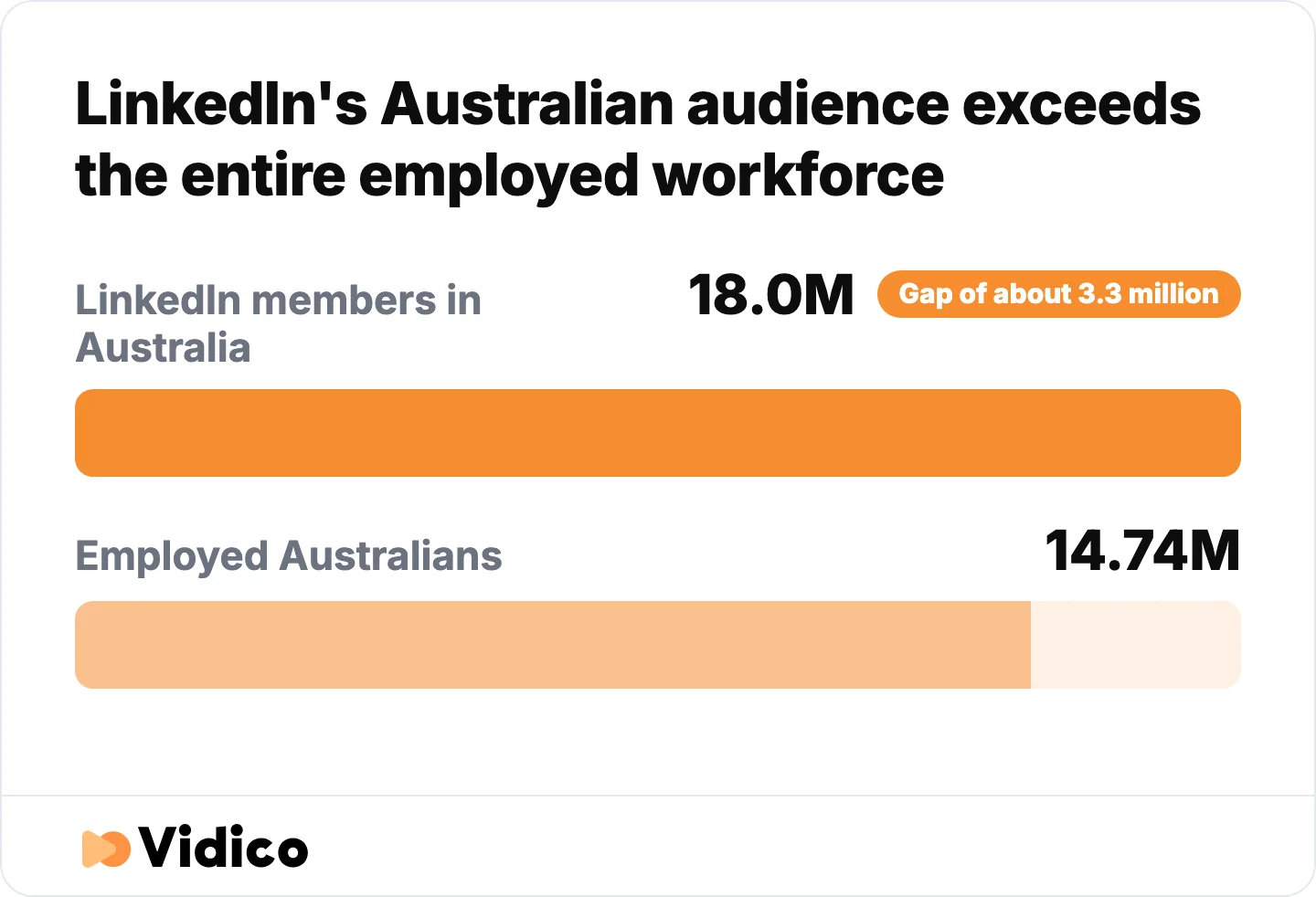
LinkedIn’s stated Australian audience is larger than the country’s entire employed workforce, which is why the figure should be read as registered accounts, not working professionals. Sources: DataReportal Digital Australia, Australian Bureau of Statistics.
10. Australia had 21.0 million active social media user identities in October 2025, equal to 77.7% of the population.
11. Australia’s social media user base grew just 0.5% year on year, adding around 100,000 identities. The market is saturated. LinkedIn’s 12.5% growth is the exception, not the norm.
12. 18.5 million Australians aged 18 and over used social media at the end of 2025, equal to 87.0% of the adult population. LinkedIn’s 84.7% adult reach sits just below the all-platform figure.
13. 91% of Australian adults used an online service to watch video content in a given week in 2025, according to the Australian Communications and Media Authority.
What LinkedIn Actually Counts as a Video View
A LinkedIn video view is two continuous seconds of playback with at least 50% of the video visible on screen. That is the Media Rating Council standard, and because video autoplays in the feed, scrolling past a video slowly enough can register a view without the viewer choosing to watch anything.
14. LinkedIn counts a video view at two seconds of playback with 50% of the video on screen. The definition is published in LinkedIn’s Campaign Manager help documentation.
15. Feed video autoplays by default, which means a portion of any view count reflects scroll behaviour rather than intent.
16. LinkedIn’s published audience figures count total registered members, not monthly active users. DataReportal states this directly and warns the numbers are not comparable with platforms that report monthly actives.
17. Video analytics stay available for up to 400 days after posting, and viewer demographics are visible only to the account that posted.
Read reported view counts with the definition in mind. A campaign reporting 100,000 views has not reached 100,000 people who watched the video. Completion rate is the more honest performance measure, because it only counts viewers who watched the video through to the end.
LinkedIn Video Engagement Benchmarks
Video averages a 6.00% engagement rate on LinkedIn, based on an analysis of 1.3 million business posts from 16,645 active business pages between January 2024 and December 2025. Video ranks third by engagement rate, behind native documents and multi-image posts.
18. Video posts average a 6.00% engagement rate, up 7% year over year, according to Socialinsider’s LinkedIn benchmarks.
19. LinkedIn’s platform-wide average engagement rate is 5.20%, up 8% year over year across all formats.
20. Native documents average 7.00% engagement, the highest of any format and up 14% year over year. Video does not lead LinkedIn on engagement rate.
21. Multi-image posts average 6.45%, also ahead of video.
22. Image posts average 5.30%, text posts 4.50%, polls 4.20% and link posts 3.25%. Link posts rank last, which is the clearest argument for uploading video natively rather than posting a link to it.
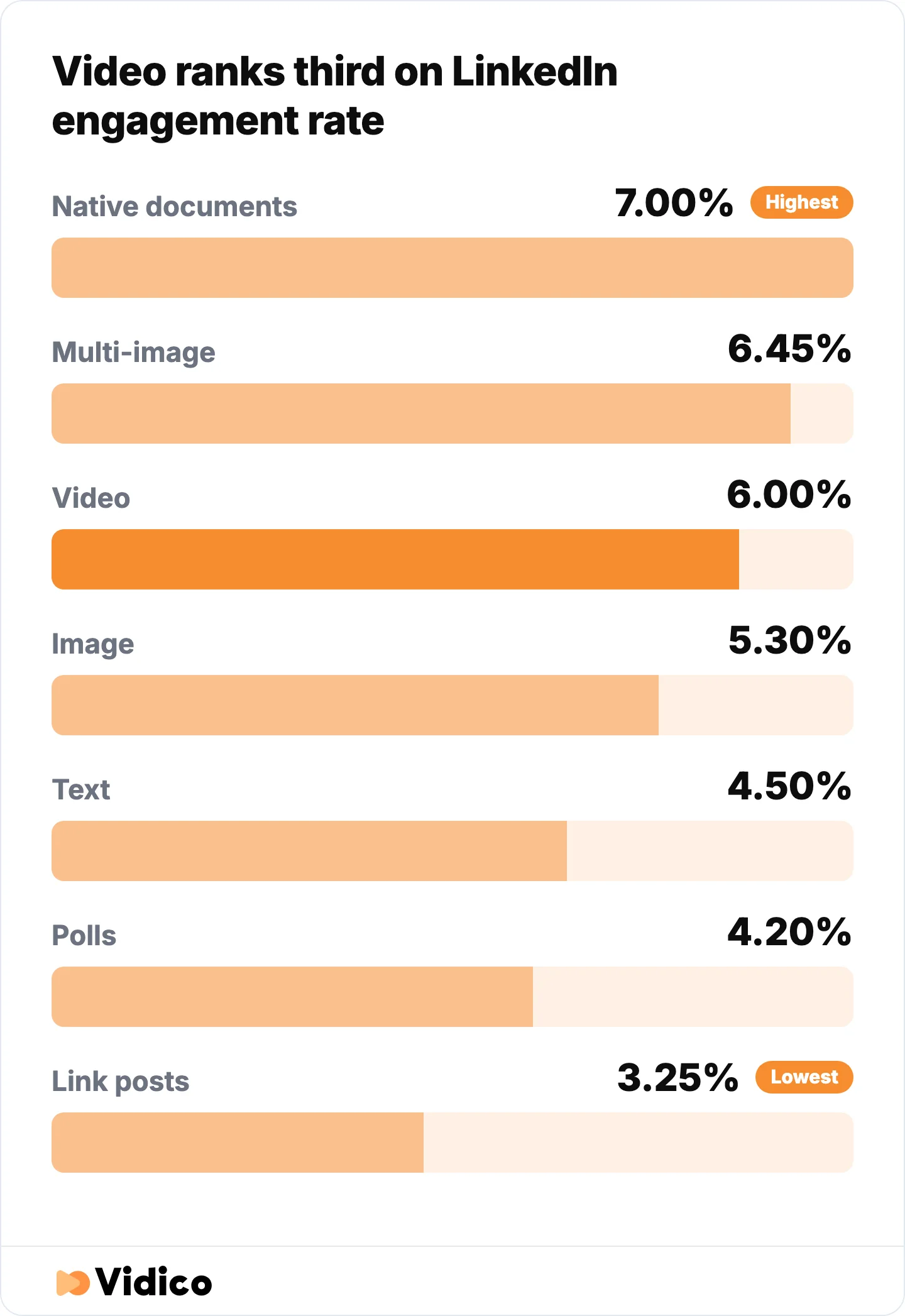
Video ranks third on engagement rate, behind native documents and multi-image posts, while link posts finish last. Source: Socialinsider LinkedIn benchmarks.
23. LinkedIn found video posts were 5x more likely to start a conversation than other content types. This figure comes from LinkedIn’s own platform data published in 2018 and has been repeated widely since without its date attached.
24. Videos under 30 seconds saw a 200% lift in view completions in LinkedIn’s video advertising guidance, published across 2017 and 2018. Still LinkedIn’s own number, but eight years old.
25. LinkedIn Live broadcasts generate 24x more comments than standard video posts, per LinkedIn figures published around 2020.
26. LinkedIn Live generates 7x more reactions than pre-recorded video, from the same 2020 dataset.
27. 37% of LinkedIn mobile viewers watch with sound on, and 21% keep their devices permanently muted, according to LinkedIn research published in 2017. The widely circulated claim that 79% of LinkedIn videos are watched silently does not come from LinkedIn and points in the opposite direction to LinkedIn’s own findings.
LinkedIn Video Growth and Reach
Video upload volume on LinkedIn is climbing while average views per page are falling. Both things are true at once, and the second one rarely gets reported.
28. Video uploads rose 20% year over year, alongside a 30% increase in comments, as reported by Social Media Today from Microsoft’s first-quarter FY2026 results.
29. That was LinkedIn’s third consecutive quarter of double-digit growth in video uploads.
30. LinkedIn reported video creation growing at roughly twice the rate of other post formats as video became its fastest-growing content type, per Social Media Today’s reporting of LinkedIn’s platform figures.
31. Average video views per business page declined 36% across all page sizes over the Socialinsider study period. More video is being uploaded and the average page is getting fewer views for it.
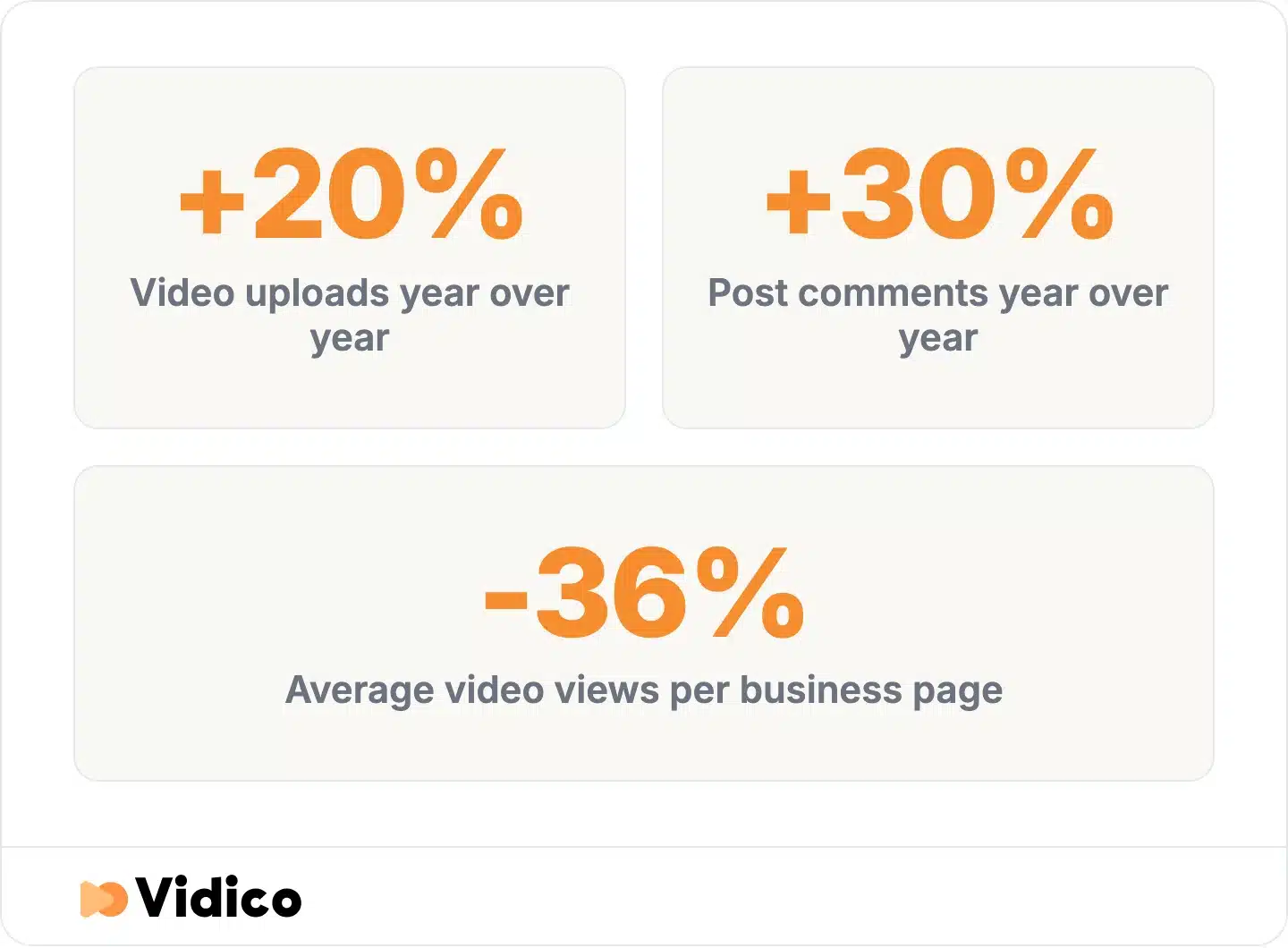
More video is going up while the average business page earns fewer views for it, so the same content reaches less than it did a year ago. Sources: Social Media Today reporting Microsoft Q1 FY2026, Socialinsider.
32. LinkedIn has more than 1.3 billion members across 200 countries and regions, according to LinkedIn’s own published company figures.
33. More than 71 million companies have a LinkedIn presence, also from LinkedIn’s published company figures.
34. Link posts sit at the bottom of every format benchmark at 3.25% engagement. Uploading a video to LinkedIn directly outperforms posting a link to it hosted elsewhere.
The practical read: rising upload volume and falling per-page views mean the same content earns less reach than it did a year ago. Competing on volume alone is getting more expensive. What still moves performance is the creative decision itself, which LinkedIn has measured directly.
What the Creative Data Says
LinkedIn analysed more than 13,000 B2B video ads and over 550,000 video frames across 70-plus dimensions through its Creative Labs research, published in July 2025. The headline finding is that creative choices, not budget, decide performance.
35. Creative choices account for 73% of what determines whether a viewer finishes a video ad. How much was spent shooting it matters far less than what was decided before the shoot.
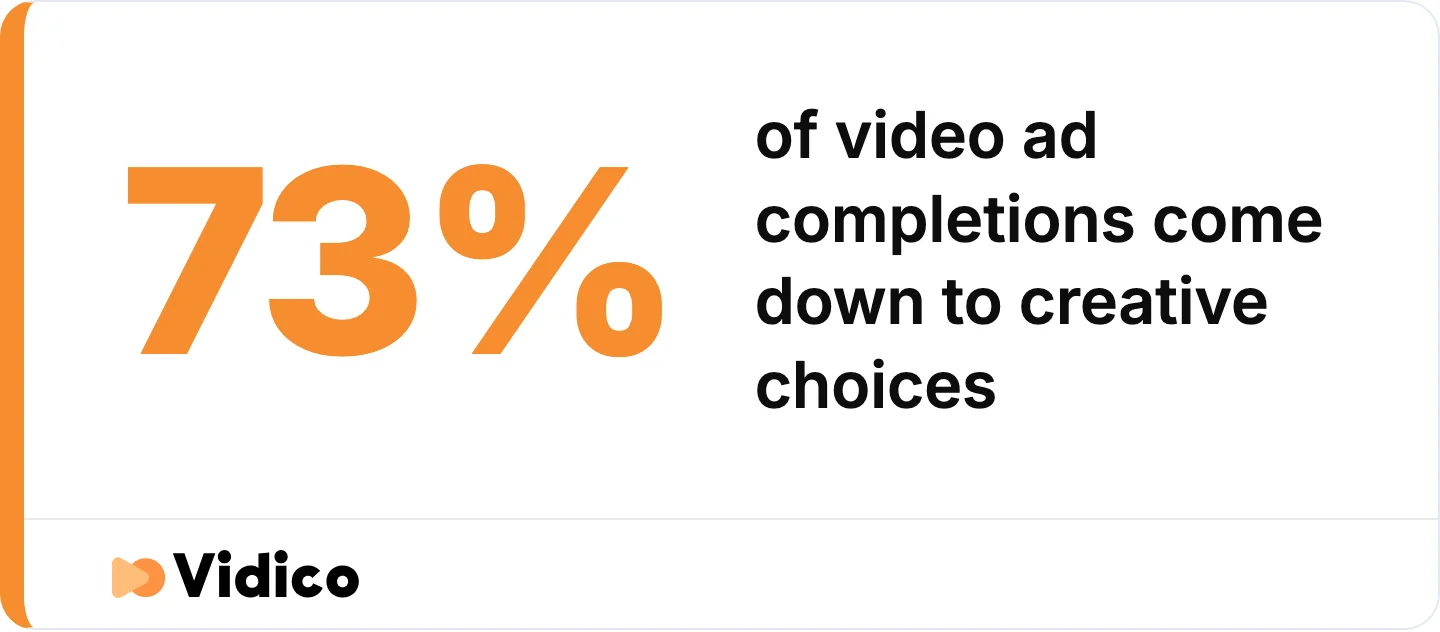
Budget is not the variable that decides whether a viewer finishes the video. Source: LinkedIn Creative Labs analysis of 13,000+ B2B video ads.
36. Creative decisions drive 49% of engagement rates in the same study.
37. The study covered 13,000+ B2B video ads and 550,000+ individual video frames assessed across more than 70 creative dimensions.
38. Blockbuster-style brand films drove 129% higher engagement than baseline.
39. Meme and cultural formats drove 111% higher engagement, and authentic emotional storytelling drove 78% higher engagement.
40. Face-to-camera delivery drove 34% higher engagement, and vertical formats drove 34% longer dwell time.
For a team with a fixed budget, this is the finding that matters most. The variable that moves completion rates is the creative decision, and that is a decision you can change without spending more.
LinkedIn Video Results From an Australian Campaign
Australian LinkedIn video results published by LinkedIn itself are rare. The clearest example is Smokeball, an Australian legal software company, which ran customer testimonial videos as Thought Leader Ads and compared them against a standard video ad campaign using the same footage.
41. Smokeball’s campaign produced a 186% increase in return on ad spend, according to LinkedIn’s published customer story.
42. It produced an 8.7x video completion rate against the comparison campaign.
43. It produced a 2x video view rate.
44. It cut cost per view by 50%.
Read the baseline carefully, because it matters. This is not video against no video. It is the same videos delivered as Thought Leader Ads against the same videos delivered as standard video ads. The creative was identical and the delivery format produced the difference.
Australian B2B and SMB Context
Australian business priorities on LinkedIn have shifted toward brand building and self-produced content.
45. 76% of Australian small and medium businesses named brand building their top goal for 2026, according to LinkedIn data reported by Mi3.
46. 65% of Australian brand owners create their content themselves.
47. Australian LinkedIn members identifying as “Founders” grew 58% between July 2024 and July 2025, having tripled since July 2022.
48. 79% of Australian small business marketers believe AI helps smaller brands compete with larger ones.
One caution when reading LinkedIn’s wider B2B research. LinkedIn’s Global B2B Marketing Outlook, which reports that 81% of B2B CMOs believe video accelerates sales cycles and 79% say it accelerates lead conversion, surveyed 1,299 marketers across the United States, United Kingdom, France, Germany and India. Australia was not in the sample. Those figures are global and should be labelled as such.
LinkedIn and Australia’s Under-16 Social Media Ban
Australia’s social media minimum age law took effect on 10 December 2025. LinkedIn does not appear on the eSafety Commissioner’s list of age-restricted platforms.
The eSafety Commissioner’s published assessment names Facebook, Instagram, Kick, Reddit, Snapchat, Threads, TikTok, Twitch, X and YouTube as age-restricted. It separately names Discord, GitHub, Google Classroom, LEGO Play, Messenger, Pinterest, Roblox, Steam, WhatsApp and YouTube Kids as not age-restricted.
LinkedIn is on neither list. eSafety notes that services are not obliged to notify it, so its lists are unlikely to be complete. The accurate statement is that LinkedIn has not been named as age-restricted, not that it has been exempted.
For B2B marketers the practical impact on reach is close to nil, since the audience is working adults. It matters for planning because every major Australian consumer video platform now carries an age restriction that LinkedIn has not been assigned.
What LinkedIn Video Costs in Australia
Australian social video production typically runs A$2,500 to A$5,000 per video. Batching several videos into one shoot day is the single biggest cost lever available.
49. Social media videos for LinkedIn, Instagram and TikTok cost A$2,500 to A$5,000 each in Australia as of 2026, based on our own published Australian production rates.
50. Filming three to five videos in a single day brings the cost down to A$800 to A$1,500 per video, against A$3,000 or more for the same video produced as a standalone shoot.
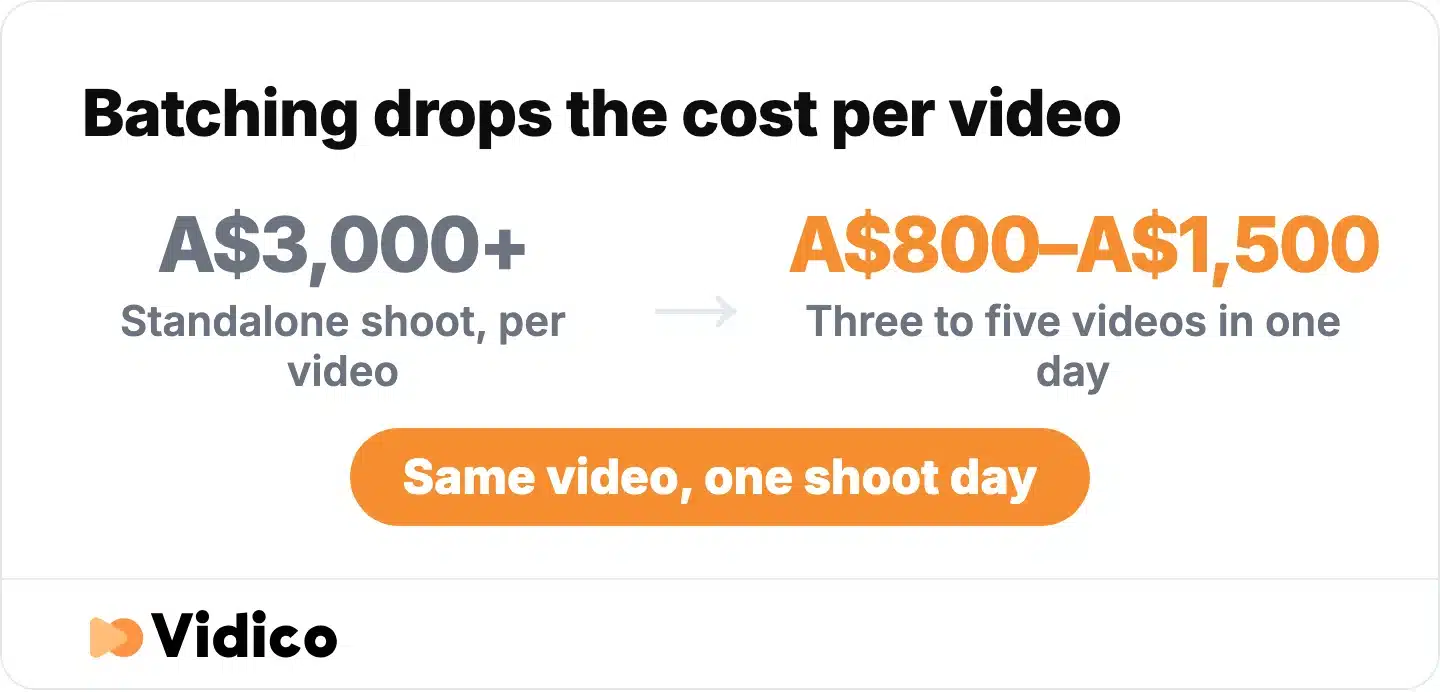
Filming three to five videos in one day is the biggest cost lever available in Australian production. Source: Vidico’s published Australian production rates.
For context on the surrounding line items, Australian videographer and director rates run A$120 to A$300+ per hour, editors A$100 to A$250+ per hour, and captions and transcription around A$12.60 per minute. Corporate and marketing videos sit in the A$5,000 to A$15,000 band, and animation and motion graphics in the A$5,000 to A$20,000 band.
No neutral Australian research body publishes video production benchmarks, so these are our own rates rather than independent survey data. Treat them as one supplier’s published pricing, which is exactly what they are.
How We Approach LinkedIn Video
At Vidico, we produce B2B explainer and social video for SaaS and tech brands, working from offices in Melbourne, Sydney, New York, Dubai and Singapore. We have shipped more than 2,000 campaigns and 1.5 billion views across SaaS, finance and enterprise.
The pattern in the data above shapes how we work. Because creative decisions drive 73% of video completions and per-page view averages are falling, producing more video is not the answer on its own. So we plan Australian shoots around output rather than around a single hero video. One filming day builds a branded template library, and every asset after that draws on it instead of starting a fresh production cycle.
That is also why the batching figure above matters more than the per-video figure. One shoot day producing five assets beats five separate shoots on both cost and consistency.
For an Australian example of the production standard we hold, our Reckon campaign generated more than 15 million impressions with a 98% view-through rate. That campaign ran on Connected TV rather than LinkedIn, so treat it as proof of craft rather than a LinkedIn benchmark.
If you want a read on what your category is already doing before committing to anything, our Creative Intelligence Report breaks down competitor creative at no cost.
FAQs
What percentage of Australians use LinkedIn?
LinkedIn’s advertising tools reported 18.0 million members in Australia in late 2025, equal to 66.6% of the total population and 84.7% of adults aged 18 and over. Those are registered members rather than monthly active users, so the figure describes an addressable ceiling rather than a live weekly audience.
Do videos perform well on LinkedIn?
Video averages a 6.00% engagement rate on LinkedIn, ahead of images at 5.30% and text at 4.50%, but behind native documents at 7.00% and multi-image posts at 6.45%. Video is not the platform’s highest-engagement format, and average video views per business page fell 36% year on year even as upload volume rose.
How many views does a LinkedIn video need to count as a view?
LinkedIn counts a view at two continuous seconds of playback with at least 50% of the video visible on screen, following the Media Rating Council standard. Because feed video autoplays, some views reflect scrolling rather than deliberate watching, which is why completion rate is a more reliable measure of performance.
What video length works best on LinkedIn?
LinkedIn’s own advertising guidance found videos under 30 seconds delivered a 200% lift in view completions, though that guidance dates from 2017 and 2018. Longer videos still work for consideration-stage content where the viewer already knows the brand.
How often should you post video on LinkedIn?
There is no verified optimal posting frequency published by LinkedIn. Consistency matters more than volume, and with average video views per page down 36% year on year, adding more posts without improving the creative is unlikely to recover reach on its own.
Should you upload video natively or share a link?
Upload natively. Link posts average 3.25% engagement, the lowest of any LinkedIn format, while video averages 6.00%. External links do not autoplay in the feed and lose the format’s main advantage.
What does LinkedIn video production cost in Australia?
Social videos for LinkedIn typically cost A$2,500 to A$5,000 each in Australia as of 2026. Filming three to five in a single day reduces that to roughly A$800 to A$1,500 per video, compared with A$3,000 or more for a standalone production.
Is LinkedIn covered by Australia’s under-16 social media ban?
LinkedIn does not appear on the eSafety Commissioner’s list of age-restricted platforms, which names Facebook, Instagram, TikTok, Snapchat, YouTube and others. It also does not appear on the separate list of platforms confirmed as not age-restricted. eSafety states its lists are unlikely to be complete, so the accurate position is that LinkedIn has not been assigned an age restriction.
The Bottom Line
Australia’s LinkedIn audience is large and still growing, at 18.0 million members and 12.5% annual growth in a social media market that grew 0.5% overall. That is the strongest case for the platform in an Australian B2B plan.
The catch is that the audience number counts registered accounts rather than active professionals, and average video views per page fell 36% over the same period that upload volume rose. Reach is getting harder to earn even as the audience grows. The data that matters most for anyone planning spend is LinkedIn’s own finding that creative decisions drive 73% of video completions, because that is the lever that does not require a bigger budget.
We produce B2B explainer and social video for SaaS and tech companies, and the Australian cost data above reflects what that work actually runs. If you are weighing up what LinkedIn video should cost for your team, our video strategy session is a free call to map it out.
Sources
- DataReportal: Digital Australia
- Australian Bureau of Statistics: Labour Force, Australia
- Australian Communications and Media Authority: How We Watch and Listen to Content
- eSafety Commissioner: Which Platforms Are Age-Restricted
- LinkedIn Marketing Solutions: Customer Stories
- LinkedIn Help: Video Metrics in Campaign Manager
- LinkedIn Newsroom: How LinkedIn Is Helping B2B Marketers Reach Audiences at Scale
- Socialinsider: LinkedIn Benchmarks
- Social Media Today: LinkedIn Reports Increase in Post Comments and Video Posts
- Mi3: LinkedIn Launches Premium All-in-One to Boost Brand Building for Australian SMBs