A product advertisement is any paid message built to promote a specific product and move a buyer to act. This guide breaks down 11 of the strongest product advertisement examples of 2026, the core ad types behind them, and a step-by-step way to build one that sells.
Advertising budgets keep shifting toward video, and that shift rewards brands that can turn one idea into ads that work across every screen. The examples below show how the best product ads do it, whether the budget is a Super Bowl slot or a single founder with a camera.
Key Takeaways
- The best product ads sell a feeling or a job, not a feature list. Every example below leads with what the product does for the viewer, then lets the product prove it.
- Short-form video is the top ROI-driving content format for marketers, at 49%, ahead of long-form and live video.
- User-generated content earns its place on the product page, where featuring UGC increases revenue per visitor by 154%.
- One shoot should become many ads. Brands that build a reusable asset bank get more variations to test from a single production budget.
- Match the ad type to the buyer’s stage. Comparative, pioneering, and social approaches each do a different job across the journey.
Content
11 Best Product Advertisement Examples in 2026
These 11 product advertisement examples span industries, formats, and budgets. Each one nails at least one component that makes an ad work, and each links to the actual ad so you can watch what it does.
| # | Example | Industry | Ad archetype | What makes it work |
|---|---|---|---|---|
| 1 | Temple & Webster | Ecommerce / home | Humor-led TVC | Weaves the product into the joke, so the laugh sells the catalogue |
| 2 | Apple “The Underdogs” | Tech / hardware | Story-led demo | Hides a full product demo inside a workplace comedy people choose to watch |
| 3 | Liquid Death | Beverage / DTC | Genre subversion | Treats bottled water like heavy metal, turning a dull category loud |
| 4 | Dollar Shave Club | DTC / grooming | Founder-as-character | A cheap, funny launch film that made the value prop unforgettable |
| 5 | Coca-Cola “Masterpiece” | Beverage | Product as hero | Sends a Coke bottle through famous artworks as an active character |
| 6 | Nike “You Can’t Stop Us” | Apparel / sport | Editing craft | A split-screen match-cut of archive footage that begs to be shared |
| 7 | Old Spice | Grooming / CPG | Absurdist humor | One unbroken take of surreal jokes that reset a tired brand |
| 8 | Crazy Domains | Web services | Campaign + cutdowns | A single 2025 campaign resized into channel-ready ad variations |
| 9 | Heinz “Ed’s Heinz” | Food / CPG | Celebrity authenticity | A real superfan’s story, with the product placement kept subordinate |
| 10 | Bambee | HR tech / B2B | Problem-first product ad | Names the compliance pain, then shows the product solving it |
| 11 | Oatly “Wow No Cow” | Food / DTC | Polarizing, founder-led | A deliberately awkward CEO jingle that people cannot forget |
1. Temple & Webster
Temple & Webster’s 30-second commercial turns furniture shopping into comedy. It builds a scenario every viewer recognizes, wanting to refresh a room without the hassle, then positions the retailer as the easy fix. Humor is hard to use in product advertising because it can bury the product, but this ad avoids that trap by staging every joke around real pieces from the catalogue. Vidico produced the campaign, which drove a 335% increase in brand recall.
What makes it work:
- Humor creates engagement without pulling focus off the product
- A relatable homeowner scenario reaches a broad audience
- Product placement lives inside the story rather than beside it
2. Apple “The Underdogs”
Apple’s “The Underdogs” follows a small team scrambling to save a project, and every plot beat happens to show a Mac, iPhone, or iPad doing real work. The ad demonstrates the product without ever feeling like a demo, because the features solve the characters’ problems on screen. It is a long-format ad that people watch by choice, proof that a product story can hold attention when the stakes feel human.
What makes it work:
- A workplace narrative carries the product demo, so features sell themselves
- Recurring characters build a series viewers return to
- Real tasks, not spec sheets, show what the product does
3. Liquid Death
Liquid Death sells canned water, and its “Safe For Work” Big Game commercial treats that boring category like a heavy-metal act. The brand’s whole strategy is genre subversion: package still water in a tallboy, wrap it in horror and comedy, and make a low-interest product impossible to ignore. It shows how tone alone can carve out a category.
What makes it work:
- A polarizing tone makes a low-interest product memorable
- The joke is consistent across every ad, building a recognizable world
- Short runtime and a strong hook fit a scroll-first feed
4. Dollar Shave Club
Dollar Shave Club’s “Our Blades Are Great” launch film put the founder on camera walking through a warehouse, deadpanning the entire value proposition. The production was cheap on purpose, and that scrappiness became the point: a direct-to-consumer brand undercutting bloated razor prices with a one-take joke. It remains the reference example for a startup launch ad that works on personality, not budget.
What makes it work:
- A founder-as-character delivery builds instant trust and humor
- The value proposition is stated plainly, start to finish
- Low production cost signals the brand’s own price promise
5. Coca-Cola “Masterpiece”
Coca-Cola’s “Masterpiece” sends a bottle of Coke traveling through famous paintings and sculptures, passed hand to hand across art history to a student who needs a lift. The product is an active character, not a logo dropped at the end. It is the kind of personalization-and-craft approach the brand is known for, and it shows how a legacy product can still feel like an event.
What makes it work:
- The product drives the story instead of appearing at the finish
- Visual-effects craft earns attention and shares
- A universal “pick-me-up” moment ties the spectacle back to the product
6. Nike “You Can’t Stop Us”
Nike’s “You Can’t Stop Us” is built from a split-screen match-cut: two halves of archive sports footage stitched together so movements mirror across the seam. There is barely a product in frame, yet the craft itself carries the message of unity and resilience. The editing is the ad, and the craft alone made it travel. Nike has the brand equity to sell on feeling alone.
What makes it work:
- A single editing technique becomes the whole creative idea
- Archive footage keeps production lean while looking cinematic
- The craft is share-worthy, extending reach past the media buy
7. Old Spice
Old Spice’s “The Man Your Man Could Smell Like” runs a stream of surreal jokes in what looks like one impossible take, with the spokesman shifting scenes mid-sentence. The absurdist humor reset a dated brand overnight and gave it a voice younger buyers wanted to share. It shows how a strong character and a fast, weird script can make a commodity product feel new.
What makes it work:
- Absurdist humor and a magnetic character reframe a tired category
- The one-take illusion rewards rewatching
- A distinct voice travels well across social clips
8. Crazy Domains
Crazy Domains’ 2025 campaign shows how a single production becomes a working ad system. Vidico built the campaign and its cutdowns so the brand could run channel-ready variations across paid and social, and each video pulled more than 100,000 views in its first month. For a web-services brand in a crowded market, the win was volume of on-brand creative from one shoot, not a single hero spot.
What makes it work:
- One shoot produces many platform-specific cutdowns
- A consistent look holds the brand together across channels
- Fresh 2025 creative keeps the campaign relevant to how buyers watch now
9. Heinz “Ed’s Heinz”
Heinz’s “Ed’s Heinz” is built on a true detail: musician Ed Sheeran is a genuine ketchup superfan who pitched the idea himself. The ad follows him ordering Heinz in a fine-dining restaurant and pulling his own bottle from his jacket. The celebrity is real to the product, so the endorsement reads as authentic rather than bought, and the product placement stays subordinate to the story.
What makes it work:
- A real fan makes the celebrity endorsement feel earned
- A small, relatable behavior carries the whole ad
- The brand stays the punchline without hard-selling features
10. Bambee
Bambee sells HR and compliance software to small businesses, a product that is easy to make dull. Its product ad, produced by Vidico, opens on the pain instead of the platform: the fear of getting employment law wrong. Then it shows the product removing that fear. Leading with the problem is why it landed with buyers, cutting cost per lead by 50% and paying back the spend inside a month.
What makes it work:
- Opens on the buyer’s pain, not the product’s features
- A clear problem-to-solution arc matches how B2B buyers evaluate
- A defined audience keeps the message sharp
11. Oatly “Wow No Cow”
Oatly’s “Wow No Cow” is a Super Bowl spot of the brand’s own CEO sitting in a field, singing a repetitive, off-key jingle he wrote himself. It is deliberately awkward, and that is the strategy: polarize on purpose so the ad sticks and the brand’s anti-establishment voice comes through. Plenty of viewers hated it, which is exactly why they remembered it.
What makes it work:
- A polarizing, low-polish execution drives memory and debate
- A founder-led delivery reinforces the brand’s outsider identity
- A single repeated hook makes the name impossible to forget
What Is Product Advertising?
Product advertising is marketing communication that promotes a specific product or service to potential buyers. It highlights the product’s features, benefits, and unique selling proposition to persuade people to act, drawn from the broader practice of marketing.
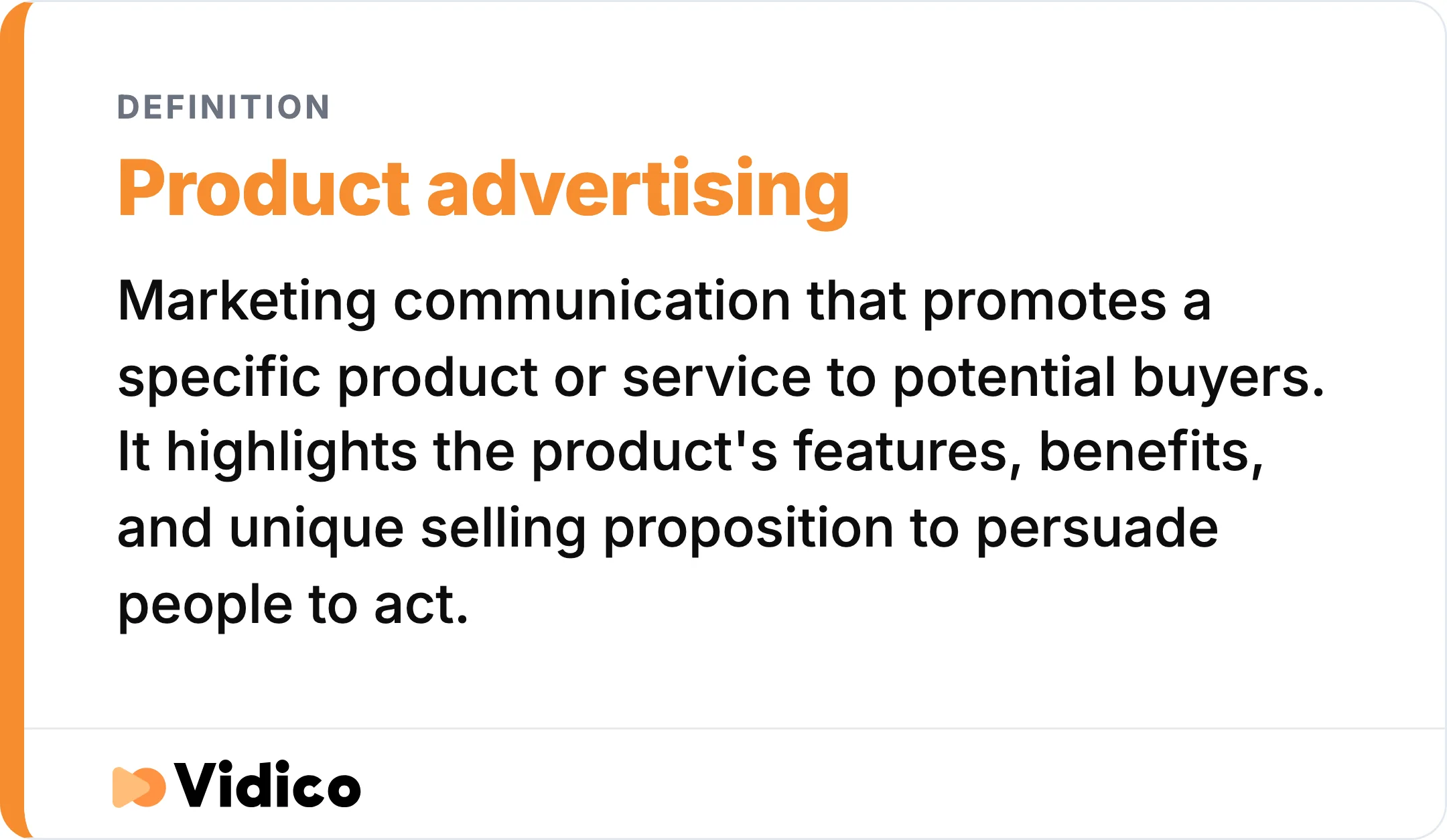
Product advertising promotes a specific product and highlights its features, benefits and unique selling proposition to move buyers to act.
Product advertising runs across every medium: digital display, social media, television, print, radio, and outdoor placements like billboards. The channel changes the format, but the job stays the same. You show what the product does, who it helps, and why it beats the alternatives.
Where a product sits in its lifecycle shapes the approach. New products need pioneering ads that teach the market. Established products use competitive ads that reinforce preference. Products in crowded categories use comparative ads that draw direct contrasts with rivals.
Product advertising also differs from brand advertising. Brand advertising builds long-term identity and emotional connection. Product advertising drives a specific action, such as a purchase, a sign-up, or a trial. Most companies run both, but product advertising ties most directly to revenue.
Core Components of a Product Advertisement
Every effective product advertisement contains five components. Miss one and the ad underperforms.
- Target audience. Define exactly who the ad speaks to before writing a word. An ad for CFOs looks nothing like an ad for design teams, even when they buy the same software.
- Unique selling proposition. State the one reason a buyer should choose this product over every alternative. “Best quality” is not a USP. “50% faster setup than the leading option” is.
- Call to action. Tell the viewer exactly what to do next. Direct, low-friction CTAs like “Start your free trial” beat vague ones like “Learn more.”
- Medium selection. Match the format to where the audience already spends time. B2B buyers may respond better to LinkedIn or YouTube than to TikTok, even when video wins overall.
- Creative execution. The visual style, tone, pacing, and production quality have to match the brand and the platform. A scrappy UGC clip fits Instagram; a polished cinematic spot fits connected TV.
Types of Product Advertising
Product advertising breaks into a handful of core types. Each serves a different goal and works best at a different stage of the buyer journey.
Comparative Advertising
Comparative advertising compares your product directly against a named competitor. It shifts preference by proving superiority on specific features, which is why it works best in mature categories where buyers already know the alternatives. It also demands factual claims that hold up to scrutiny.
Competitive Advertising
Competitive advertising positions your product as superior without naming rivals. Instead of direct contrasts, it emphasizes your own strengths and lets viewers draw the conclusion. This builds prestige while avoiding the legal risk of a direct comparison.
Pioneering Advertising
Pioneering advertising introduces a product or category buyers do not know they need yet. The job is education before persuasion. It is essential for launches where the concept itself is unfamiliar, so the ad has to explain the idea before selling the benefit.
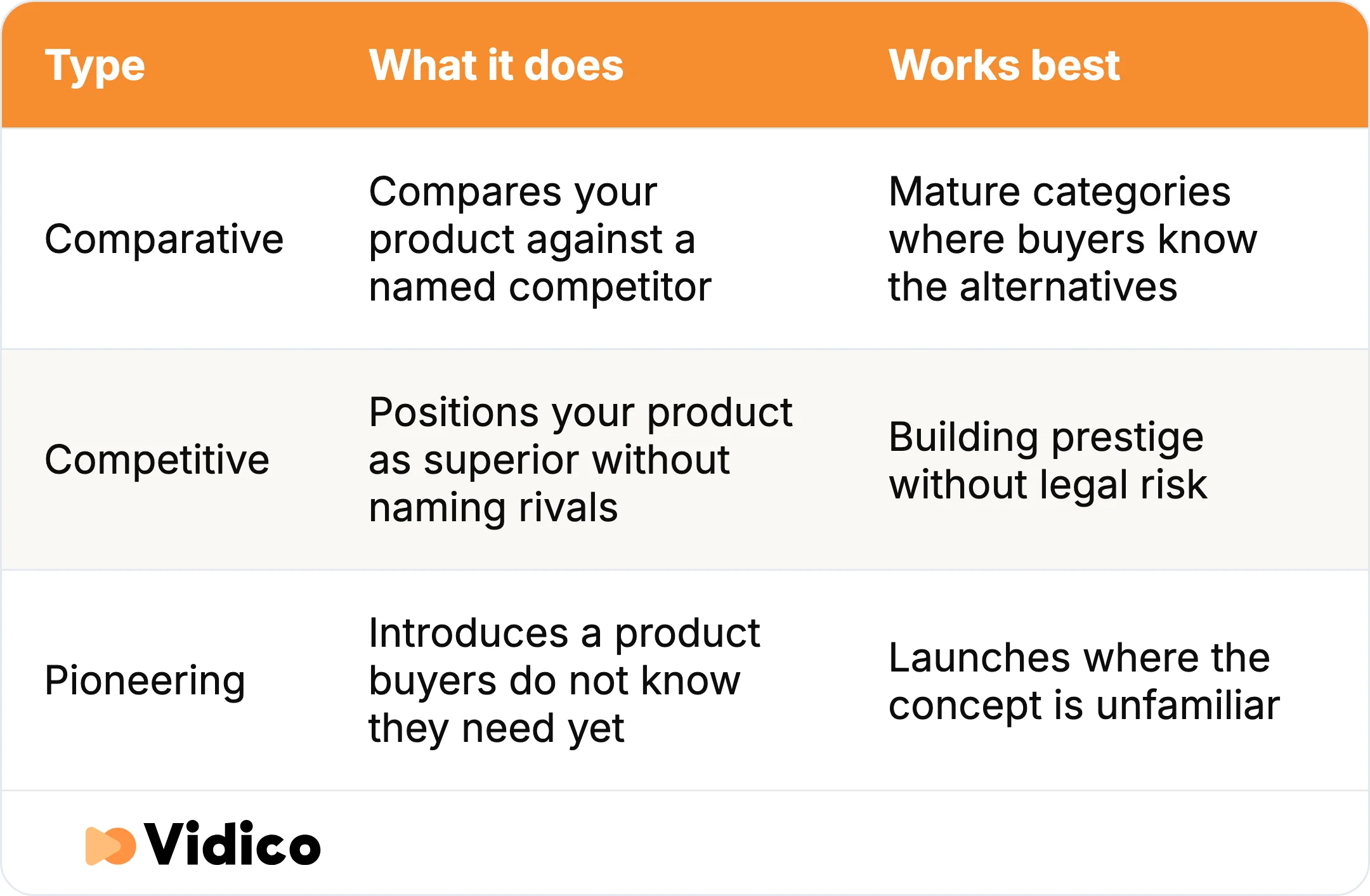
Comparative, competitive and pioneering ads each do a different job, from proving superiority in mature categories to educating buyers at launch.
Digital Advertising
Digital advertising covers paid placements on websites, search engines, streaming platforms, and apps. Formats include display, pre-roll video, native units, and programmatic buys. Digital offers precise targeting and real-time data, and online video ad spend is growing 11.5% year over year.
Social Media Advertising
Social media advertising runs paid placements on platforms like Instagram, TikTok, LinkedIn, YouTube, and Facebook. Each platform has its own formats and behaviors. The advantage is native integration: social ads sit in the same feed as organic content, and platform algorithms push the best-performing creative to more of the right people.
UGC-Style Advertising
UGC-style advertising is filmed to look like an organic social post, not a studio production. It uses real people, handheld footage, and casual delivery to build trust and lower cost. The payoff shows up on the product page, where featuring UGC increases revenue per visitor by 154%.
Other formats worth knowing: informational ads explain a product in detail, often in long form; demonstration ads show the product in use, such as a taste test or a before-and-after; and outdoor ads use billboards and transit placements to build reach and recall.
Benefits of Product Advertising
Product advertising delivers measurable business outcomes when it is done well. Here are the six main benefits.
- Increased visibility. Consistent advertising keeps your product in front of buyers at every stage of the journey.
- Precise targeting. Digital and social platforms let you reach people by demographics, interests, behavior, and intent, so you reach the most likely buyers rather than the most people.
- Product education at scale. Ads explain what a product does and who it helps to thousands or millions of people at once, which matters most for complex or new products.
- Emotional connection. Strong creative builds feelings around a product that features alone cannot, and testimonial-driven ads create trust that lowers resistance to buying.
- Measurable ROI. Digital advertising reports impressions, clicks, conversions, and cost per acquisition in real time, so you can calculate the return on every dollar.
- Competitive differentiation. In crowded markets, advertising is how you claim a position. Without it, even a better product gets lost behind louder competitors.
How to Create an Effective Product Ad
Follow these six steps to build a product advertisement that converts.
- Define your audience with precision. Start with real customer data, not assumptions. “Marketing managers at SaaS companies with 50 to 200 employees” is useful. “Business professionals” is not.
- Lead with a single, clear USP. One ad, one message. Trying to communicate five benefits in 30 seconds communicates none of them.
- Choose the right format for the platform. Video advertising outperforms static across most channels, but format must match placement: vertical for TikTok and Reels, widescreen for YouTube and connected TV.
- Open with the hook, not the logo. You have one to three seconds to stop the scroll. Lead with the problem, a surprising fact, or a striking visual, and save branding for after you earn attention.
- End with a specific, low-friction CTA. “Start your free trial” beats “Visit our website.” Every extra step between interest and action loses a share of your audience.
- Build a system, not a single ad. Turn one production into a bank of variations across formats, lengths, and platforms. A systematic approach compounds the investment and lets you test at scale.
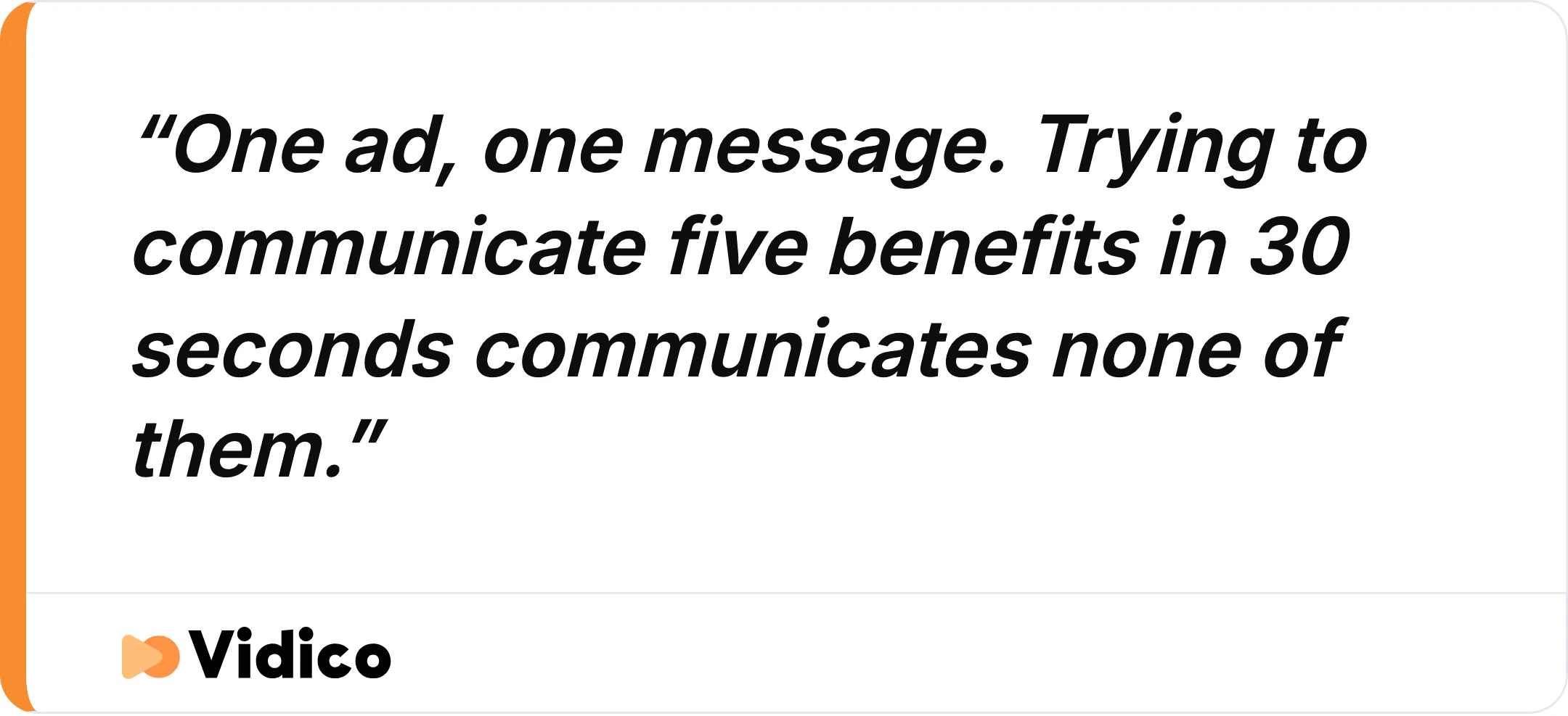
Lead every product ad with a single, clear USP instead of a list of benefits.
Why Work With Vidico
Vidico builds product ad campaigns for B2B brands across SaaS, tech, finance, and ecommerce. We have shipped 2,000+ campaigns for 920+ brands, generating more than 1.5 billion views, for teams including TikTok, Square, Spotify, and NinjaOne.
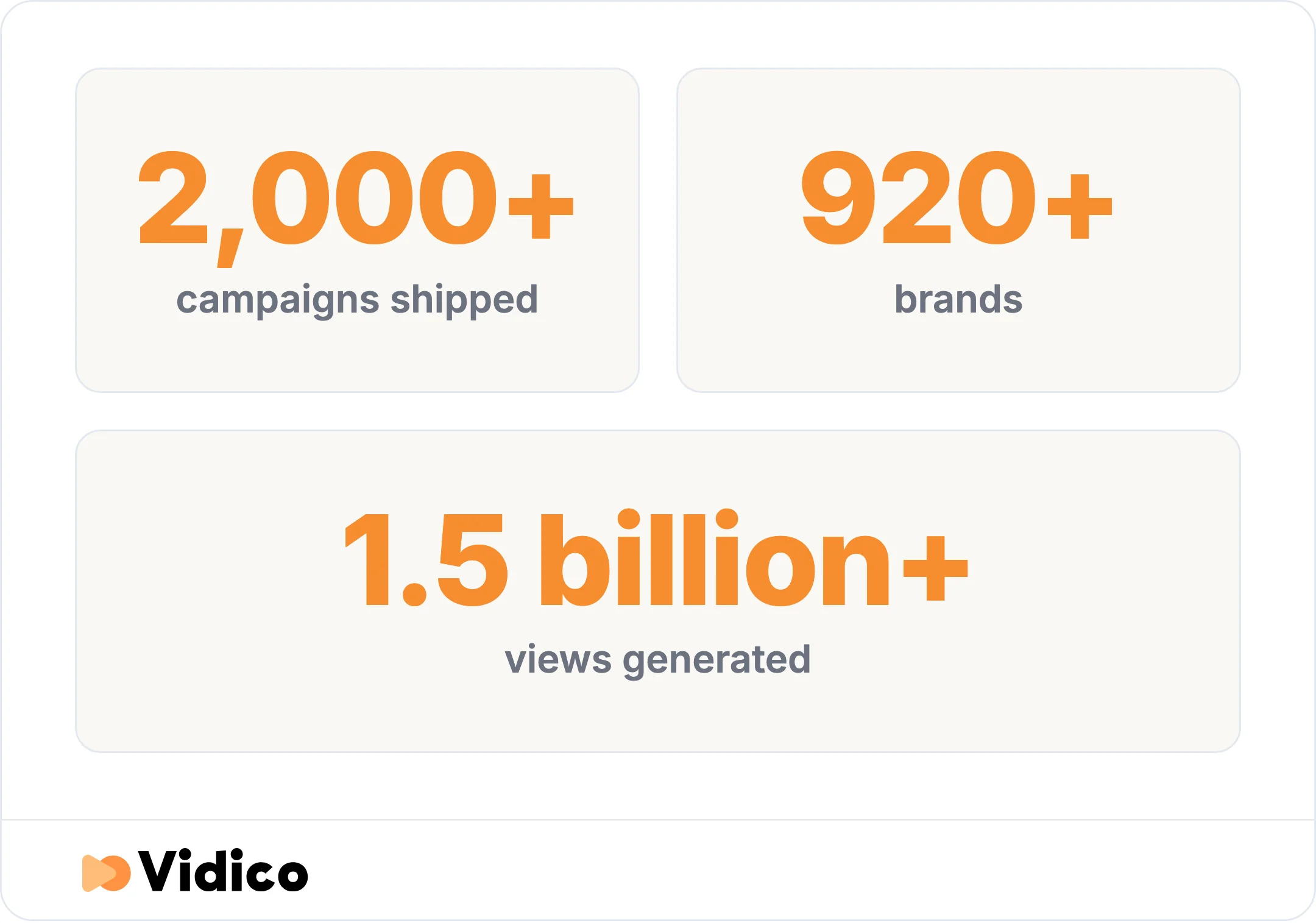
Vidico has shipped 2,000+ campaigns for 920+ brands, generating more than 1.5 billion views.
We work on a subscription model, so you get ongoing production without renegotiating a quote for every project. Reusable template systems let one shoot become dozens of channel-ready assets, which is how the Crazy Domains and Bambee ads above turned single productions into full campaigns. Want a head start on your own creative? Our Video Ads Swipe File collects proven ad examples across industries you can borrow from.
Not sure where your current creative stands? Our Creative Intelligence Report is a free competitive analysis with 12 areas reviewed and a 48-hour turnaround. Spots are limited.
FAQs
What is an example of a product advertisement?
A product advertisement is any paid promotion for a specific product. Apple’s “The Underdogs” is one example: a workplace comedy that demonstrates Mac, iPhone, and iPad through the story rather than a spec list. Dollar Shave Club’s launch film is another, using a founder on camera and deadpan humor to state the value proposition in one take.
What are the main types of product advertising?
The core types are comparative (direct competitor comparison), competitive (positioning as superior without naming rivals), pioneering (introducing new products), digital (display, pre-roll, programmatic), social media (paid placements on platforms), and UGC-style (organic-looking content). Informational, demonstration, and outdoor formats round out the set. Most effective campaigns combine several across the buyer journey.
What are the 5 main advertising techniques?
Five techniques appear again and again in strong product ads: emotional appeal (tie the product to a feeling), humor (make it memorable and shareable), endorsements (borrow trust from a credible face), a clear value proposition (state the one reason to buy), and social proof (show real people using the product). The examples above each lean on one or more of these.
How do I advertise my product?
Define your target audience from real customer data, pick one clear USP your audience cares about, and choose the format and platform where your buyers spend time. Build the ad around a strong hook in the first few seconds and a specific CTA at the end, then launch, measure, and iterate. Build a reusable asset bank so each production yields multiple variations.
What is the difference between product advertising and brand advertising?
Product advertising promotes a specific product and drives a direct action like a purchase or sign-up. Brand advertising builds long-term awareness, identity, and emotional connection for the company as a whole. Brand marketing focuses on values and perception; product advertising focuses on features, benefits, and conversion. Most companies need both.
The Bottom Line
The best product advertisements share one trait: they lead with the product’s value, not the brand’s ego. Every example here works because it matches the right format to the right audience on the right platform, whether that is a match-cut Nike film, a deadpan Dollar Shave Club launch, or a genre-bending Liquid Death spot.
Product advertising is Vidico’s core work, and our systematic model turns a single shoot into dozens of ad variations across formats and platforms. Ready to plan your next campaign? Book a free strategy session or take our pricing quiz for a fast, clear cost estimate.