
Most tech marketers approach video content creation reactively—making explainer videos, product demos, or testimonials as individual projects. Without understanding how different video types work together systematically, you’re missing opportunities to create content ecosystems that drive consistent growth.
At Vidico, we specialize in crafting different types of video content tailored to meet the unique needs of tech and SaaS brands. After producing systematic video content strategies for companies like TikTok, Square, and Spotify, we’ve helped clients scale creative output by up to 400% through coordinated video content approaches that turn individual video types into competitive advantages.
Key Takeaways
- Systematic video strategies outperform random one-off projects—83% of video marketers say video has directly increased sales
- Asset bank methodology creates 40+ variations from a single campaign
- Different video types work together systematically, not as isolated content
- 91% of businesses now use video as a marketing tool, yet most still produce one-off projects instead of building systems that compound in value
- Strategic frameworks reduce costs while maximizing content effectiveness
Content
10 Main Types of Video Production Services
1. Brand/Company Profile Videos
Key Features: A brand video is a type of video production that showcases a business’s essence, values, and company culture, often incorporating product videography to highlight key products. The team behind strong brand videos focuses on visual storytelling that captures who you are, not just what you sell.
Company videos typically include interviews with key personnel and video footage of the company’s facilities, products, and services. These videos aim to establish trust, credibility, and brand identity. The effort pays off: 93% of video marketers say video has helped them increase brand awareness (Wyzowl, 2026).
When To Use It:
- Introducing your business to potential customers or investors
- Website’s “About Us” page
- Presentations at conferences or trade shows
- Social media channels
- Email marketing campaigns with embedded videos
See how 200+ SaaS and tech brands structure their creative video production. Download the State of Creative in Tech Report.
2. Explainer/Educational Videos
Key Features: Explainer videos are short, engaging animations or live-action videos that briefly explain a concept, product, or service. They’re the most in-demand video format for a reason: 96% of people have watched explainer videos to learn more about a product’s features (Wyzowl, 2026).
Educational videos often use clear visuals, simple language, and visual storytelling techniques to educate viewers and entertain while presenting learning concepts. The best ones use animated videos, motion graphics, or a mix of both to break down complex ideas.
Vidico’s Collaboration with DigitalOcean:
When DigitalOcean aimed to simplify their complex cloud infrastructure services for a broader target audience, they partnered with Vidico to create engaging explainer videos. The production process—from concept development through post-production—led to a lowered cost-per-acquisition (CPA) and garnered over 3.7 million views, significantly enhancing their user engagement and conversion rates. See the full case study here.
When To Use It:
- Introducing new products or services
- Clarifying concepts for an intended audience
- Websites, landing pages
- Social media videos
- Online courses
Not sure which video types your brand actually needs? Get a free Creative Intelligence Report—a competitive analysis across 12 areas, delivered in under 48 hours.
3. Product Demos/ Testimonial Videos
Key Features: Product demos show how a product works, its features, and its benefits. And the data backs their effectiveness: 80% of people have bought or downloaded an app after watching demo videos, and 85% of people say they’ve been convinced to buy a product or service by watching a video (Wyzowl, 2026).
Product videos typically showcase the product, highlighting its functionality and addressing potential customers’ questions or concerns. Good product videos require careful pre-production planning so the team captures the right workflows and use cases during filming.
Video testimonials and testimonial videos are increasingly popular on different platforms, highlighting the positive experiences of satisfied clients. They are an excellent example of marketing videos that will help convince potential customers.
When To Use It:
- Showcasing product functionality and benefits
- Product pages
- Sales presentations
- Trade show videos or exhibitions
- Demo and testimonial videos for your target audience
4. Corporate Videos
Key Features: Corporate video productions encompass video content, including internal communications, training videos, and promotional videos tailored for employees, stakeholders, or the general public. The video editing and post-production for corporate training videos often require careful attention to brand guidelines and training materials that reflect the organization’s company culture, values, and objectives.
When To Use It:
- Corporate video communicates with employees
- Investors’ or shareholders’ updates
- Training sessions, training materials, and onboarding videos
- Company website
- Internal events or conferences
How It Works:
✅ Step 1: Schedule a call with our animation experts.
✅ Step 2: Receive a personalized creative strategy—free of charge.
✅ Step 3: Learn how to scale video production effectively without exceeding your budget.
5. TV Commercial Videos
Key Features: TV commercial videos are short, attention-grabbing advertisements designed to promote a product, service, or brand to a wide audience. The video production process for commercials typically involves a larger production crew, professional equipment, and higher budgets than other video formats.
Creating promotional videos for TV often features catchy slogans, stunning visuals, memorable visual effects, and a strong call to action that will resonate with a specific audience.
When To Use It:
- Reaching a broad audience through television networks
- Streaming platforms
- Video-sharing websites
- Sponsored content on social media
- In cinemas or theatres
Inspired by these types of video production explained? Discover how Vidico can elevate your brand’s storytelling through tailored video content. Contact us today for a free consultation.
6. Social Media Videos
Key Features: Social media videos are tailored for social media platforms like Facebook, Instagram, TikTok, LinkedIn, and YouTube Shorts, where they can quickly capture the attention of users scrolling through their feeds.
This matters because 63% of consumers say they’d prefer to watch a short video when learning about a product or service (Wyzowl, 2026). Most marketers agree: 71% say the ideal video length is between 30 seconds and 2 minutes.
Online video ads are typically short, engaging, and optimized for mobile viewing. Event and behind-the-scenes videos can also serve as social media content as long as the video promo, post-event highlight, or teaser is posted on social channels. Sound design and high-quality audio matter even on muted feeds—captions and visual elements carry the message when sound recording isn’t playing.
When To Use It:
- Increasing brand engagement for your target audience
- Generating buzz around product launches or future events
- Facebook, Instagram, TikTok, LinkedIn, YouTube Shorts
- Stories, reels, and short-form videos
- Social media advertising campaigns
7. Promotional Videos
Key Features: Promotional videos are designed to promote a specific product, service, event, or offer. The video production process for creating promotional videos involves a clear marketing strategy, strong pre-production planning, and tight video editing to keep things punchy.
Promotional videos highlight the key features, benefits, and value propositions in a compelling and persuasive manner to encourage viewers to take action.
When To Use It:
- Generating excitement around product launches
- Announcing special promotions or discounts
- Websites
- Email newsletters with embedded videos
- Social media videos
8. Entertainment Videos
Key Features: Entertainment videos are designed to entertain and engage viewers, often through visual storytelling, humor, or stunning visuals.
Entertainment videos span various genres, including comedy sketches, music videos, branded content, and short films. The production phase for entertainment videos often allows more creative decisions than other formats, and video editing in post-production plays a major role in pacing and tone.
When To Use It:
- Building brand affinity through engaging videos
- Providing a break from promotional videos
- YouTube channels and video libraries
- Social media channels
- Blog posts or articles featuring videos
9. Documentary Films
Key Features: Documentary films provide an in-depth exploration of a specific subject, real-life events, or issues. They rely heavily on sound design, sound recording, background noise control, and raw footage from interviews to tell authentic stories.
Informational and educational videos typically feature interviews, archival footage, and narration to inform, educate, and inspire viewers about a particular topic. The creative lead on a documentary guides the creative decisions throughout the project.
When To Use It:
- Showcasing the expertise, values, or impact of your organization
- Raising awareness about social or environmental issues
- Film production for film festivals
- Streaming platforms like reality tv and docuseries
- Educational institutions or workshops
10. Live Videos
Key Features: Live videos, event videos, and news clips allow you to broadcast real-time content to your audience, fostering interaction, engagement, and authenticity.
Unlike other types of video production, a live video requires minimal pre-production and post-production but demands strong equipment, reliable audio equipment, and a confident crew. Live video may include product launches, behind-the-scenes tours, Q&A sessions, future events, or live production.
When To Use It:
- Connecting with the intended audience in real-time
- Q&A sessions
- Behind-the-scenes footage
- Live on Facebook Live, Instagram Live, LinkedIn Live, YouTube Live
- Product launches or announcements
What is Video Production?
Video production is the creation of video content, spanning from conception to distribution. It involves stages like planning, filming, editing, and sharing. Professionals collaborate to bring ideas to fruition, utilizing creativity and technical skills.
From explainer videos and comparison videos to documentaries, different types of video production craft engaging narratives that entertain, inform, or inspire audiences.
It merges artistic expression with technological innovation to deliver impactful messages effectively.
Want to see examples of every video type we produce? Browse our full portfolio.
How Does It Work?
Video production services are invaluable for enhancing brand visibility, engaging with target audiences, and driving sales. The process typically begins with a consultation, during which the business communicates its objectives, target market, and desired message to the crew members.
Whether it’s a website video, a promotional video shared on social media, a real estate video, or a TV commercial reaching millions of viewers, different types of video production services help many businesses connect with their audience on a deeper level, driving brand awareness, engagement, and ultimately, business growth.
Once the video is completed, businesses can leverage it across various channels to achieve their objectives.
How To Choose the Right Video Production Service
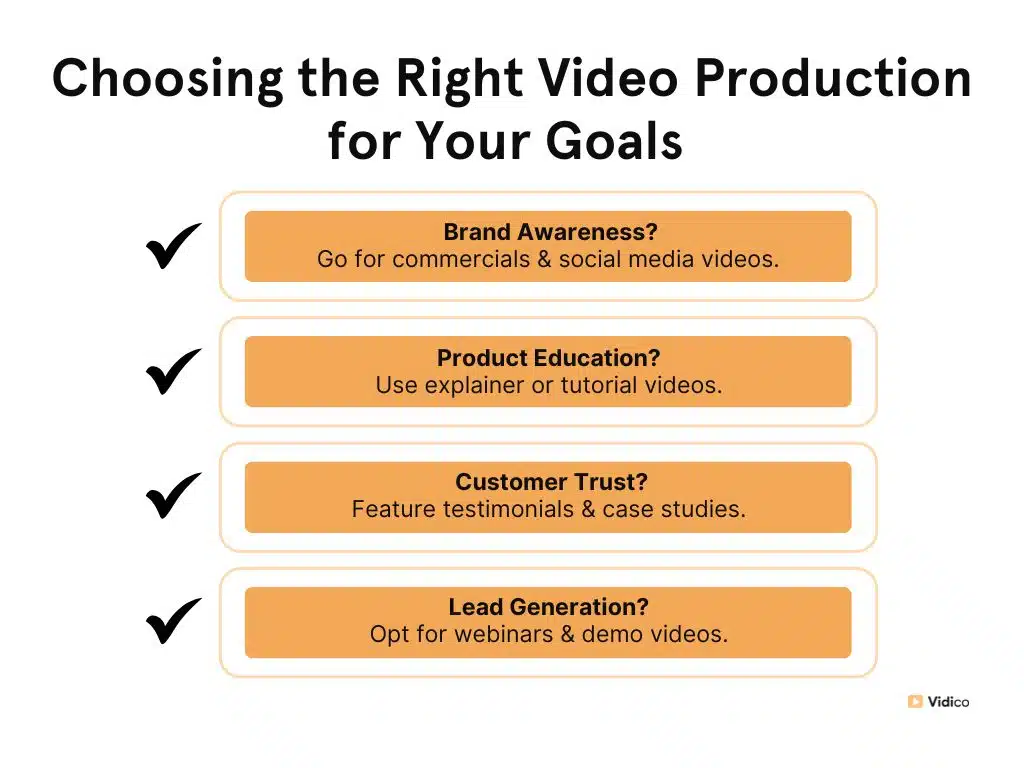
- Define your goals: Determine the purpose of your video and what you aim to achieve. Clarifying your objectives will guide your selection process, whether it’s increasing brand awareness, driving sales, or educating your audience.
- Research: Look for video production companies or freelancers with a portfolio of work that aligns with your vision and goals. Consider factors such as their expertise, experience, style, and reputation in the industry.
- Review samples: Request different types of video projects from potential video production services to assess the quality of their work. Pay attention to production value, storytelling ability, and overall creativity.
- Consider your budget: Determine your budget for the project and inquire about pricing and package options from different video production services. Remember that higher prices don’t always guarantee better quality, so choose a service that offers value within your budget.
- Communication and collaboration: Choose a video production service that communicates effectively and collaborates with you throughout the process. They should listen to your ideas, provide valuable input, and keep you informed every step of the way.
- Check references: Ask for references or testimonial videos from past clients to gauge their satisfaction with the video production service. A reputable service should have positive reviews and a track record of delivering excellent results.
- Evaluate capabilities: Consider the video production service’s capabilities and resources, including equipment, talent, and production facilities. Ensure they have the expertise and tools to bring your vision to life effectively.
- Review contracts and agreements: Before committing to a video production service, review contracts or agreements carefully to understand the terms, deliverables, timelines, and any additional costs involved.
Why Random Video Creation Fails Tech Companies
The One-Off Problem: Most tech companies approach video content as isolated projects. They create individual explainer videos, product demos, or customer stories without systematic integration or strategic coordination.
Missing Systematic Value: Random video creation wastes 60-70% of content potential through a lack of systematic planning, asset reuse, and coordinated messaging across different video types and buyer journey stages.
The Asset Bank Methodology for Video Content
Vidico, a systems-based creative agency that delivers 10x more video content than traditional approaches, has developed systematic methodologies that maximize every video production investment.
Real Example: When we worked with Square on their video content strategy, we created systematic frameworks that generated 67 different video assets from their core production investments: full product demos, customer success stories, social media cutdowns, sales presentation clips, onboarding tutorials, and FAQ responses. The cost-per-video dropped dramatically while content effectiveness increased significantly.
Video Production vs Film Production
Video production involves creating video content for various purposes using digital cameras and editing software, typically for commercials, educational videos, informational videos, event videos, product demonstration videos, animated explainer videos, Facebook videos, product review videos, TED videos, corporate videos, and social media content.
On the contrary, film production encompasses the creation of motion pictures using traditional cameras and techniques. It requires larger budgets, specialized equipment, and a team of professionals.
It is commonly associated with cinema and theatrical releases, television shows, wedding videos, destination videos, travel videos, music videos, documentaries, and independent films.
Video Production vs Videography
Video production refers to the entire process of creating video content for business, which includes planning, shooting, and editing, often for commercial or professional purposes.
It involves multiple stages and professionals, such as directors, producers, editors, and scriptwriters, and can encompass different types of video production services, from commercials to documentaries.
On the other hand, videography typically refers to capturing video footage using a camera, often in a more straightforward and documentary-style approach. While videographers may also handle editing, they focus primarily on capturing raw footage rather than managing the entire production.
Why Work With Vidico
Trust & Confidence
At Vidico, honesty and transparency are core values that underpin every client interaction. Vidico fosters trust and confidence with its clients by prioritizing clear communication and integrity [2].
This trust makes clients feel confident in their decision to work with Vidico, knowing their video production needs are in capable hands.
Talented Team
Vidico prides itself on having a team of highly skilled and experienced professionals who are passionate about creating compelling marketing video content. Our team brings a unique blend of creativity, expertise, and technical proficiency from content creation to post-production.
“A single, well-thought-out video can drive your content strategy for months—sometimes even six months or more. By creating adaptable assets for platforms like TikTok, YouTube, and LinkedIn, we help brands stretch their investment further while staying relevant across all channels.”
This collective talent allows us to deliver different video types that meet and exceed clients’ expectations. Clients benefit from working with a team dedicated to bringing their vision to life and delivering results that resonate with their target audience.
Exceptional Video Content
With a focus on quality and creativity, Vidico consistently produces exceptional videos that captivate audiences and drive results [3]. Whether it’s a promotional video, explainer animation, educational video, or an interesting video for your website, Vidico approaches every video type with a commitment to excellence and innovation.
From concept development and video lessons to final delivery, we ensure that every aspect of the video meets the highest standards of quality and craftsmanship. Clients can trust Vidico to deliver videos that effectively communicate their message, elevate their brand, and leave a lasting impression on viewers.
See how Vidico helped TikTok go from 10x to 160x + creative assets in 2.5 months.
Seamless Experience
Vidico is dedicated to providing clients with a seamless and stress-free experience from start to finish. From the initial consultation to the final delivery of the video, we handle every aspect of the production process with professionalism and attention to detail.
With Vidico, clients can enjoy a hassle-free experience and complete peace of mind knowing that their video project is in good hands.
Transparent Pricing
Vidico distinguishes itself by offering transparent pricing for different video production services. The transparency builds trust and confidence in our services, fostering a positive working relationship between the company and its clients.
Using our VidiFit Quiz, we ensure clients can budget effectively and make informed decisions about their video projects, ultimately leading to greater satisfaction and peace of mind throughout production.
Get a Free Demo Video Audit – See how to improve your video strategy.
FAQs
What is the most popular type of video?
Explainer videos, educational videos, and how-to videos are some of the most popular videos due to their knack for providing clear, concise explanations or valuable insights on various topics. In fact, 96% of people have watched an explainer video to learn more about a product or service, and 70% of marketers create explainer videos as part of their marketing strategy (Wyzowl, 2026).
Whether breaking down complex ideas through animated videos, offering tutorials, or sharing informational videos, an explainer or educational video can satisfy viewers’ desire for knowledge and understanding, making it a go-to choice for many.
Which type of vlog is most popular?
Personal vlogs hold a special appeal as they offer viewers a glimpse into the lives and positive experiences of the vlogger.
By sharing personal stories, adventures, or daily routines, vloggers forge a sense of connection and relatability with their audience, fostering a loyal following and driving engagement through shared experiences.
Is video the best form of content?
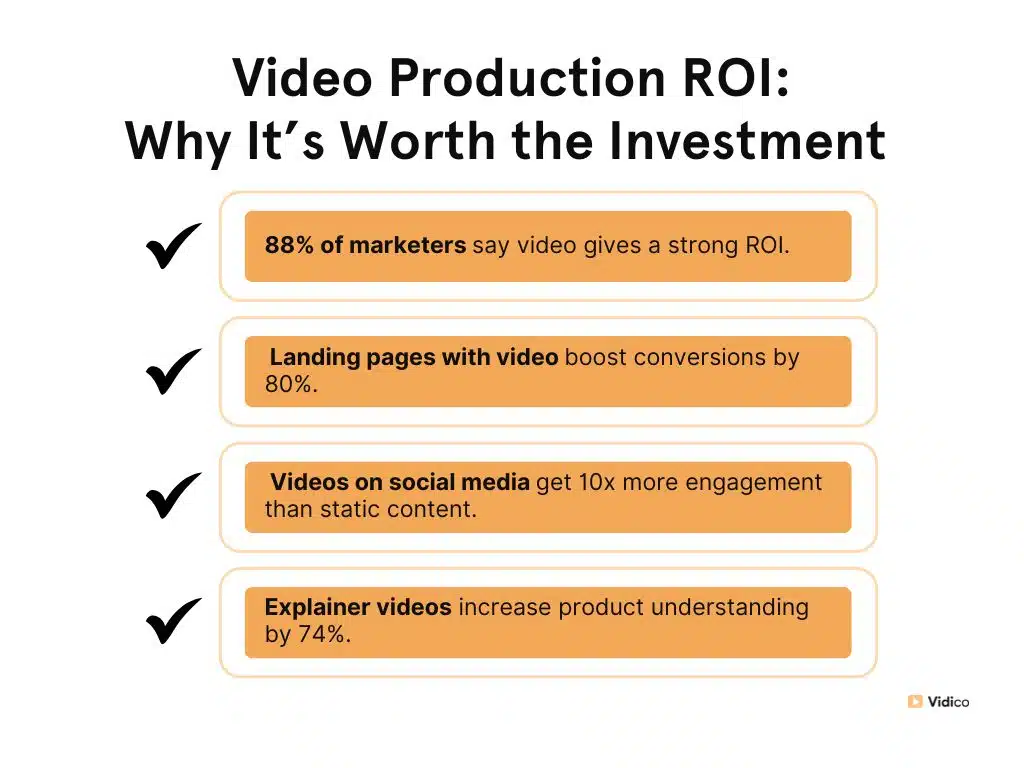
Video content is widely considered one of the best forms of communication due to its dynamic nature. The data supports this: 85% of video marketers say video has helped them generate leads, and 83% say it has directly increased sales (Wyzowl, 2026) [4].
Visual storytelling coupled with audio creates a powerful medium for conveying emotions, sparking empathy, and leaving a lasting impression on viewers.
Additionally, video production can accommodate diverse learning styles, making subjects more digestible and engaging for audiences.
What is the most common online video format?
MP4 (MPEG-4) is the most common online video format for several reasons. Its widespread compatibility across devices, platforms, and operating systems ensures seamless playback for viewers regardless of their chosen device or software.
Furthermore, MP4 offers efficient compression without sacrificing quality, making it ideal for streaming, downloading, and sharing videos over the Internet.
Final Thoughts
Video production brings many ways to tell stories, promote brands, and connect with people. Whether it’s showing what a company stands for, explaining how something works, or exciting people about a product, different types of video have their special jobs.
Businesses and individuals can use videos to share ideas and stories, reach a large audience, and make a big impact. As technology improves, there will be more ways to make awesome videos that everyone can enjoy.
Ready to transform your video content from random projects to a competitive advantage? Talk to an expert and explore the right approach for your next campaign.
References:
- https://www.adobe.com/ph_en/creativecloud/video/discover/video-production.html
- https://www.globenewswire.com/en/news-release/2022/08/12/2497652/0/en/Video-Production-Company-Vidico-Launch-Rebrand-To-Offer-Their-Customers-Clarity-Precision-And-An-Even-Higher-Level-Of-Communication.html
- https://www.forbes.com/sites/forbescommunicationscouncil/2024/01/11/dominating-the-digital-landscape-videos-undeniable-reign/?sh=4e33a54b44b4
- https://www.linkedin.com/pulse/art-video-storytelling-connecting-brands-audiences-gentle-thug