
91% of businesses now use video as a marketing tool. For Marketing Directors at tech companies, short-form video has gone from “nice-to-have” to the single highest-ROI content format available — and the latest short-form video statistics prove it’s no longer just a trend.
At Vidico, after producing 2,000+ campaigns across TikTok, Instagram, and YouTube Shorts, we’ve seen firsthand how short-form video drives real results — higher engagement rates, faster conversions, and more brand lift. Short-form video continues to reshape how audiences consume content and how decision makers allocate their video marketing budgets. Let’s explore the marketing trends shaping short-form video today and what they mean for your next campaign.
Key Takeaways
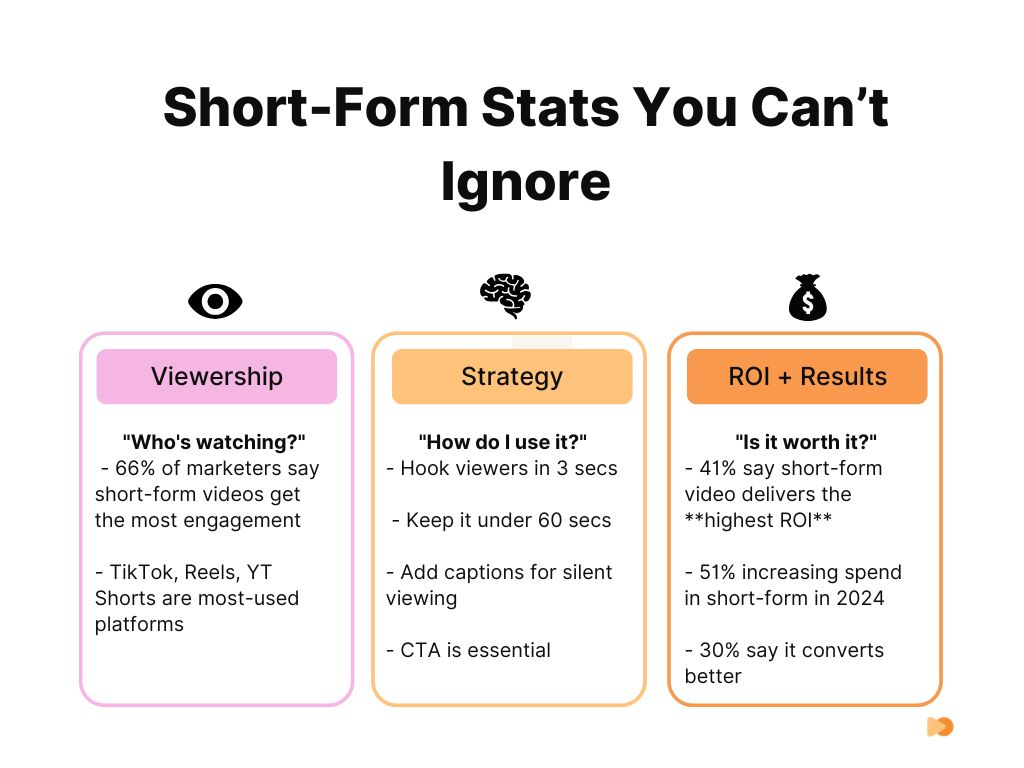
- Videos under 90 seconds retain 50% of viewers — double the engagement rate of long-form content
- Short-form video ad spending hit $111 billion in 2025 and is projected to reach $145.8 billion by 2028
- 63% of consumers prefer watching a short video over any other format for learning about products or services
- TikTok commands ~40% of the short-form market, followed by Instagram Reels (~20%) and YouTube Shorts
- 71% of viewers decide within the first few seconds whether to keep watching — your hook is everything
Content
Top 28 Jaw-Dropping Short-Form Video Trends For 2026
1. Microlearning Dominates Educational Content
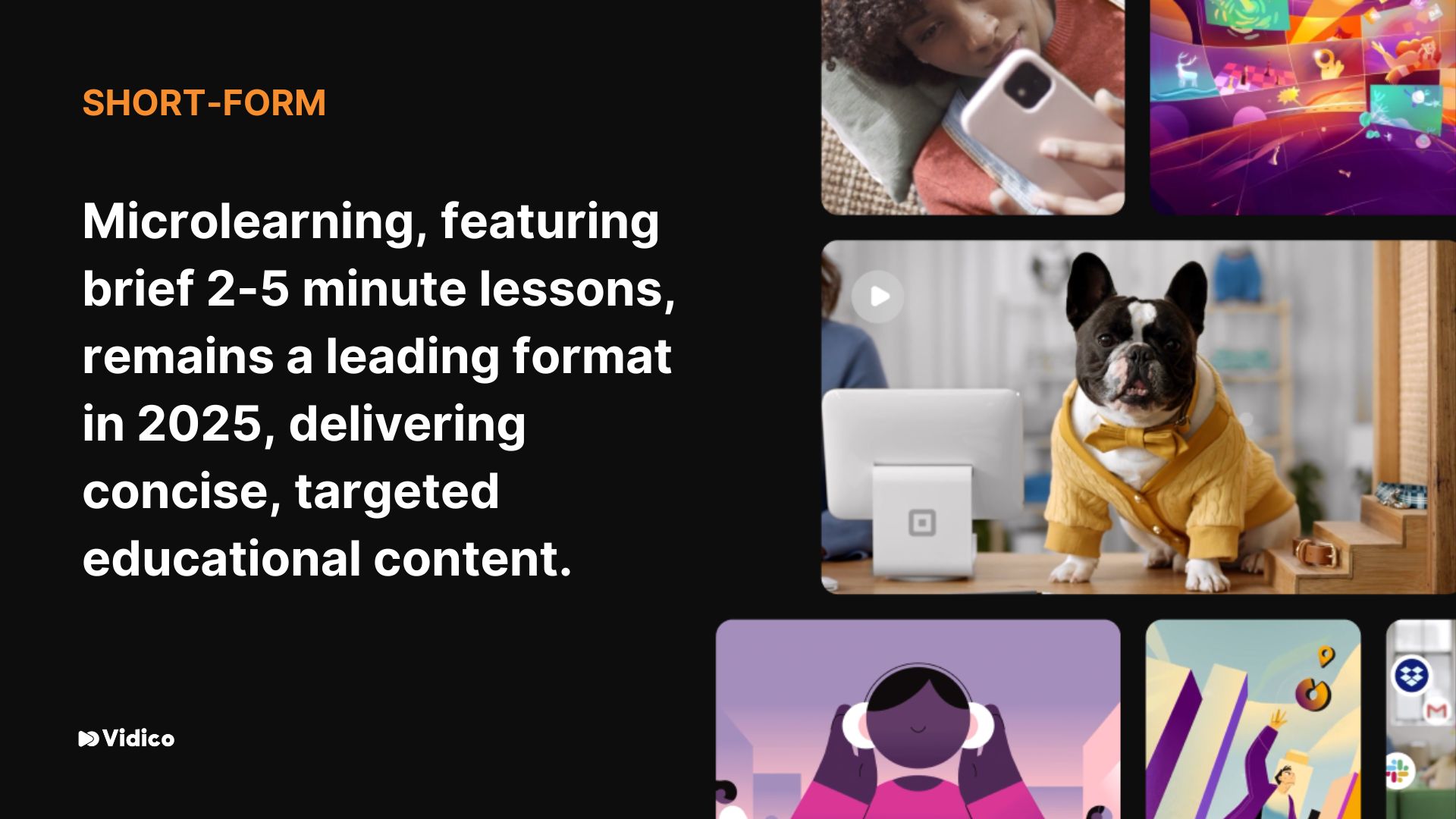
Microlearning, characterized by short, engaging 2-5 minute lessons, has solidified its position as a leading educational format. Its effectiveness in delivering concise and focused information makes it ideal for product tutorials, feature explanations, and skill development.
For marketers, this trend presents an opportunity to create value-driven content that educates while subtly promoting products or services. The key is focusing on specific learning objectives that align with your audience’s needs and interests.
Discover the power of short-form videos to transform your digital content! Get started today by trying our for a free estimate on how short-form videos can elevate your brand.
2. With 70% of U.S. consumers following influencers, the use of short-form videos in influencer campaigns is set to grow significantly.
Based on GlobalWebIndex, with 70% of U.S. consumers actively following influencers, incorporating short-form videos within influencer campaigns is poised for substantial growth.
This short-form video trend reflects influencers’ increasing influence and reach in shaping consumer behavior and preferences, particularly through engaging short videos and short-form video content across various short-form video platforms.
What’s driving this growth is the rise of user-generated content (UGC). User-generated content consistently outperforms traditional brand short-form video by wide margins, with 79% of consumers saying UGC directly influences their purchase decisions (Stackla). For new brands producing short-form video at scale, managing UGC alongside branded content has become a core operational challenge.
3. TikTok commands roughly 40% of the short-form video market.
TikTok dominates the short-form video landscape with approximately 40% market share, followed by Instagram Reels and YouTube Shorts at roughly 20% each (Statista). YouTube Shorts alone now generates over 200 billion daily views — nearly triple the 70 billion it averaged just a year prior — making it the fastest-growing short-form video platform by volume.
This platform fragmentation means brands can’t rely on a single channel. There’s no single preferred platform for every use case. Each short-form video platform has its own visual language, algorithm behavior, and audience expectations — content that performs on TikTok doesn’t always translate to LinkedIn or YouTube Shorts without reformatting.
Read: How Much Does a 30-Second Commercial Cost?
4. Short-form video ad spending reached $111 billion in 2025 — and it’s still climbing.
Global short-form video ad spending hit $111 billion in 2025, with projections pointing to $145.8 billion by 2028 — a compound annual growth rate of 9.52%. LinkedIn anticipates revenue from short-form video advertisements to surpass $10 billion.
This growth highlights the substantial financial opportunity in short-form video advertising, reflecting its growing effectiveness in capturing consumer attention and driving engagement across platforms. For context, TikTok alone is projected to generate between $35-44 billion in advertising revenue in 2026, depending on the forecast source (eMarketer, Statista).
5. Businesses now produce videos to drive engagement, 56% of which are under two minutes.
Based on marketing professionals, businesses are actively creating videos, with 56% under two minutes.
Businesses increasingly turn to short-form video as a social media marketing strategy, with key trends towards creating shorter, more concise content. Shorter videos align with the limited attention spans of viewers, making them more likely to engage with and share the content.
Case Study: Airtable’s Short-Form Video System
Airtable needed a set of walkthrough videos that could serve as templates for their ongoing content needs. Our systems-based approach delivered:
- Five product tour videos with consistent brand identity
- A reusable template system for their team’s future projects
- Clear UI abstraction that maintained a fresh, modern look
“Research was key when approaching a project for such a bespoke company. We reviewed previous brand videos and assets, as well as current brand guidelines to ensure the video remained bespoke yet closely branded.” – Erin Dayley, Animation Producer
6. Using video can boost sales and conversions by as much as 80%.

Incorporating short-form video content into various influencer marketing strategies can significantly enhance sales and conversions, potentially increasing them by up to 80%.
B2B companies are increasingly incorporating short-form video into sales processes, with customer-facing teams using bite-sized content to engage prospects throughout the sales cycle.
This trend bridges traditional marketing-sales divides by creating content explicitly designed for sales team deployment. When produced within a consistent brand system, these assets maintain quality while addressing specific objections or questions that arise during sales conversations.
7. Videos under 90 seconds achieve a 50% viewer retention rate.
Short-form videos lasting less than 90 seconds manage to retain a viewer rate of 50%.
According to Harvard Business Review, attention spans are shorter, and more brands compete for it [3].
| Context | Level of Attention | Advertising Approach |
| Short Form Videos | Moderate to High | Engage with snappy intros; Employ vibrant visuals and concise messages; Use humor or emotions to captivate |
| Long Form Videos | Low | Utilize compelling storytelling; Develop narratives gradually; Seamlessly integrate brand messages |
| Cinema | Moderate | Showcase captivating, cinematic visuals; Offer premium content and experiences; Use immersive audio-visual techniques |
| Peer to Peer Sharing | Variable | Utilize genuine, user-generated content; Leverage peer recommendations; Create easily shareable content |
| Television Multi Tasking | Variable | Seamlessly integrate ads with programming; Repeat ad placements for increased exposure; Use attention-grabbing visuals and jingles |
8. 90% of consumers watch videos in their free time, with mobile YouTube viewing outpacing other devices.
surpassing other devices.
YouTube is accessible on multiple devices, including smartphones, tablets, computers, and smart T.V.s. This accessibility allows social media users to watch short-form videos anytime, anywhere, at home, on the go, or offline with downloaded videos [4].
9. A large percentage of business-created videos are two minutes or less in length because of attention spans of the viewers.
Compared to long-form videos, a significant portion of videos created by businesses are two minutes or less in duration.
Shorter videos are inherently more cost-effective and efficient to produce. They require less time, resources, and investment than longer-form content, making them a practical choice for businesses looking to generate impactful video content without breaking the bank.
10. At least 75% of consumers prefer videos over text for learning about products or services.
At least 75% of consumers prefer videos over text when learning about products or services.
One study conducted by HubSpot found that 72% of consumers would rather learn about a product or service through video ads than any other type of content. Similarly, according to a report, 84% of people say they’ve been convinced to buy a product or service by watching a brand’s video.
According to U.S. Department of Education research, the brain processes visual information 60,000 times faster than text [5]. This innate preference for visual stimuli makes video content more engaging and memorable for consumers.
11. People spend an average of 1 hour and 16 minutes daily watching short-form videos.

On average, individuals dedicate 1 hour and 16 minutes daily to watching short-form videos rather than long-form videos.
This behavior suggests a profound shift in entertainment and information consumption habits, reflecting the growing popularity and accessibility of platforms offering bite-sized, engaging video content.
12. Before purchasing, 55% of consumers watch videos.
Consumers prefer to watch videos before making a purchase. Platforms like TikTok and Instagram are widely used to explore product reviews, demonstrations, and user-generated content, allowing them to make informed decisions before completing a purchase.
TikTok videos are visually appealing and interactive, where consumers can engage with authentic, real-life experiences shared by other users. Also, users can create videos and see the average watch rate and average daily usage time.
By watching videos, consumers can visually assess the product’s features, benefits, and functionalities, leading to a more informed purchase decision.
Also read: Australia’s TikTok Statistics
13. Meta introduced Facebook Reels as a short-form video, competing with TikTok and YouTube Shorts.
Meta, the parent company of Facebook, recently launched Facebook Reels [6] as a short-form video ads feature, directly entering the competitive edge dominated by platforms like TikTok and YouTube Shorts.
Meta’s short-form video strategy reflects its commitment to innovation and adaptation in response to evolving user preferences and short-form video trends.
Meta aims to strengthen its position as a leading player in the ever-evolving short-form video landscape of social media and digital entertainment.
Also read: Animation Industry Statistics
14. Online marketing videos are preferred over television by 60% of viewers.
These short-form video statistics reflect a significant shift in media consumption habits, with audiences increasingly favoring the convenience, accessibility, and relatable content offerings provided by social short video platforms.
Online marketing videos offer greater flexibility and convenience, allowing viewers to access high quality content anytime, anywhere, and on any device with an internet connection.
15. Video content can significantly increase conversions and sales.
Short or long-form video content can remarkably boost business conversions and sales substantially.
This effectiveness stems from video’s engaging and persuasive nature, which allows companies to use video as a marketing tool to convey their messages more effectively and emotionally connect with a wider audience.
Short video ads leverage video content’s dynamic and visually appealing nature to convey key messages concisely and persuasively.
Moreover, social media platforms offer extensive targeting options, allowing social media marketers plan highly relevant social media video ads for audiences.
17. A 50% retention rate is noted for videos shorter than 90 seconds.
Based on short-form video stats, videos shorter than 90 seconds boast a noteworthy 50% retention rate, indicating their ability to captivate and retain audience interest effectively.
In just a few seconds, you can raise brand awareness with the help of mobile devices, video, or photo-sharing platforms. Brands create video content to increase brand recognition. Instead of a long-form video, Instagram reels with shorter airtime can help them be remarkable.
18. More than 50% of marketers report their companies use short-form videos in digital marketing.

Over half of social media marketers plan to utilize short-form videos in their marketing efforts. In the past few years, short-form content has been
The popularity of short-form videos underscores their versatility and ability to effectively convey messages concisely and engagingly, making them a valuable asset in modern video marketing strategies.
19. Mobile YouTube videos have a wider reach among 18-19-year-olds than any T.V. network.
Based on short-form video statistics, mobile YouTube videos reach more 18-19-year-olds than any T.V. network because younger audiences use their phones a lot, and YouTube has a ton of stuff they like to watch.
YouTube suggests videos they might like, and they can chat with others while watching. This makes sense because YouTube has more fun and engaging in-feed marketing videos.
Also read:
20. 72% of people favor videos over text for learning about new products or interactive features.
People prefer watching videos over reading text when learning about new products or services because business videos are more visually engaging and interactive.
They can see demonstrations, hear explanations, and visualize the product or service in action, which helps them better understand its features and benefits.
21. Over 70% of Gen Z spend over three hours daily watching online videos.
Over 70% of Gen Z spend more than three hours daily watching online videos, with mobile YouTube viewing reaching more 18-19-year-olds than any TV network. This demographic’s content consumption habits are reshaping how brands approach video marketing.
For marketers targeting younger audiences, understanding platform-specific content preferences is crucial. Content that acknowledges and respects viewers’ media literacy while avoiding obvious sales language tends to perform best with this demographic.
22. YouTube, Instagram, and LinkedIn are the top platforms for video marketers in 2026.
According to 2026 data, the most-used platforms for short-form video marketing are YouTube (82%), LinkedIn (70%), Instagram (69%), and Facebook (66%). The most effective platforms by marketer satisfaction: YouTube (69%), Instagram (56%), and LinkedIn (50%).
For B2B marketers specifically, LinkedIn video is seeing explosive growth. LinkedIn short-form videos achieve 3x the average engagement rate of text posts, and 71% of B2B marketers now use video marketing as part of their strategy, with 73% reporting positive ROI (B2B video marketing statistics). These engagement rates make LinkedIn one of the highest-performing platforms for B2B short-form video content.
Additionally, Instagram reels, IGTV, and Instagram stories offer versatile formats for showcasing products and services through short videos, enhancing the effectiveness of influencer collaborations.
23. Video viewers retain 95% of a message.

Research indicates in short-form video statistics that viewers retain an impressive 95% of the information presented in video format, a phenomenon known as the “picture superiority effect.”
Case Study: Square’s Multi-Format Video Approach
Square needed to promote their Online Store product following their acquisition of Weebly. Our systems-based approach delivered:
- Mixed-media design that balanced product features with market profiles
- Consistent brand identity across animated UI, in-app video, and physical elements
- Framework that showcased core benefits while appealing to multiple verticals
“Square has always been one of the more forward-thinking companies when it comes to video. What we were most impressed by was their willingness to break out of previous creative directions and continue to push the envelope.” – Evan Pirone, Creative Director
24. The most engagement is seen in videos up to 2 minutes long.
Research in cognitive psychology suggests that individuals have limited attentional resources, and shorter videos are more likely to sustain viewer attention throughout their duration.
Shorter videos align with viewers’ shorter attention spans, making them more likely to watch the content in the marketing channels’ entirety. Behind-the-scenes video is a great example of a video type with high engagement. Facebook and Twitter users do not scroll past this type of video.
25. Brands are using short-form videos for effective storytelling and brand messaging.
Brands utilize short-form videos for storytelling and brand messaging due to their effectiveness in capturing audience attention and concisely conveying messages.
Short-form videos capitalize on the limited attention spans of modern consumers, offering bite-sized videos that are easy to consume and share.
26. Global short-form video ad spending surpassed $111 billion in 2025.
The increasing popularity of short-form video platforms, such as TikTok, Instagram Reels, and YouTube Shorts, has created a fertile ground for advertisers to reach a vast and engaged audience. Statista projects ad spending will reach $145.8 billion by 2028, with TikTok alone projected to generate between $35-44 billion in ad revenue in 2026 (eMarketer, Statista).
Unlike traditional advertising mediums, which may struggle to capture and retain audience attention, short-form content has proven highly effective in grabbing interest within seconds. Whether used for live events promotion, product launches, or always-on awareness campaigns, short-form video delivers engagement rates that other channels simply can’t match.
See what your competitors are saying—and what they’re not—in the Creative Intelligence Report.
27. 54% of people desire more video content from brands than other types.
Videos can convey information dynamically and entertainingly, making it easier for consumers to understand and remember brand messages.
Brands create content that evokes emotions and connections between consumers to increase brand engagement and loyalty.
28. Video content now accounts for over 82% of all global internet traffic.
The rise of video content to over 82% of global internet traffic is driven by increased internet access, the popularity of video-sharing platforms, technological advancements, and the engaging nature of the social media video itself. Video now accounts for approximately 76% of all mobile data traffic, with total global mobile network data traffic reaching 188 exabytes per month, and video representing the vast majority of that volume.
Short-form video’s presence in search results has also increased 183% over the past two years, meaning these assets now drive organic discovery, not just social engagement.
Common Pitfalls to Avoid
- Platform Overextension: Attempting to maintain presence on too many platforms simultaneously without sufficient resources for quality content production.
- Trend Chasing: Pursuing every trending format or challenge without strategic alignment to brand goals and audience interests.
- Quality Sacrifices: Compromising production quality in pursuit of higher volume, resulting in content that damages brand perception.
- Insufficient Measurement: Focusing solely on vanity metrics like views without connecting short-form video performance to business outcomes.
- Inconsistent Execution: Creating disjointed content that varies too widely in style, tone, or messaging, confusing audience understanding of the brand.
Book a strategy session for your short-form video approach →
FAQs
What is short-form video content?
Short-form video content encompasses various multimedia materials characterized by brevity and focused messaging. These videos typically span a few minutes or less, making them suitable for quick consumption and sharing on various digital platforms.
From entertaining snippets to informative tutorials and compelling advertisements, short-form videos offer versatility and adaptability, catering to audiences’ diverse content preferences and consumption habits.
How many people prefer short-form videos?
A significant segment of the population clearly prefers short-form videos, attracted by their brevity, dynamism, and ease of consumption. This preference is underscored by the convenience and accessibility of short videos, which fit seamlessly into busy modern lifestyles.
Additionally, the diverse range of content in short-form videos caters to various interests and preferences, further contributing to their popularity among viewers across demographics.
Why are short videos more effective?
Short videos are deemed more effective due to their ability to capture attention swiftly and maintain viewer engagement throughout their duration. The short-form video format ensures that key messages are delivered succinctly, minimizing the risk of viewer distraction or disengagement.
Furthermore, the condensed nature of short videos allows for focused storytelling and impactful visuals, maximizing their communicative potential and resonating more profoundly with audiences.
Ready to revolutionize your business video marketing strategy with the dynamic impact of short-form videos? Take the first step towards captivating your audience and boosting engagement by trying our . In less than 90 seconds, you can get clear pricing for your short-form videos.
What are the benefits of including short-form videos in your content marketing strategy?
Integrating short-form videos into your social media marketing strategy offers numerous advantages for brands and content creators. Firstly, short videos are highly effective in capturing audience attention and fostering engagement, increasing brand visibility and awareness.
Additionally, the brief format of short videos facilitates message retention and comprehension, ensuring that key information is effectively communicated to viewers. Furthermore, short-form videos are easily shareable across social media platforms, extending their reach and amplifying brand exposure.
Incorporating short-form videos into your content marketing strategy enhances audience engagement, boosts brand recognition, and drives meaningful interactions with your target audience.
In Conclusion
With 1.6 billion people using short-form video platforms and 91% of businesses now incorporating short-form video into their marketing, the format has moved well beyond trend status. It’s the primary way audiences discover, evaluate, and engage with brands.
The data in this article is clear: short videos retain more viewers, deliver higher engagement rates, and generate significantly more conversions than any other content format. Average watch rate data consistently favors short-form content over longer videos, and the gap continues to widen. For marketing teams that struggle to keep up with the volume demands, the answer isn’t more headcount — it’s building short-form video production systems that scale.
Have you observed a trend or have a story to share? We at Vidico invite you to contribute to our growing knowledge base and share your insights and experiences.
Don’t miss out the 50-minute masterclass sessions from Adobe and Vidico.
References:
- https://blog.gwi.com/chart-of-the-day/social-browsers-brand/
- https://www.linkedin.com/pulse/short-form-video-stats-you-need-know-2023-kate-beavis/
- https://hbr.org/2015/10/when-people-pay-attention-to-video-ads-and-why
- https://www.adobe.com/
- https://files.eric.ed.gov/fulltext/EJ1288746.pdf
- https://www.socialmediatoday.com/news/meta-launches-facebook-reels-to-all-users-expanding-its-short-form-video-p/619175/
- https://www.forbes.com/advisor/in/business/social-media-statistics/